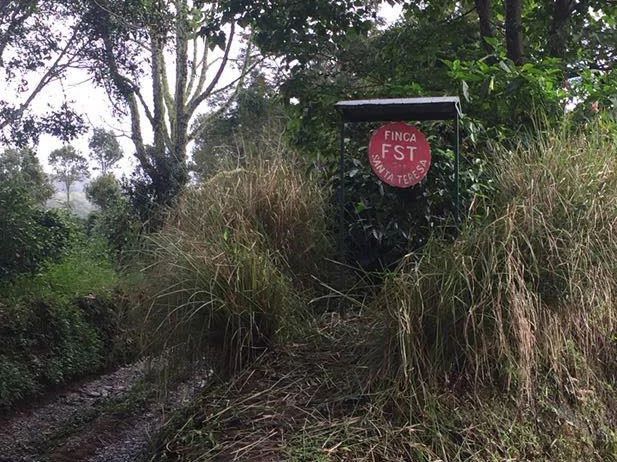
Finca Santa Teresa is located in the Santa Clara production area on the border between Panama and Costa Rica. It is jointly managed by Juan Pablo Berard and his daughter Maria Luisia, covering one hundred hectares of coffee farm, of which twenty-five hectares are preserved as primary forest. The estate cultivates Caturra, Catuai, and Geisha. The altitude and black volcanic soil, combined with the moisture from both Pacific and Atlantic climates, create multiple microclimates that give each micro-lot of green beans its own character. The estate has its own processing plant, completing every step from cherry to burlap sack on-site. Waste materials are recycled as fertilizer or fuel, and the estate also provides meals, medical care, and education for employees and their children.
Professional coffee knowledge exchange. For more coffee bean information, please follow Coffee Workshop (WeChat official account cafe_style)
Today it's time again for Front Street to share Panama coffee beans. There's no need to fixate on Geisha—when Front Street looks for Panama coffees, we certainly don't go only for Geisha. So many coffee estates and quality coffees have yet to be discovered, and finding beans with novel flavors is the real goal. Today, what Front Street wants to share is a Caturra variety from a famous local Panama coffee estate, Finca Santa Teresa. This estate is very well known and has won numerous awards, so the coffee quality is beyond doubt. As Front Street said, we won't seek only Geisha; the aim is to find more quality coffees. So what makes this bean special after testing? Read on and you'll have a new experience.
Estate Introduction
Finca Santa Teresa is located in the Santa Clara production area on the border between Panama and Costa Rica. The estate owners, Juan Pablo Berard and his daughter Maria Luisia, jointly manage 100 hectares of coffee farm, retaining 25 hectares as primary forest for wildlife habitat. The coffee varieties planted include Caturra/Catuai/Geisha. This estate has numerous award records and is also enthusiastic about education. It joined the non-profit organization the NGO, Casa Esperanza, which provides two teachers for it. Juan Pablo built school buildings and provides books and meals, dedicating himself to local education development. The estate's planting area is not large, but although small it is fully equipped with its own processing plant, sufficient to complete all work from cherry to burlap sack. Most employees are local border residents and are well cared for by the owner.
Finca Santa Teresa (FST) is located in a high-altitude area with uniquely rich black volcanic soil, and simultaneously receives the moisture of both Pacific and Atlantic climates. These advantages create quality coffee. Santa Teresa is situated among beautiful valleys and ridges, creating multiple different microclimates and giving each micro-lot of specialty green coffee beans a different personality. Santa Teresa adopts environmentally friendly cultivation and green bean processing methods, and all waste related to the production process is recycled as fertilizer or used as fuel. In addition, Santa Teresa provides all employees with free meals, medical care, accommodation, transportation, utilities, and education. There is also a school on the farm for employees' children, so farmers can rest assured about conditions at home and devote themselves fully to caring for the coffee trees.
Finca Santa Teresa Award Records:
2005 Best of Panama: 4th place
2007 Best of Panama: 6th place
2011 Best of Panama: 3rd place
2012: Used by the World Hand Brew Coffee Champion (FST Geisha)
2012 Best of Panama: 4th place (Geisha)
2013 Best of Panama:
3rd place (Geisha Natural);
4th place (Geisha Honey);
6th place (Geisha Lavado)
Processing Method Introduction
The natural process, simply put, is using the sun to dry coffee cherries with the pulp and skin still on, so in English it is called Nature. However, this nature processing method looks easy but is not simple. The commercial natural processing method involves laying a plastic sheet on the ground and placing the coffee beans directly on it for sun drying. But the problem lies in the transfer of ground heat and the unstable heat convection of the coffee cherries. If they are not turned frequently, there may be problems of excessive temperature rise or uneven fermentation. (You can imagine the beans on top being comfortably sunned, while the beans stifled underneath may develop strange odors.)
In addition, there are many undesirable microorganisms and contamination on the ground, which can also damage the flavor of the coffee beans. So traditional natural processing has many... flavors. In the early days, good beans were not processed by the natural method because everyone's impression was poor and the price was not high. However, in recent years the natural method has improved a great deal. Today's natural processing mostly uses African-style raised beds, which can effectively block ground moisture and soil and increase air circulation. During sun drying, temperature is also strictly controlled to prevent excessive fermentation caused by high temperatures. The entire natural processing process usually takes more than 20 days, allowing microorganisms and coffee cherry pulp to gradually ferment, so the flavor is sweeter and often carries rich tropical fruit flavors.
FrontStreet Coffee Green Bean Analysis
Caturra is a single-gene mutation of Bourbon, discovered in Brazil in 1937. Its productivity and disease resistance are both better than Bourbon, and the tree is shorter, making harvesting convenient. Unfortunately, like Bourbon, it has a cycle of fluctuating productivity every two years. Its flavor is comparable to or slightly inferior to Bourbon beans, but more importantly, its adaptability is extremely strong. It does not need shade trees and can thrive even directly under blazing sun, commonly known as Sun Coffee. It can adapt to high-density planting but must be fertilized more, increasing costs, so early coffee farmers were not highly accepting of it. Caturra is suitable for planting from low altitudes of 700 meters to high altitudes of 1700 meters, with strong altitude adaptability, but the higher the altitude, the better the flavor, while productivity relatively decreases—this is the fate of specialty beans. Some in academia call Caturra the intensive and sun-exposed version of Bourbon, which hits the nail on the head.
FrontStreet Coffee Roasting Analysis Roaster Yangjia 600g Semi-direct Fire
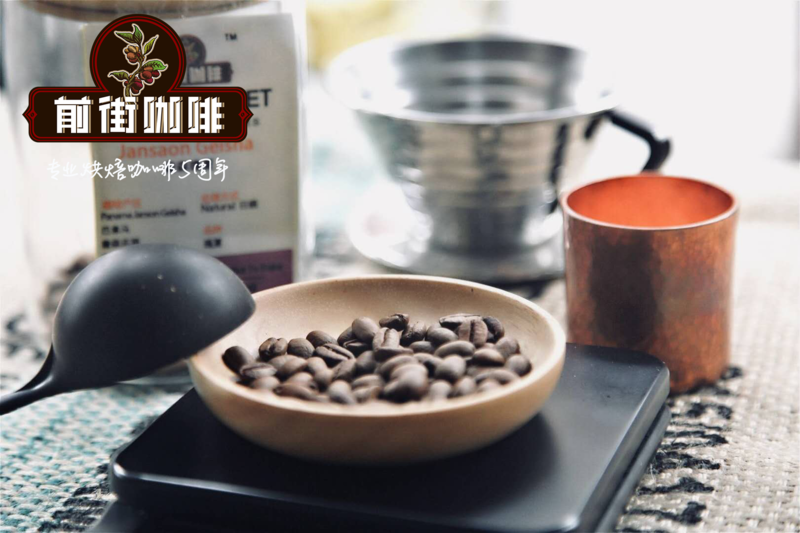
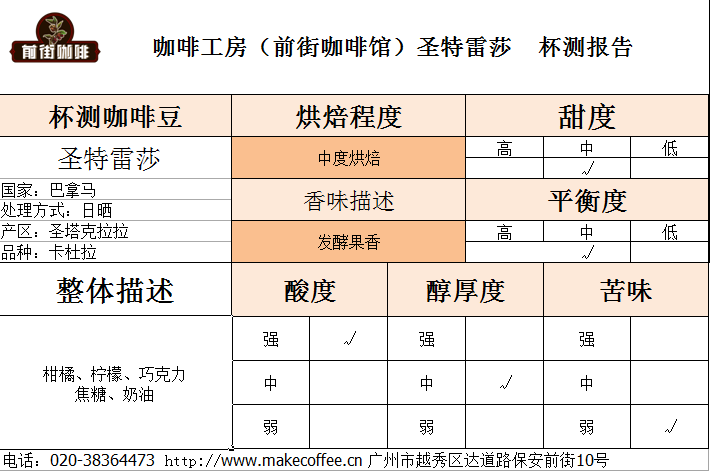
This coffee bean has medium density, and medium roast is the most suitable roast level to showcase the character of this bean.
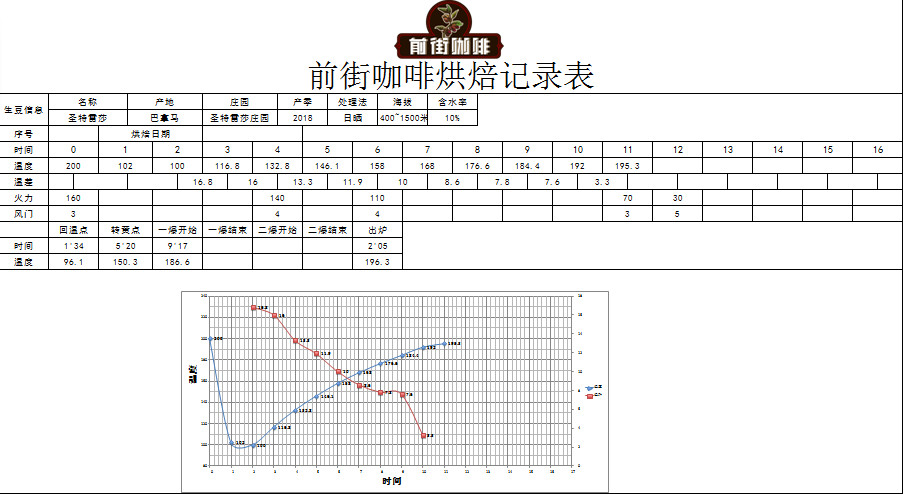
A fast-roasting mode was adopted. The roaster was charged at 200°C, with airflow set to 3. After 1 minute, the heat was adjusted to 160°C with airflow unchanged. Roasting continued to 5'20", at a temperature of 150.3°C, when the bean surface turned yellow, the grassy smell completely disappeared, and dehydration was complete. The heat was adjusted to 140°C and airflow opened to 4; 168°C was the Maillard reaction point, and the heat was lowered to 110 to develop flavor; at 196.3°C the heat was lowered again to 80, entering first crack at medium heat.
At 8'20", wrinkles and dark streaks appeared on the bean surface, and the toasted bread smell clearly turned into coffee aroma, which can be defined as the prelude to first crack. At this time, listen carefully for the sound of first crack. At 9'17" first crack began, airflow fully open, and at 186.6°C the heat was lowered to 70, roasting until 196.3°C when the beans were dropped, with a development time of 2'05".
FrontStreet Coffee Cupping Record
FrontStreet Coffee Panama Finca Santa Teresa Caturra
Panama Finca Santa Teresa
Region: Santa Clara
Variety: Caturra
Estate: Finca Santa Teresa
Altitude: 1400~1500 meters
Processing: Natural
FrontStreet Coffee Brewing Analysis
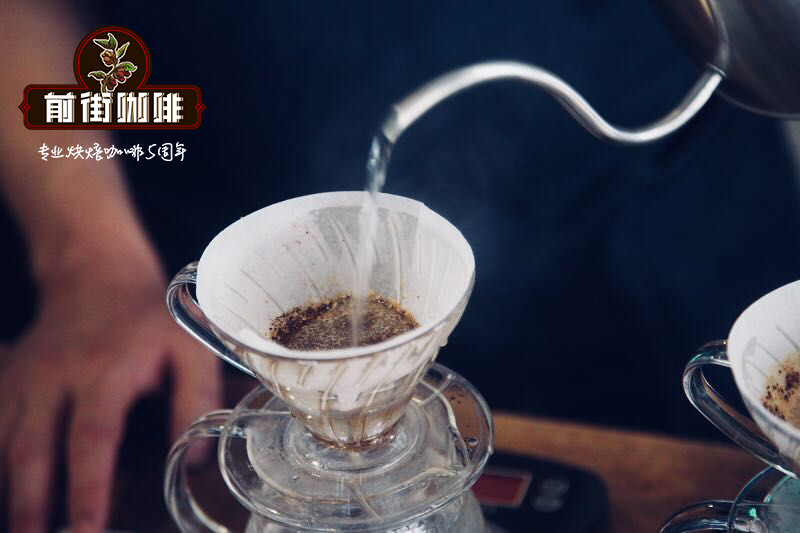
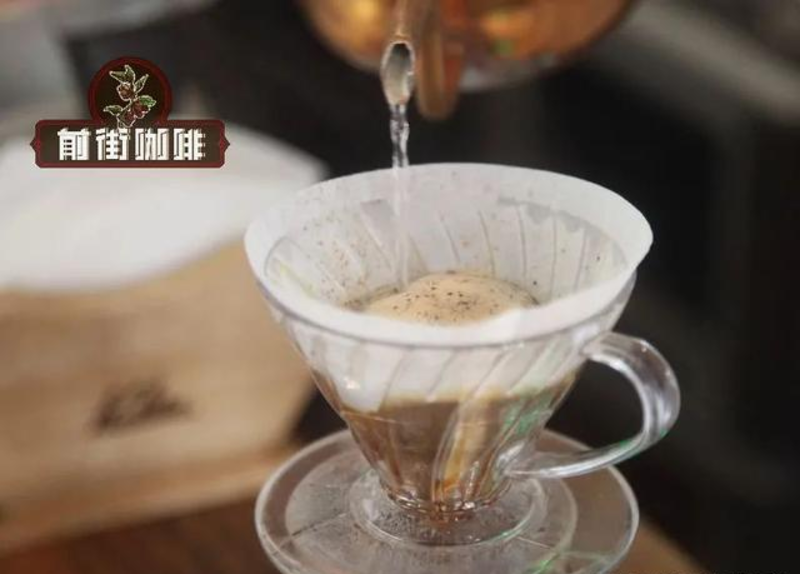
Recommended brewing method: Pour-over with V60 dripper, 15g grounds, water temperature 89°C, small Fuji grind setting 3.5, water-to-coffee ratio close to 1:15. Bloom with 30g water for 30s. Stages: pour to 130g and stop, wait for the water level to drop by 1/3, then pour again to 230g.
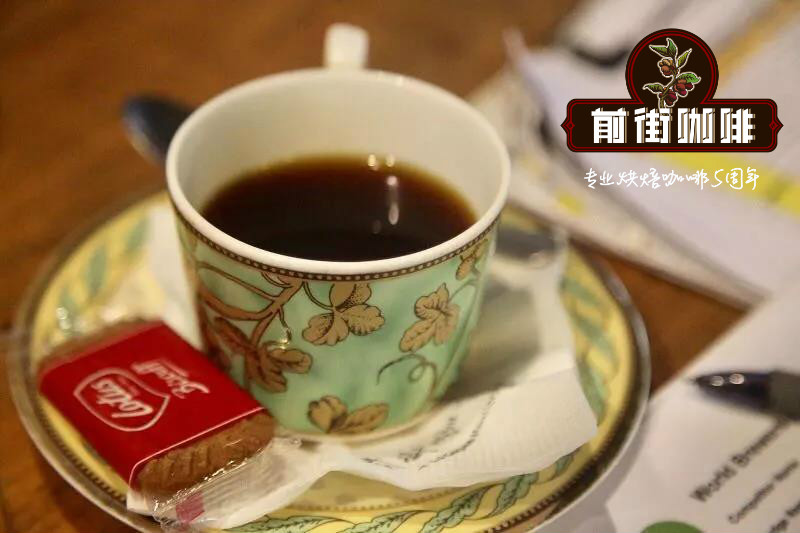
FrontStreet Coffee Flavor Description: The entry has citrus and lemon acidity, the middle shows honeydew melon and nutty flavors, and the finish carries some caramel sweetness

Light Roast Pour-Over Floral Coffee Beans Recommendation: Qianjie Yirgacheffe Gedeo Dingding, Qianjie Panama Hacienda La Esmeralda Green Label Geisha Coffee Beans, QianjiePanama Butterfly Coffee Beans
Daily medium-light roast Yirgacheffe pour-over floral coffee bean recommendation, Qianjie Yirgacheffe Guddina, light roast brings the signature white floral notesAromatic, with lemon-citrus fruit notes and a refreshing floral tea note; bright and crisp on the palate. Great value and an ideal entry-level pour-over coffee with floral and fruity notesAn unrivalled choice.
Moka pot, home espresso, and espresso-based milk drinks like latte — recommended beans: Qianjie Classic Espresso Blend, using BrazilianWest, with Mandheling Arabica and a small amount of Vietnamese Robusta fully blended, delivering a rich and outstanding espressocrema; overall style is rich and memorable. Qianjie Brazil Queen's Estate coffee beans and Qianjie Classic Espresso Blend coffee beans are both mochaA highly recommended option for pot-style espresso machines.
Fruity-floral signature espresso latte bean recommendation: Qianjie Strawberry Candy espresso blend, featuring strawberry gummy and rose aromas,Full-bodied sweetness with a grape and almond finish; especially stunning as an iced latte. Made from Costa Rican honey-process beans, PanamaBlended from Panama Geisha coffee beans and select beans from Colombia's Huila region. Not only does it overturn traditional espresso flavor, the cremaalso performs well, with impressive showings in creative specialty drinks.
Now available on Taobao store「 Qianjie Coffee 」To purchase the above coffee beans, Qianjie Coffee offers dozens of selected single-origin pour-over and espresso coffee beans from around the world. Qianjie CoffeeQianjie Coffee is a veteran specialty coffee roaster; beans are freshly roasted within 5 days, with consistent quality and highly competitive pricesGreat value, ships within 24 hours. Qianjie Coffee is recommended by many coffee lovers and platforms.
Taobao Qianjie Coffee Link: https://qianjiecoffee.taobao.com
Or search our shop directly on Taobao 「Qianjie Coffee」
Qianjie Coffee Store Address: 315 Donghuadong Road, Yuexiu District, Guangzhou
Follow our official account Qianjie Coffee to learn more about coffee
Site Recommendations:
耶加雪菲
花魁咖啡
瑰夏咖啡
波旁咖啡
蓝山咖啡
天堂鸟咖啡豆
曼特宁咖啡豆
PWN黄金曼特宁
星巴克菜单
咖啡豆种类
Please indicate the source when reprinting.
2018-07-09 14:02:54