Some people grind and brew according to the parameters on the QR code on the packaging, yet always feel that the cup is missing something compared with the one in the shop. The reason often lies in the dripper: the store brews Golden Mandheling with the Kono Meimon dripper—small hole, short ribs, filter paper clinging tightly to the wall—so the flow rate is slow, the contact time between water and coffee grounds is longer, body is enhanced, and the grind is accordingly coarser. Switch to the common V60 at home: the large hole plus low ribs make the flow rate noticeably faster. In the first half of brewing you can lower the flow rate to fully extract flavor compounds, and in the latter half speed it up to reduce bitterness.
Some people grind and brew according to the parameters on the QR code on the packaging, yet always feel that the cup is missing something compared with the one in the shop. The reason often lies in the dripper: the store brews Golden Mandheling with the Kono Meimon dripper—small hole, short ribs, filter paper clinging tightly to the wall—so the flow rate is slow, the contact time between water and coffee grounds is longer, body is enhanced, and the grind is accordingly coarser. Switch to the common V60 at home: the large hole plus low ribs make the flow rate noticeably faster. In the first half of brewing you can lower the flow rate to fully extract flavor compounds, and in the latter half speed it up to reduce bitterness—and the layering actually comes through more clearly. This bean comes from Aceh, Sumatra, wet-hulled and screened four times for 19 mesh and above.
Some friends bought FrontStreet Coffee'sFrontStreet PWN Golden Mandheling coffee beans and asked FrontStreet, "Why does the coffee I brew at home taste different from what I drink in the shop? I already scanned the QR code on the coffee bean packaging and ground and brewed according to your parameters—why does it feel like something is missing after brewing?" Don't worry! FrontStreet Coffee brews Golden Mandheling coffee beans with the Kono Meimon dripper. The biggest feature of this dripper is that it enhances the body of the coffee, so the grind in the parameters is also a bit coarser. Many friends use a V60 dripper to brew Golden Mandheling coffee beans at home, so how can you use a V60 to brewFrontStreet PWN Golden Mandheling coffee?~
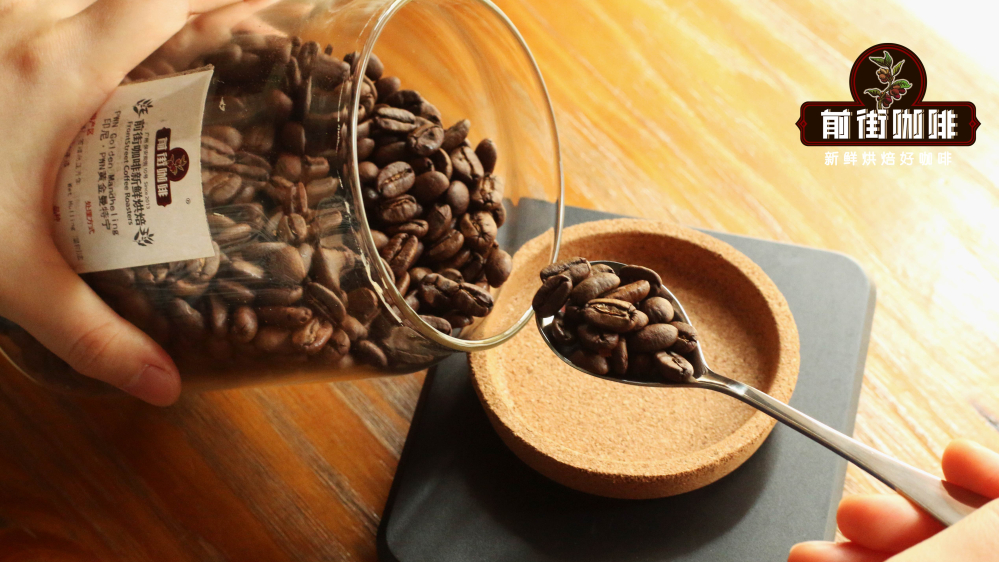
FrontStreet Coffee: FrontStreet PWN Golden Mandheling coffee beans
Region: Aceh, Sumatra, Indonesia
Company: PWN Company
Altitude: 1100-1600m
Processing method: wet-hulled + screened four times for 19 mesh and above
Variety: Ateng
What is the difference between the Kono Meimon dripper and the V60 dripper?
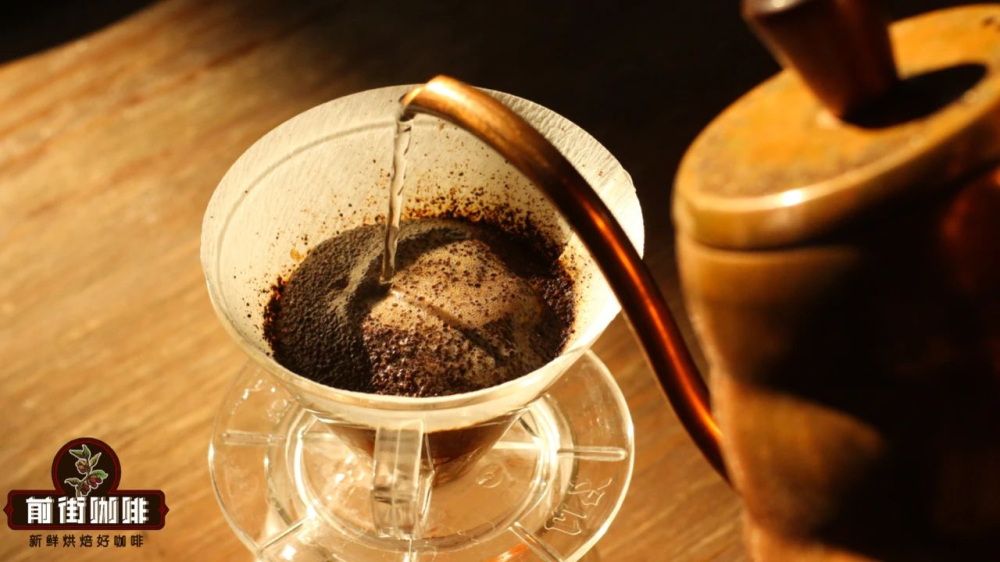
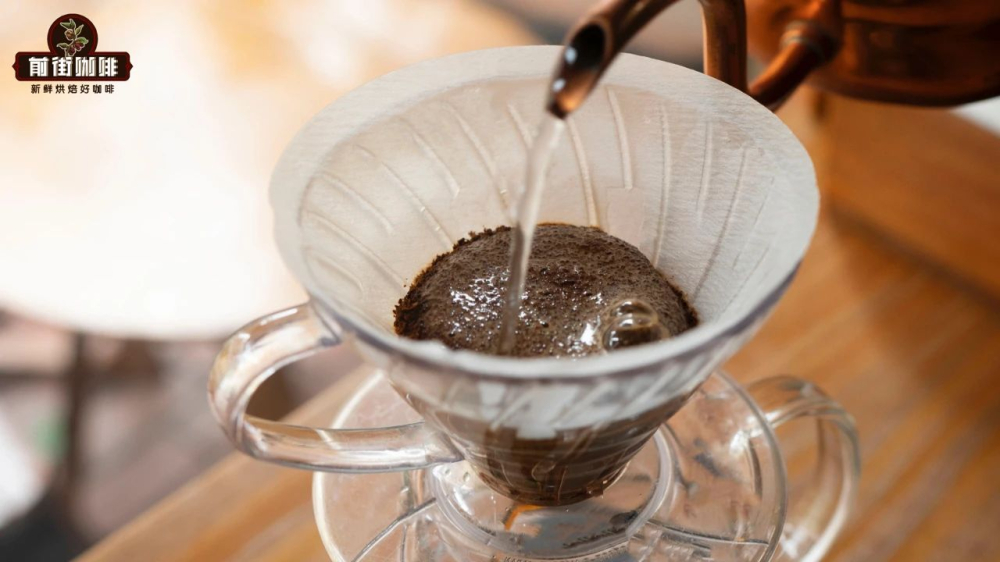
The V60 dripper is a large-hole dripper, and its characteristic is a fast flow rate. The design extending to low ribs and a large hole gives the barista ample room to control the flow rate—for example, during the first stage of brewing the flow rate can be lowered to fully extract the flavor compounds of the first stage, and in the latter stage the flow rate is increased to reduce the production of bitter compounds. FrontStreet Coffee believes that coffee brewed with the V60 dripper has excellent layering.
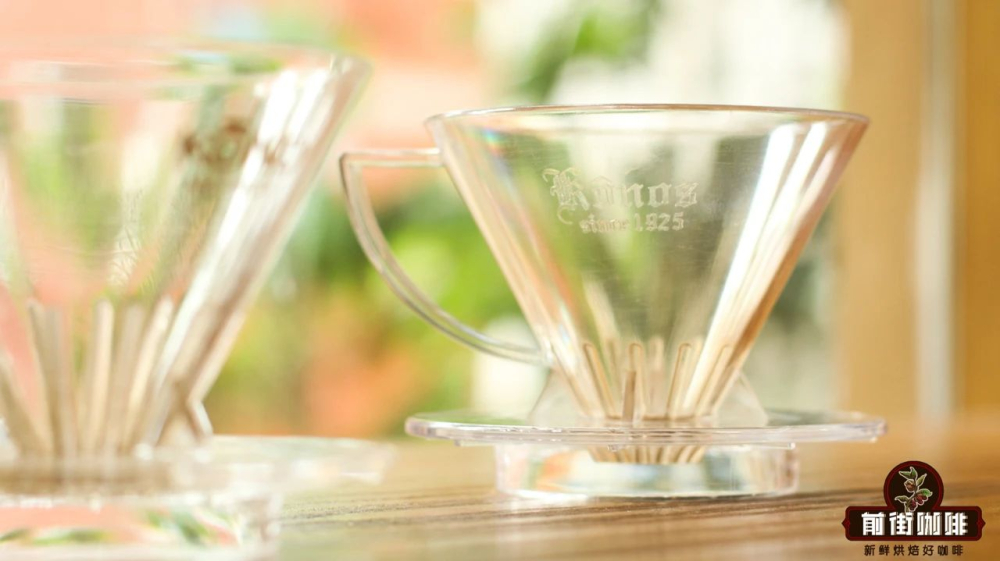
The Kono dripper is a small-hole dripper, and its characteristic is a slow flow rate. It has only short ribs close to the hole opening; above them there are no ribs, and the coffee bed and filter paper cling tightly with no space for air to flow, so the extraction speed slows down, and the contact time between water and grounds is longer than with the V60 dripper. FrontStreet believes that brewing with the Kono Meimon dripper can enhance the body of the coffee, so it uses this dripper when brewing medium-roast coffee beans.
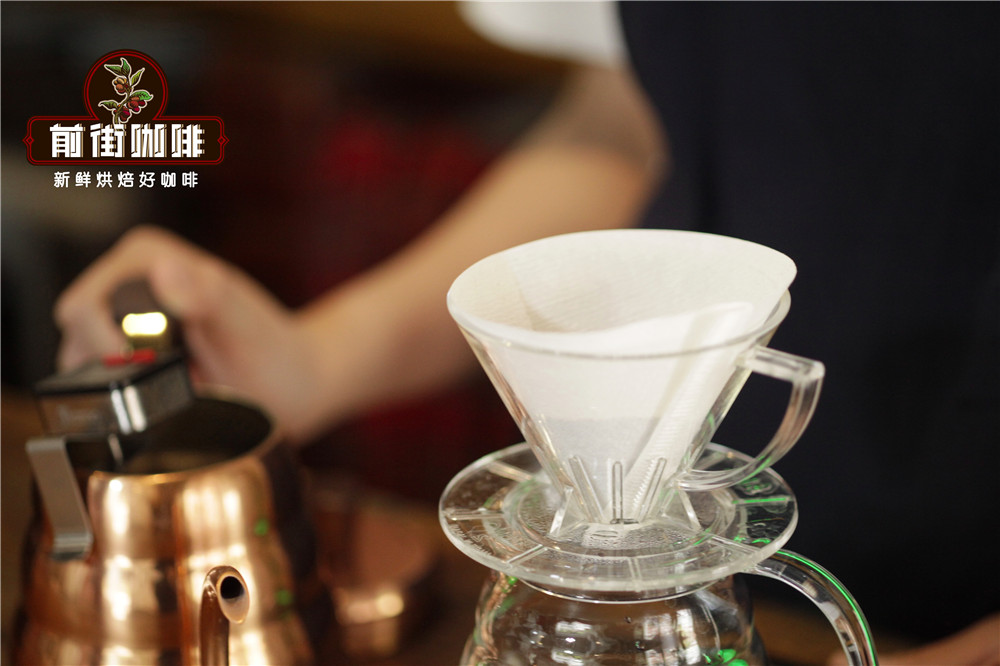
Back to the point: thegrind FrontStreet uses when brewing FrontStreet PWN Golden Mandheling with the Kono dripper will taste thin when brewed with a V60, so how should we adjust it?
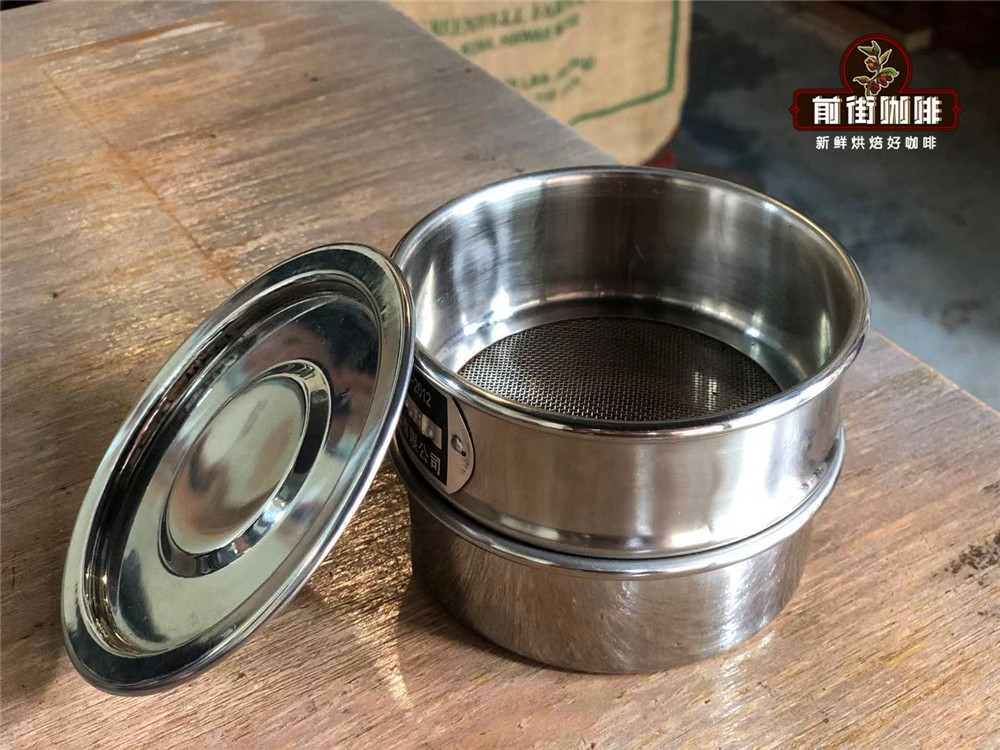
First, let's review the Kono brewing parameters FrontStreet Coffee provides for FrontStreet PWN Golden Mandheling: dose 15g, coffee-to-water ratio 1:15, water temperature 88°C, grind: medium-coarse (65% passing rate through a 0.85mm aperture sieve). Seeing this, are you wondering what a 0.85mm aperture sieve is?
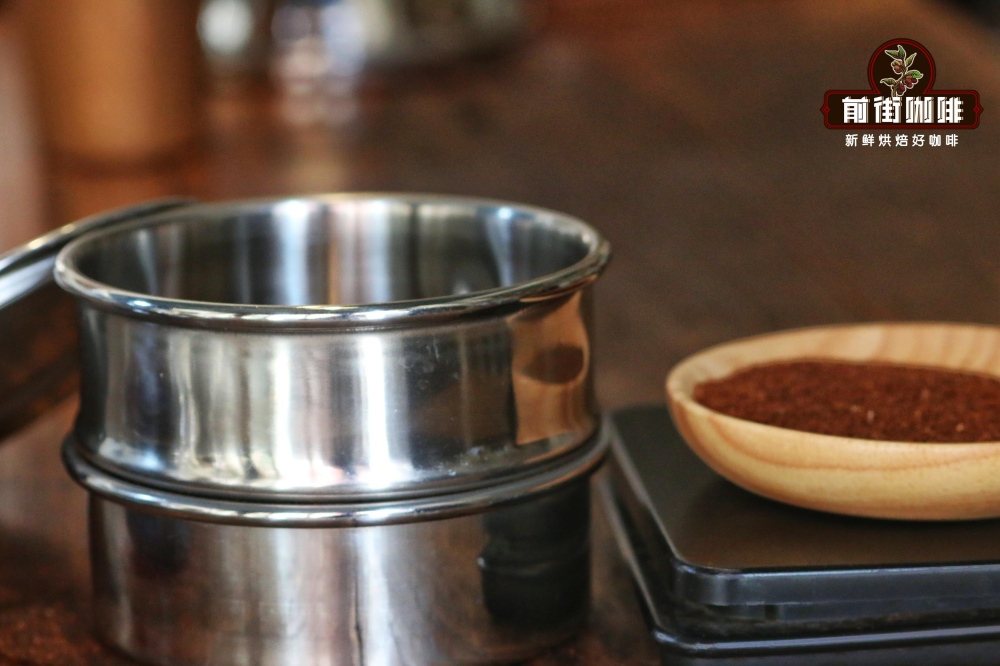
The purpose of the 0.85mm sieve is to establish a grind calibration standard suitable for this coffee bean's brewing method. First weigh out 10 grams of coffee beans, then grind them to the grind level to be tested, place the ground coffee into the upper part of the sieve, and shake vigorously so that coffee particles finer than 0.85mm fall into the lower half of the sieve. Shake repeatedly and continuously to ensure all coffee particles finer than 0.85mm fall through. Then weigh the coffee in the lower half and divide the weighed coffee weight by 10 grams to get what we call the passing rate.
FrontStreet has conducted different sieve tests and multiple experiments on grind sizes for various brewing methods. The final recommendations for black coffee brewing grind size, based on sieving 10g of coffee, are: cold drip > light-roast pour-over, siphon, passing rate 80% > moka, American drip filter, passing rate 75-80% > cupping, passing rate 70-75% > medium-roast pour-over, French press, passing rate 65-70%. FrontStreet Coffee's FrontStreet PWN Golden Mandheling is medium-roast, so when brewing, the grind is set so that the amount of coffee passing through from 10g of coffee reaches 6.5g-7g—about the size of coarse granulated sugar.
So since we are not adjusting the grind, what should we adjust when brewing with a V60 dripper?
When it is not recommended to adjust the grind, then you should adjust the coffee brewing coffee-to-water ratio! FrontStreet uses a 1:15 coffee-to-water ratio when brewing with the Kono Meimon dripper. Because the Kono dripper is characterized by a slow flow rate and enhanced body, this parameter is just right for brewing with the Kono Meimon dripper. As for the V60 dripper's characteristics of a fast flow rate and high layering in the brewed coffee, FrontStreet recommends using a 1:13 ratio, so that by reducing the coffee-to-water ratio, the overall body of the coffee is increased.
When brewing FrontStreet PWN Golden Mandheling coffee with a V60, should the brewing water temperature be adjusted?
Here FrontStreet recommends using 90° water temperature; higher water temperature will cause the coffee's flavor molecules to be released faster. Combined with the V60's fast flow rate characteristic, this can make the coffee flavor of FrontStreet PWN Golden Mandheling coffee appear fuller. One thing to note: when using this 90°C water temperature, make sure the coffee grind is still at a passing rate of 65%-70%. If the grind is too fine and you brew at this temperature, the coffee will have bitter/woody and other off-flavors.
Having said so much, finally FrontStreet will summarize the parameters for brewing Golden Mandheling coffee beans with a V60!
Dose: 15g
Coffee-to-water ratio: 1:15
Grind: medium-coarse (65%-70% passing rate through China No. 20 standard sieve)
Water temperature: 88°C
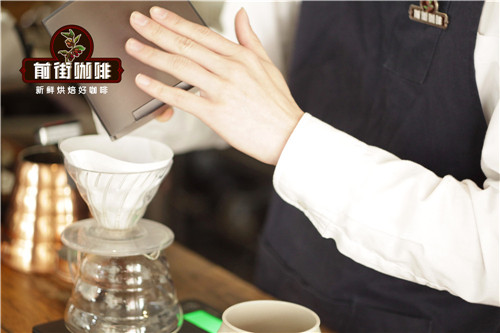
Use three-stage extraction: in the first stage use 30g of water to fully wet the coffee bed for blooming, then pour 70g in an even circular motion with a medium-fine stream (total weight at this point is 100g). When the liquid level drops to 2/3 of the coffee bed, begin the third stage: again pour 95g in an even circular motion with a medium-fine stream, then stop pouring. Total poured amount is 195g, final extracted coffee amount is 170g, and extraction time is 1'45".
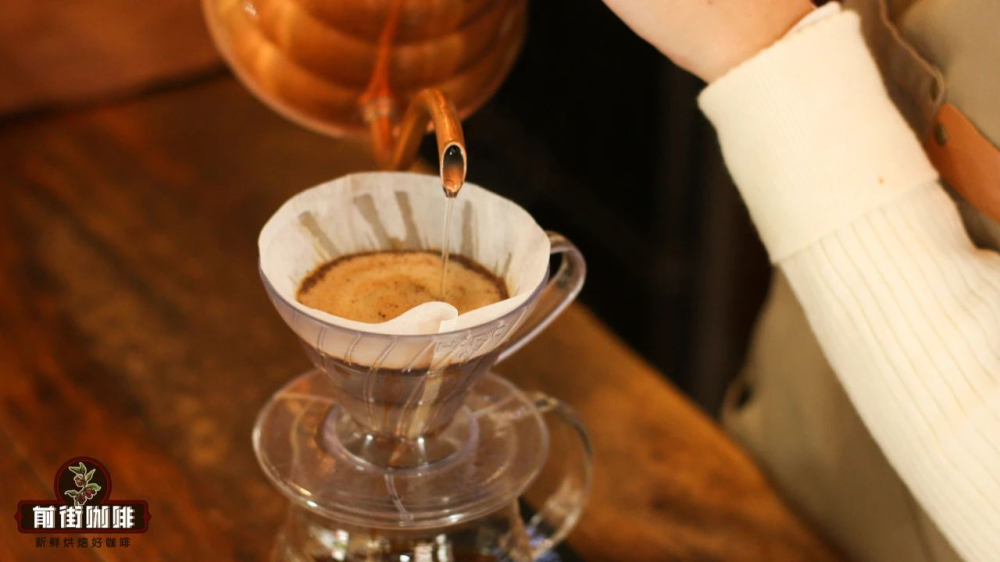
Because coffee brewed with the V60 dripper has distinct layering, after extraction is complete, shake it well before tasting.
For professional coffee knowledge exchange and more coffee bean information, please follow Coffee Workshop (WeChat public account cafe_style)
For more specialty coffee beans, please add the private WeChat of FrontStreet Coffee, WeChat ID: qjcoffeex

Light Roast Pour-Over Floral Coffee Beans Recommendation: Qianjie Yirgacheffe Gedeo Dingding, Qianjie Panama Hacienda La Esmeralda Green Label Geisha Coffee Beans, QianjiePanama Butterfly Coffee Beans
Daily medium-light roast Yirgacheffe pour-over floral coffee bean recommendation, Qianjie Yirgacheffe Guddina, light roast brings the signature white floral notesAromatic, with lemon-citrus fruit notes and a refreshing floral tea note; bright and crisp on the palate. Great value and an ideal entry-level pour-over coffee with floral and fruity notesAn unrivalled choice.
Moka pot, home espresso, and espresso-based milk drinks like latte — recommended beans: Qianjie Classic Espresso Blend, using BrazilianWest, with Mandheling Arabica and a small amount of Vietnamese Robusta fully blended, delivering a rich and outstanding espressocrema; overall style is rich and memorable. Qianjie Brazil Queen's Estate coffee beans and Qianjie Classic Espresso Blend coffee beans are both mochaA highly recommended option for pot-style espresso machines.
Fruity-floral signature espresso latte bean recommendation: Qianjie Strawberry Candy espresso blend, featuring strawberry gummy and rose aromas,Full-bodied sweetness with a grape and almond finish; especially stunning as an iced latte. Made from Costa Rican honey-process beans, PanamaBlended from Panama Geisha coffee beans and select beans from Colombia's Huila region. Not only does it overturn traditional espresso flavor, the cremaalso performs well, with impressive showings in creative specialty drinks.
Now available on Taobao store「 Qianjie Coffee 」To purchase the above coffee beans, Qianjie Coffee offers dozens of selected single-origin pour-over and espresso coffee beans from around the world. Qianjie CoffeeQianjie Coffee is a veteran specialty coffee roaster; beans are freshly roasted within 5 days, with consistent quality and highly competitive pricesGreat value, ships within 24 hours. Qianjie Coffee is recommended by many coffee lovers and platforms.
Taobao Qianjie Coffee Link: https://qianjiecoffee.taobao.com
Or search our shop directly on Taobao 「Qianjie Coffee」
Qianjie Coffee Store Address: 315 Donghuadong Road, Yuexiu District, Guangzhou

Site Recommendations: 耶加雪菲 花魁咖啡 瑰夏咖啡 波旁咖啡 蓝山咖啡 天堂鸟咖啡豆 曼特宁咖啡豆 PWN黄金曼特宁 星巴克菜单 咖啡豆种类
Please indicate the source when reprinting.
2025-05-03 10:52:51
