When choosing single-origin coffee beans for the first time, judging flavor by region is the most straightforward approach. Coffees from African regions are known for their bright and refreshing fruity acidity, beans from Latin America mostly carry nutty and cocoa notes, while Asian regions commonly show herbal and spicy aromas. As the birthplace of coffee, Ethiopia has high altitudes and mild temperatures within its borders, which are suitable for coffee cultivation. Producing regions such as Yirgacheffe and Sidamo each have different expressions. Stringing these clues together means choosing beans no longer relies on guesswork.
When choosing single-origin coffee beans for the first time, judging flavor by region is the most straightforward approach. Coffees from African regions are known for their bright and refreshing fruity acidity, beans from Latin America mostly carry nutty and cocoa notes, while Asian regions commonly show herbal and spicy aromas. As the birthplace of coffee, Ethiopia has high altitudes and mild temperatures within its borders, which are suitable for coffee cultivation. Producing regions such as Yirgacheffe and Sidamo each have different expressions.
For professional coffee knowledge exchange and more coffee bean information, please follow Coffee Workshop (WeChat official account cafe_style )
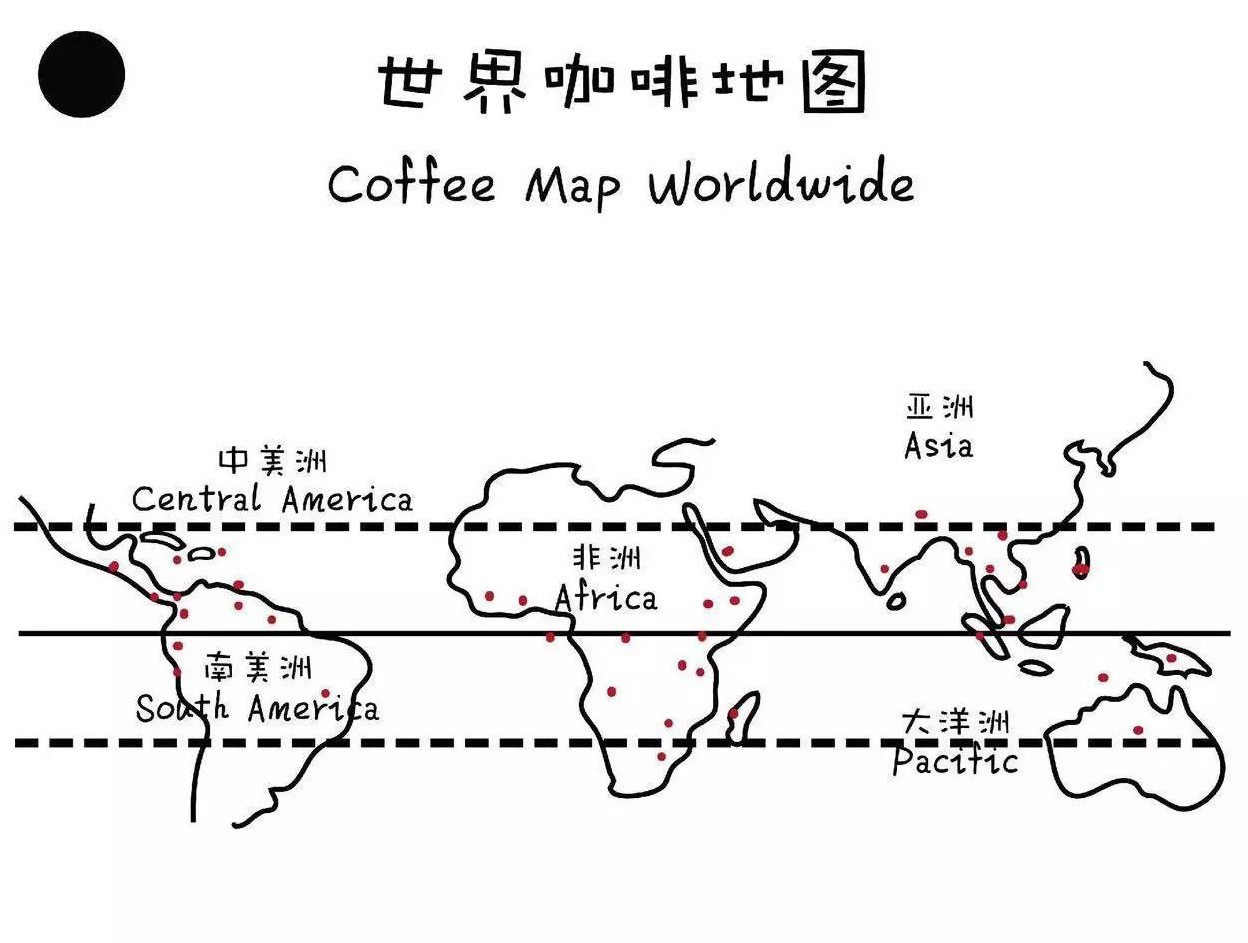
When novice coffee enthusiasts first come to the Front Street shop, they often do not know how to choose single-origin coffee beans that suit their preferred flavors, because the Front Street shop alone carries more than 50 kinds of coffee beans, and these coffee beans come from all over the world. Generally, Front Street asks coffee enthusiasts whether they want coffee that is acidic or not acidic, or coffee that is full-bodied. In fact, these flavors all correspond to regions, mainly divided into Africa, Latin America, and Asia—the three major coffee regions. Among them, single-origin coffee beans from Asia mostly present the unique aromas of herbs and spices, while Latin America is dominated by nutty and cocoa-flavored coffee, and African coffee beans are known for fruity acidity and a refreshing mouthfeel. Next, Front Street will explain the regional characteristics of these three major coffee regions of the world.
African Coffee Bean Regions
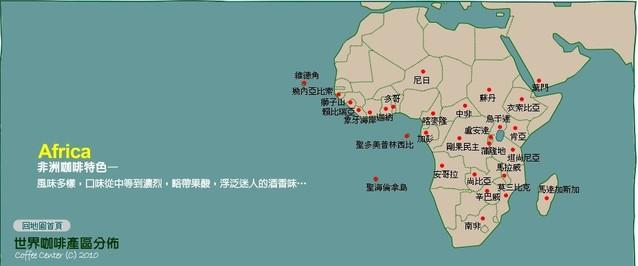
As Front Street mentioned above, the flavor characteristics of African regions are mainly known for pleasant, bright, and refreshing fruity acidity. Among them, the most famous single-origin coffee-producing country is none other than Ethiopia, which is rich in specialty coffee, as well as its neighboring country Kenya. These two countries can be said to have supported the development of the entire African coffee industry.
Africa is also the birthplace of coffee, so its development history spans hundreds of years. To this day, there are still many undiscovered wild coffee varieties in Africa. Next, Front Street will introduce Ethiopia, the well-known African region mentioned just above.
Growing Conditions for Ethiopian Coffee Beans
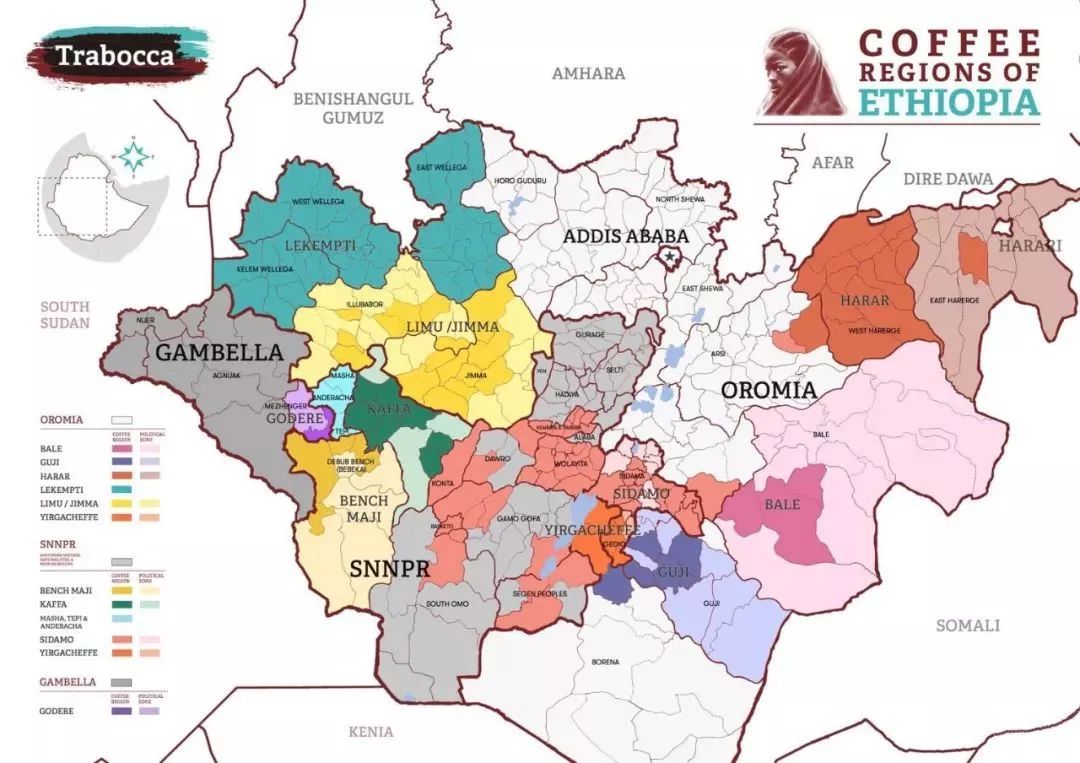
Since the first coffee tree was discovered in Ethiopia, coffee cultivation began there. Coffee has therefore become an indispensable part of local life and has even been integrated into daily life, while coffee is also their main source of income. The output of specialty coffee is also diverse, such as the Front Street Ethiopia Yirgacheffe coffee beans, Front Street Sidamo Arsi coffee beans, and Front Street Sidamo Huakui coffee beans at FrontStreet Coffee, all of which come from here. Their flavors each have their own characteristics and are not identical, which has also captured the hearts of many coffee enthusiasts.
Ethiopia is located in East Africa and is currently the largest coffee-producing country in Africa, but only 60% of its coffee beans are exported for sale, while the rest are used in various forms of ceremonies. For example, at weddings people make potions from coffee beans and coffee fruit pulp, coffee mixed with honey, and various herbs to ward off bad luck. This shows that coffee is an inseparable part of local life.
The reason Ethiopian coffee flavors are so good is that the country has high altitudes, mild temperatures, and suitable conditions, making it very suitable for coffee bean growth. Front Street’s previous articles have also said that coffee beans produced in higher-altitude areas have better flavors and richer acidity, which is the main reason Ethiopian coffee has such pleasant acidity.
Ethiopian Coffee Varieties
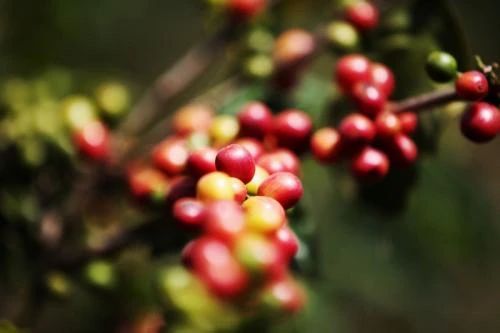
As Front Street mentioned above, Ethiopia, as the origin of coffee, still has many coffee varieties that have not been discovered. Among them, Ethiopian coffee varieties are collectively called local heirloom varieties, that is, Heirloom (also known as longberry heirloom).
Main Producing Regions of Ethiopian Coffee Beans
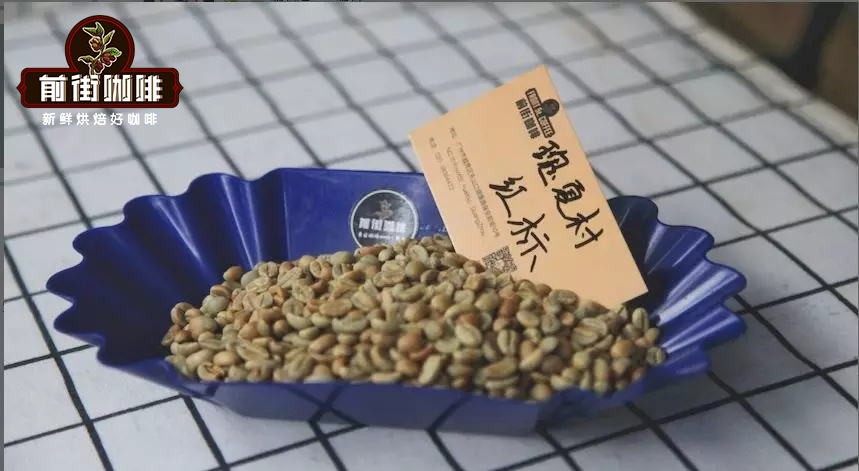
Among them, Ethiopia’s Sidamo region is the country’s most famous coffee region and also holds a certain status internationally. Well-known coffees such as Front Street Huakui coffee and Arsi coffee beans come from here, including one of the coffee beans most loved by coffee enthusiasts at Front Street in recent years, Front Street Yirgacheffe coffee beans. It is itself also within the Sidamo region, but because its flavor is too unique and can be easily distinguished from the coffee flavors of the Sidamo region, Yirgacheffe has been singled out as a separate single region. At the same time, it is also a representative of a flavor profile, which is enough to prove that the Sidamo region is very suitable for producing high-quality specialty coffee.
Sidamo Coffee Region
The Sidama region is located in southern Ethiopia and is an important producing region in southern Ethiopia, with a planting altitude of 1400-2200 meters. The local terrain is diverse, with microclimates plus fertile nutrients and different soil types, creating a unique coffee flavor. Sidamo coffee flavor is similar to Yirgacheffe and is known for floral and orange aromas.
FrontStreet Coffee Ethiopian Sidamo Huakui Coffee Beans
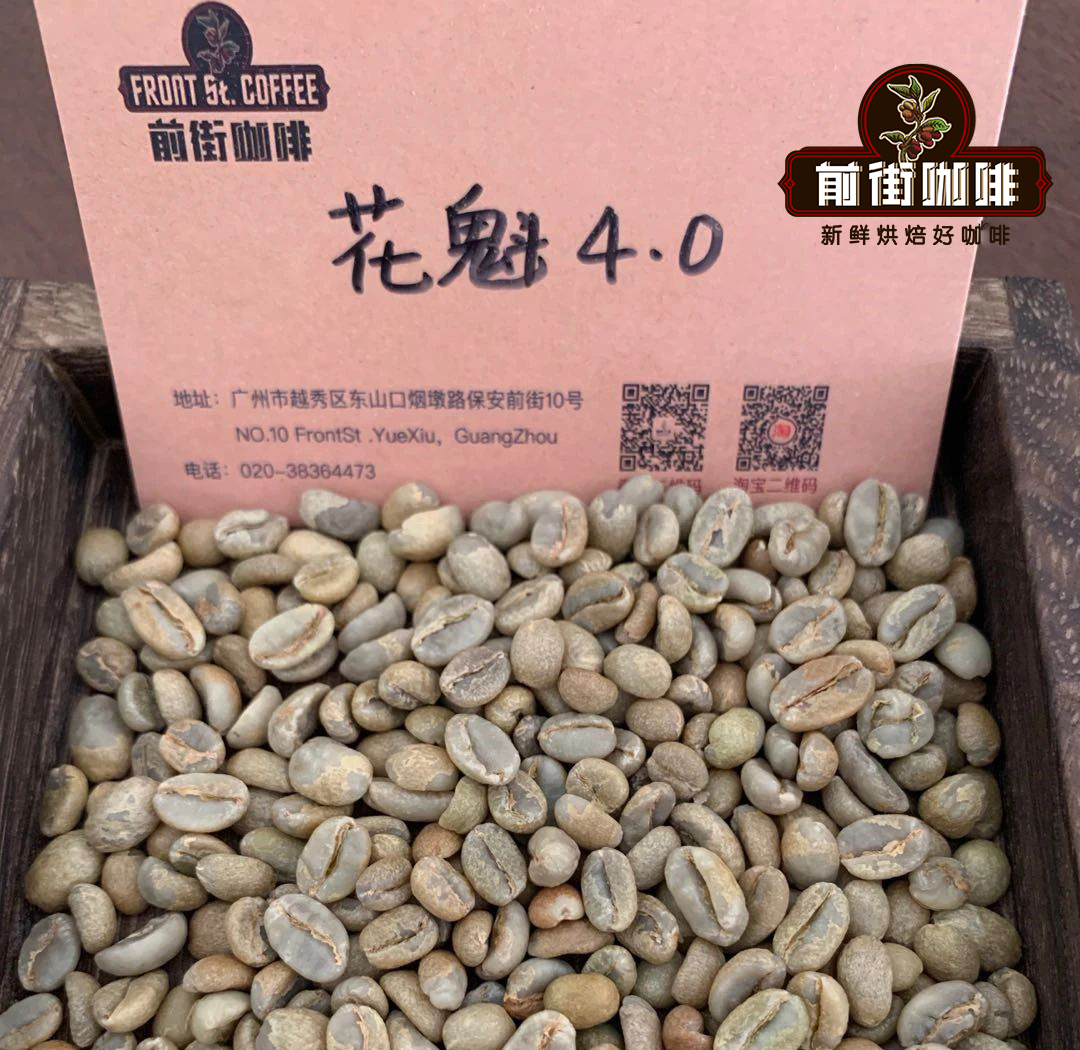
Country: Ethiopia
Region: Sidamo
Altitude: 2250-2350m
Variety: Local heirloom
Processing method: Natural processing
Flavor: Berries, floral tea, honey, lemon, black tea
This Front Street Huakui coffee won first place in the natural coffee bean group of the 2017 TOH coffee competition in Africa, hence the name Huakui. It also comes from Sidamo, but not all coffee beans in Sidamo can be casually called Huakui, because this champion bean refers to coffee beans produced in 2017 by the Buku processing station in the Guji Hambela region of Sidamo. Therefore, only coffee beans produced by the Buku processing station can be called Huakui. Depending on annual climate changes, the coffee flavor will also change more or less, so it is very normal for each year’s Front Street Huakui to have different flavors.
Yirgacheffe Region
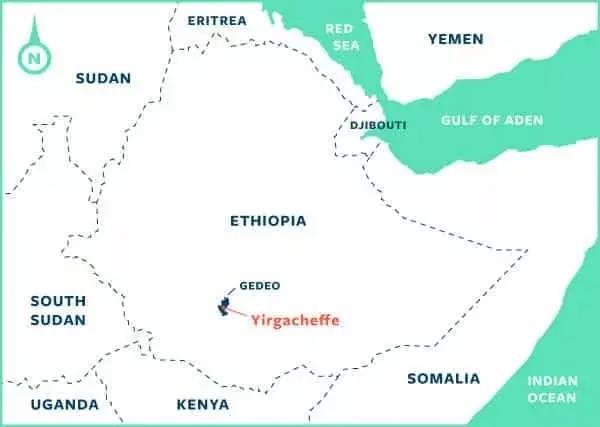
Yirgacheffe belongs to the Sidamo region, but because of its unique flavor it has been separated out. In addition to the small town of Yirgacheffe, it also includes three surrounding sub-regions: Wenago, Kochere, Gelena, and Abaya.
The so-called Yirgacheffe flavor refers to rich jasmine aroma, lemon aroma, peach and almond sweetness, and tea aroma. Traditionally, Yirgacheffe used the oldest natural processing method, but in 1972 Ethiopia introduced washed processing technology from Central and South America in order to improve coffee quality, making Yirgacheffe’s jasmine and citrus aromas clearer and more transparent. FrontStreet Coffee believes that the most essential difference between washed processing and natural processing is that washed processing presents the most basic flavor of coffee and can most intuitively reflect the special flavor of the region, while natural processing adds sweet aroma and fermented notes on top of this basic flavor.
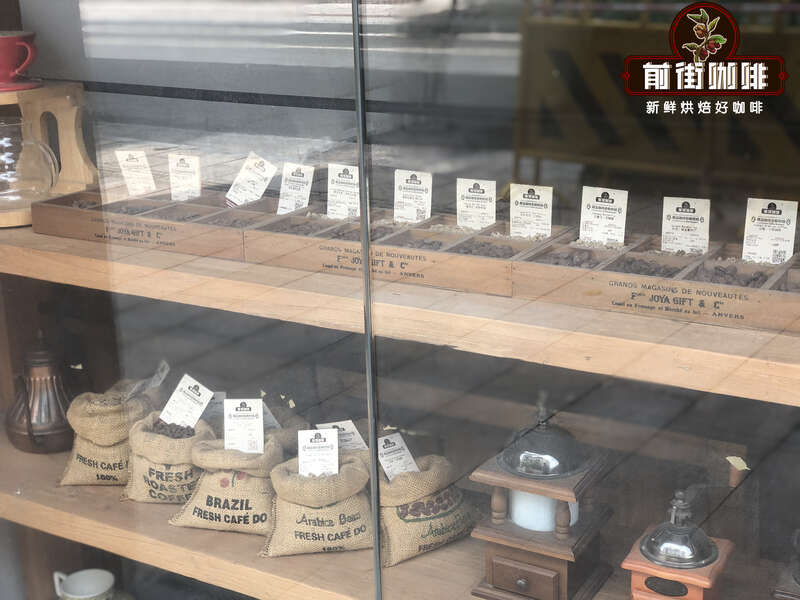
It is precisely because of the introduction of washed processing that Yirgacheffe leaped to become a representative of the world’s specialty coffee. After the 1970s, this region was mainly washed, becoming Ethiopia’s most flourishing washed-bean producing region.
However, in the 21st century, coffee merchant Baghi, because he missed the traditional natural bean flavor and could not bear to see natural processing technology gradually replaced by washed processing, improved the natural bean processing method, enhancing the flavor and reducing the defect rate. Therefore, many natural Yirgacheffe coffees can now be seen on the coffee market. For example, the Front Street Yirgacheffe natural coffee beans launched by FrontStreet Coffee have the unique aroma and fermented notes of natural processing. This has also given coffee enthusiasts more choices.
FrontStreet Coffee Ethiopian Gotiti Coffee Beans
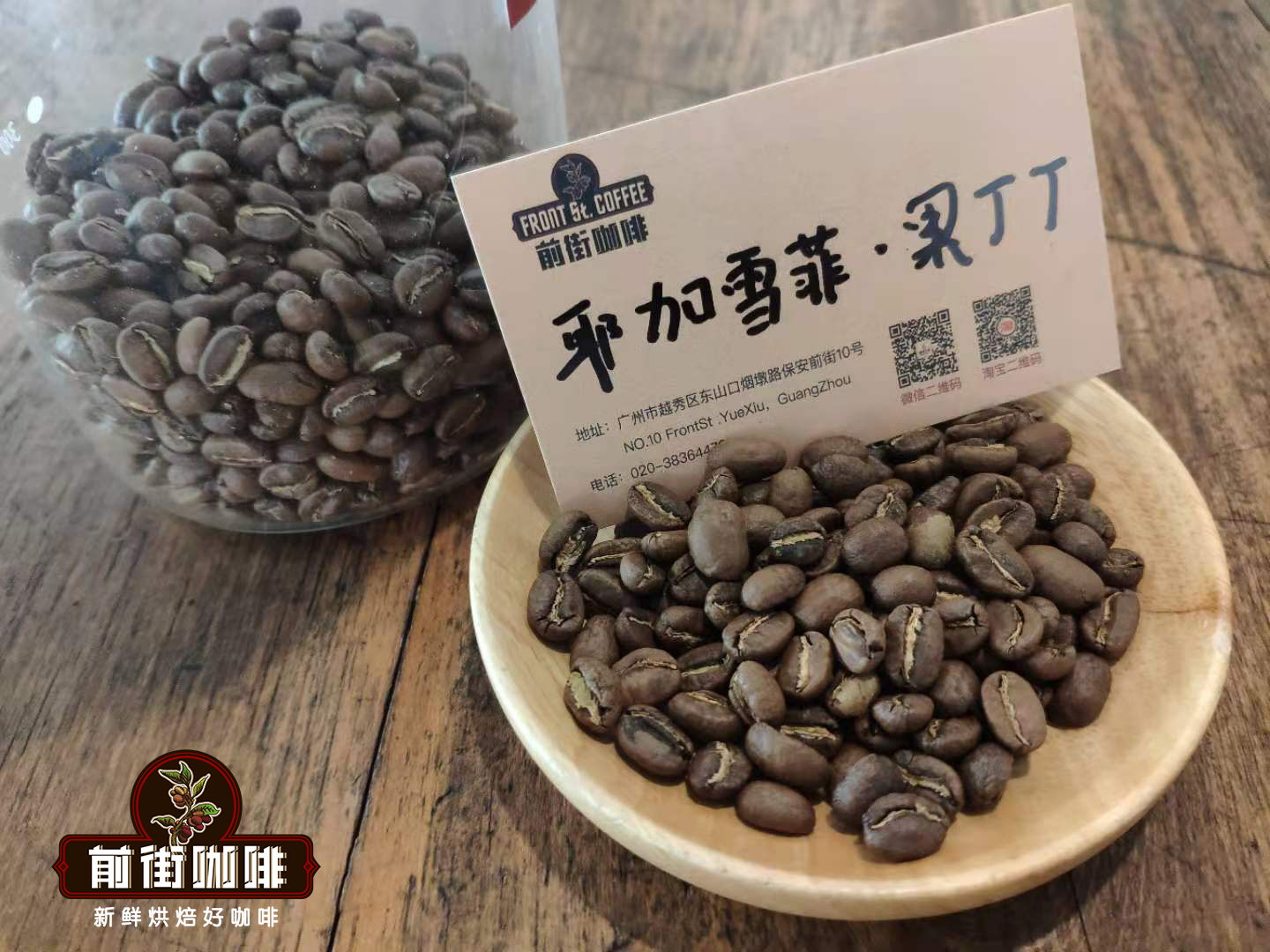
Country: Ethiopia
Region: Yirgacheffe
Altitude: 1900-2300m
Variety: Local heirloom
Processing method: Washed processing
Flavor: Tropical fruit, cream, honey, berries, citrus
The Gotiti Cooperative is located in the Worka region at the southeastern end of Yirgacheffe. According to Front Street’s understanding, it was originally part of the Worka Cooperative under the Yirgacheffe Coffee Farmers Cooperative Union YCFCU.
But later, as people pursued traceability of green coffee beans, individual “single regions” were discovered one after another. Therefore, in 2012, Gotiti, with about 300 farmer members, independently established the Gotiti Cooperative.
At the same time, Gotiti village was also the earliest village area to be independently established. Many small farmers were also members of the original Worka Cooperative, so their coffee production techniques are naturally up to standard.
Front Street Ethiopian Yirgacheffe Natural Red Cherry
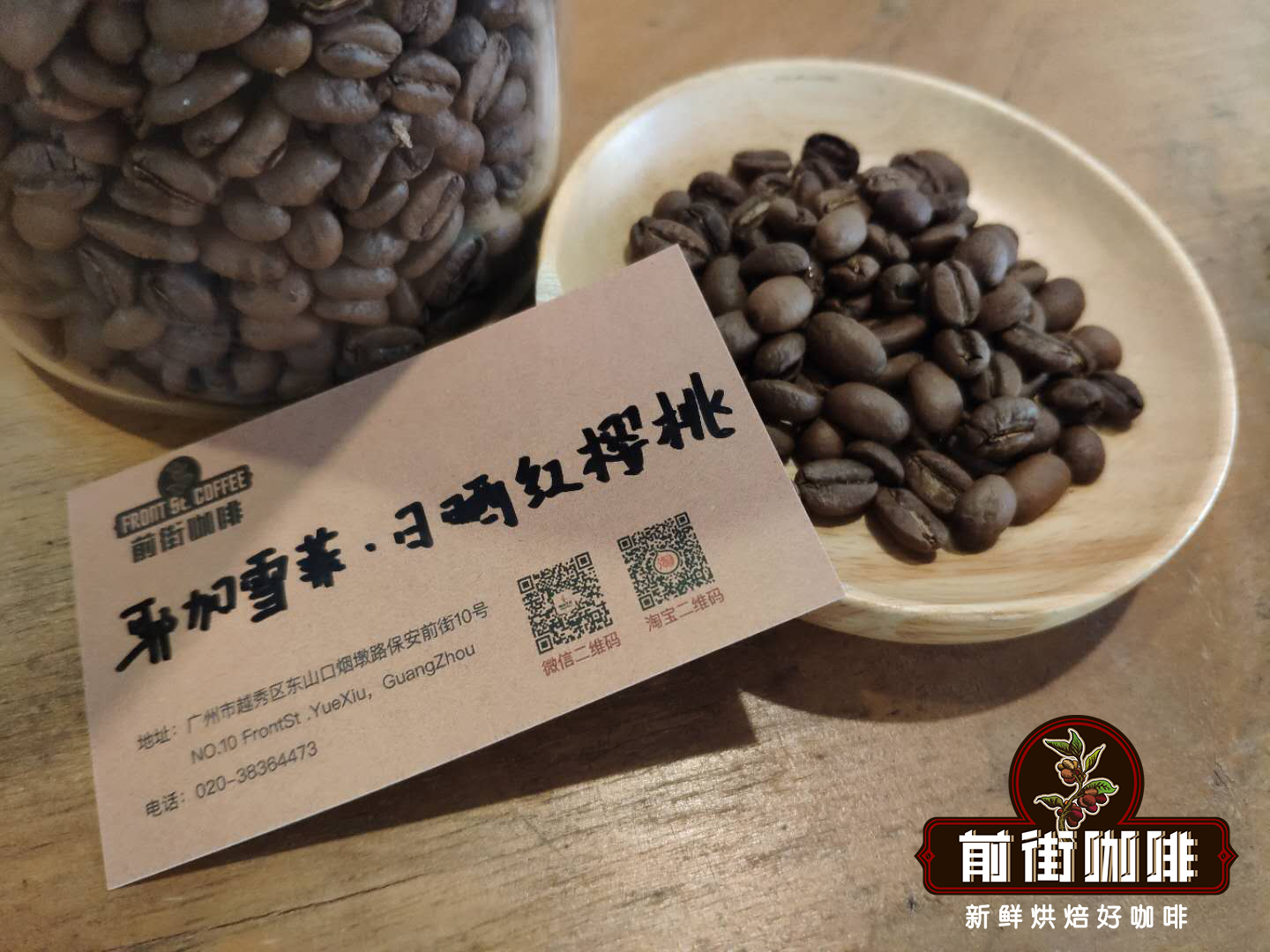
Country: Ethiopia
Region: Yirgacheffe
Altitude: 2300m
Variety: Local heirloom
Processing method: Natural processing
Flavor: Berries, lemon, strawberry, fermented wine aroma
The so-called Red Cherry coffee beans actually refer to the Red Cherry Project, jointly initiated by the Dutch trader Trabocca and local farmers, aiming to improve the quality of small-scale farms. When picking coffee cherries, not only must fully red and highly ripe cherries be picked, but they must also be harvested entirely by hand. However, this is only the most basic requirement. There are also corresponding requirements for coffee bean processing methods.
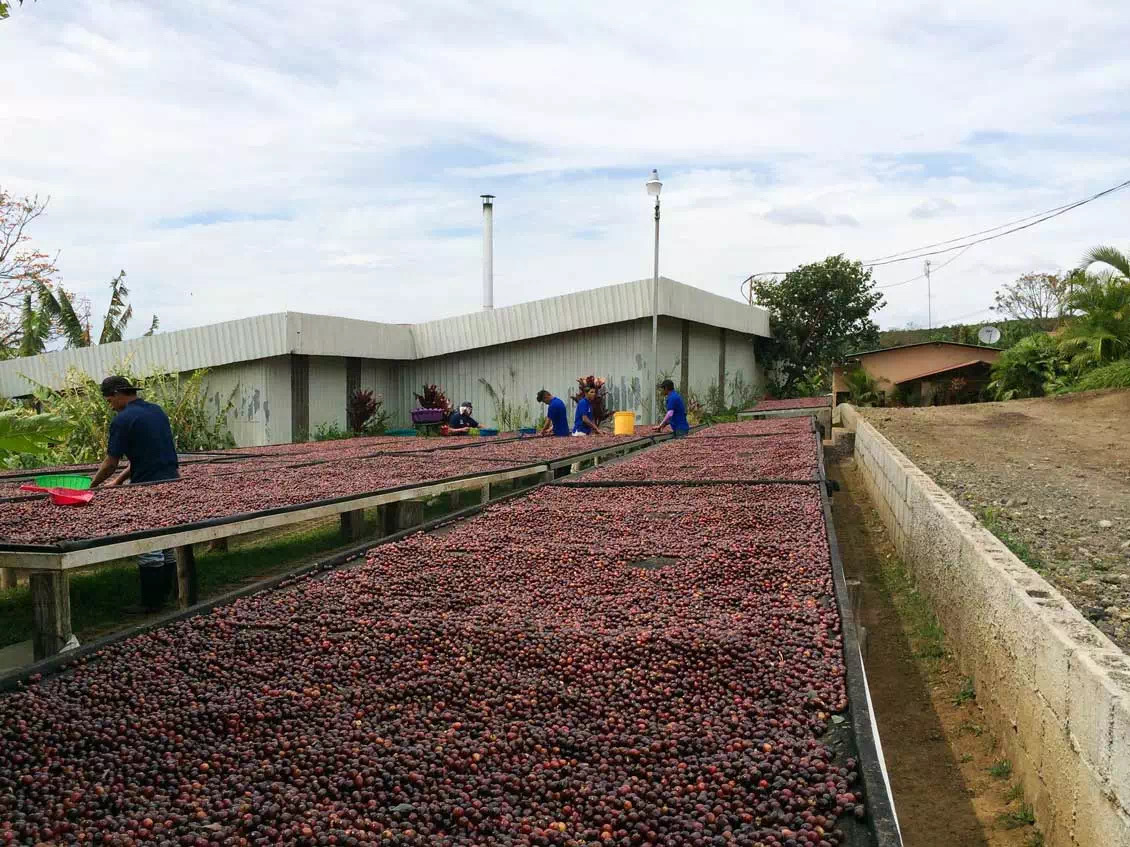
The Red Cherry Project makes coffee farmers put more effort into the process of screening and sorting beans, so the prices of these coffees are relatively higher. In addition, the term unique to Red Cherry coffee belongs to Ethiopia, except that when Red Cherry coffee is produced, the English name of the Trabocca company will be printed on the jute bag.
The above is the relevant content about Ethiopia, the most famous producing country in Africa. Next, Front Street will introduce coffee beans from the Latin American region.
Latin American Coffee Bean Regions
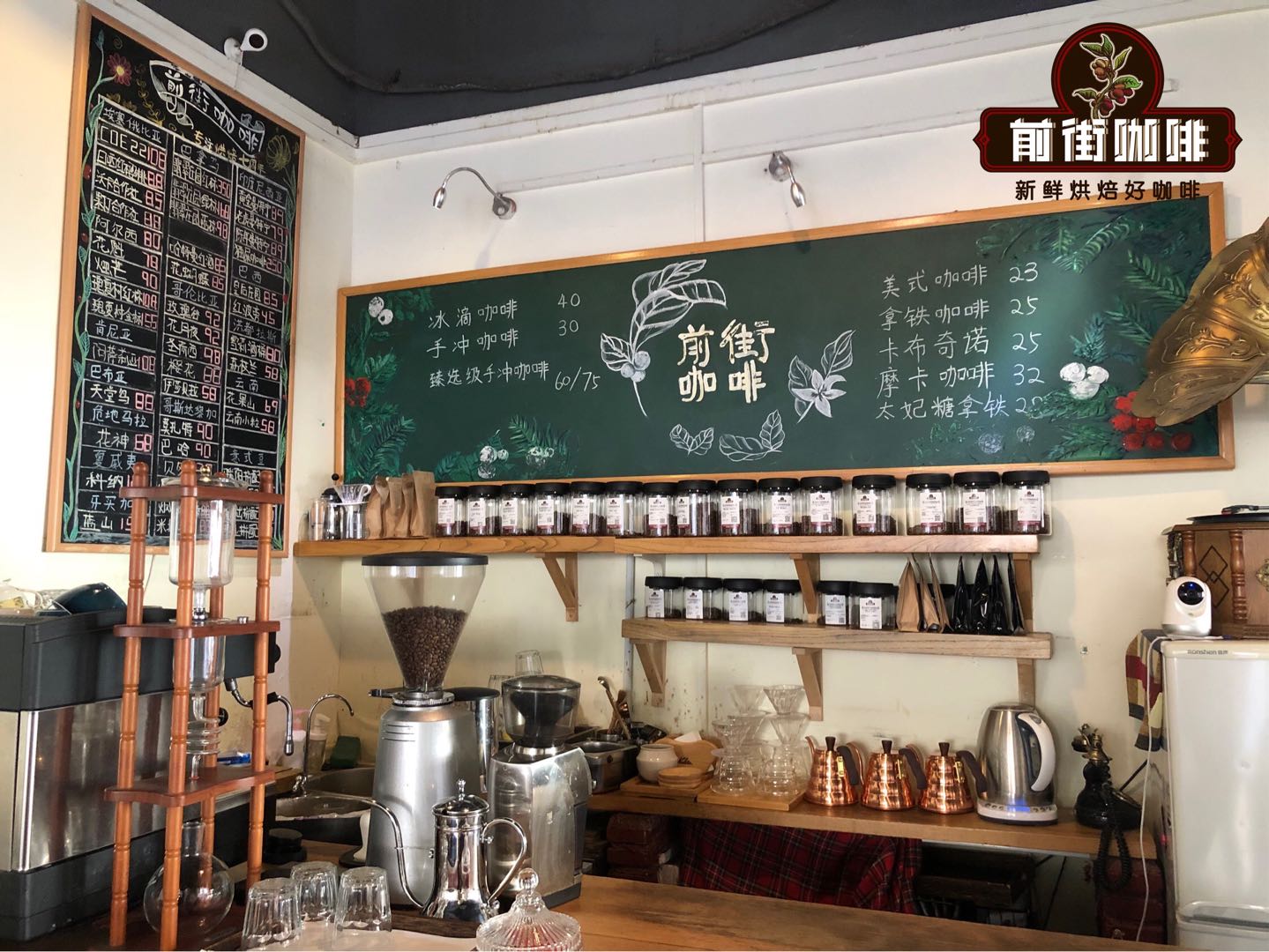
As Front Street mentioned above, the coffee flavors of Latin America are mainly nutty and cocoa flavors. This is also caused by the climate of Latin America. Latin America is the hottest and most humid continent in the world. Low-altitude areas are hot and humid, while high-altitude areas are relatively drier, so it is still very suitable for growing coffee.
The coffee history of Latin America originated in the 18th century and was deeply influenced by Spanish colonial rule at the time, so many Latin American countries still use Spanish today. However, because of the colonial and colonized relationship, even though coffee cultivation increased significantly in the colonized countries of Latin America, there were major deficiencies in quality. It was not until the later emergence of the specialty coffee concept that Latin American coffee-producing countries began to focus on refined output.
In terms of flavor, as Front Street mentioned above, the distribution of Latin American regions is very fragmented, and the coffee flavors presented by high-altitude areas and low-altitude areas are also different. Therefore, Latin American coffee flavors are often known for balance. In addition to nutty and cocoa flavors, almost all coffee flavors can be found in Latin America. And because they are American countries, good processing also makes the coffee beans of this continent more uniform in shape and lower in defect rate.
For example, the Brazilian coffee beans at FrontStreet Coffee show pure American nutty and cocoa flavors, while Costa Rican coffee shows a relatively mild and smooth expression, rich in nutty and sweet aromas. All of this is enough to prove that Latin American flavors are diverse, and by comparison the flavor characteristics are balanced. Next, Front Street will introduce these two relatively famous Latin American coffee regions.
Brazilian Coffee Bean Regions
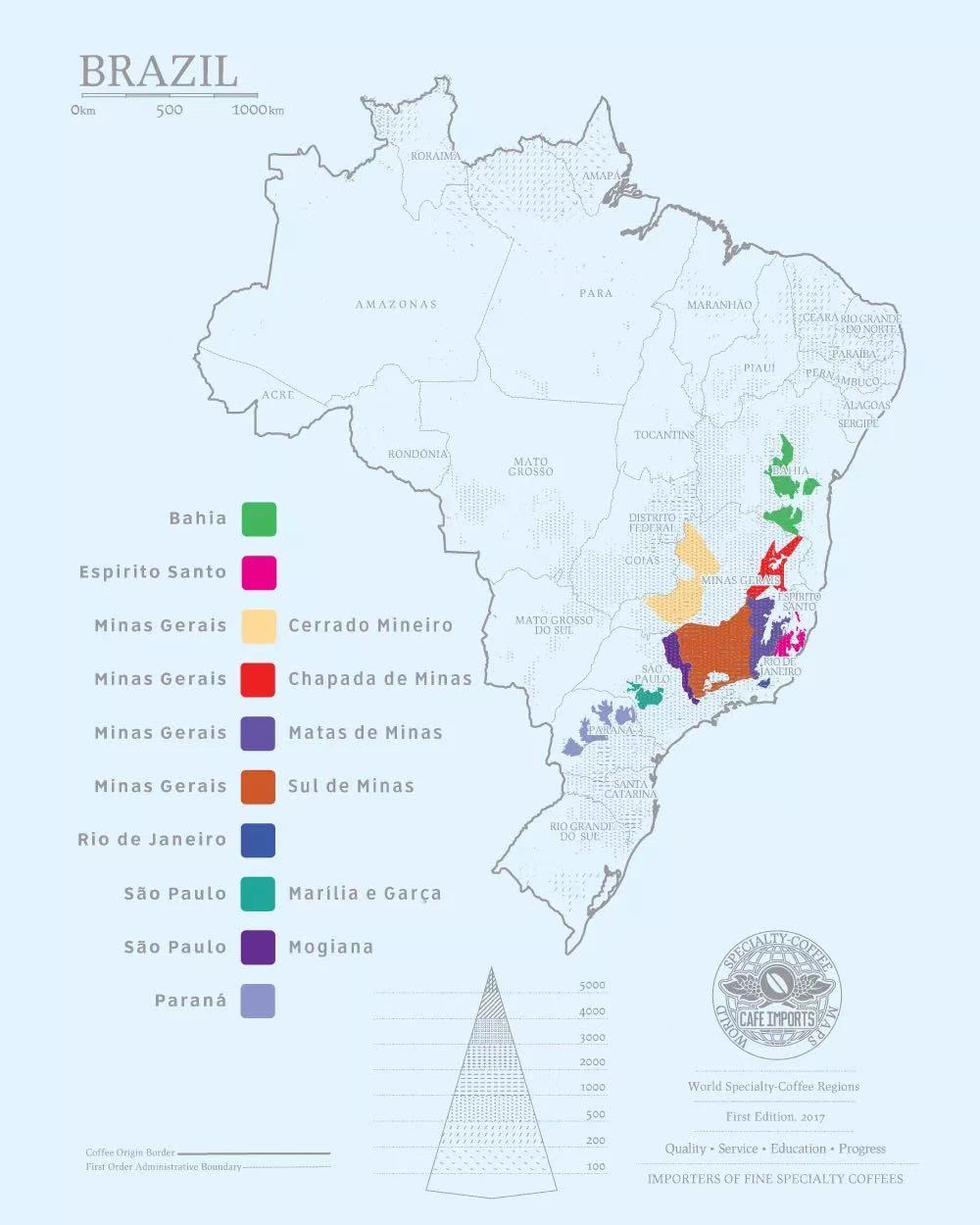
The characteristics of coffee beans from Brazil are lower acidity, strong nutty chocolate notes, and good body. Therefore, Front Street suggests that coffee enthusiasts who like full-bodied nutty and cocoa-flavored coffee may wish to choose Brazilian coffee beans; they will definitely not disappoint.
Brazil is also currently the world’s number one coffee-producing country and the world’s second-largest coffee-consuming country.
History of Brazilian Coffee Bean Cultivation
Coffee was introduced to Brazil after the 18th century. In 1727, coffee was introduced from Guyana to the port of Belem in Brazil, and from then on it settled in Brazil, mainly distributed in Brazil’s southeastern coastal areas, namely Sao Paulo, Parana, Espirito Santo, and Minas Gerais.
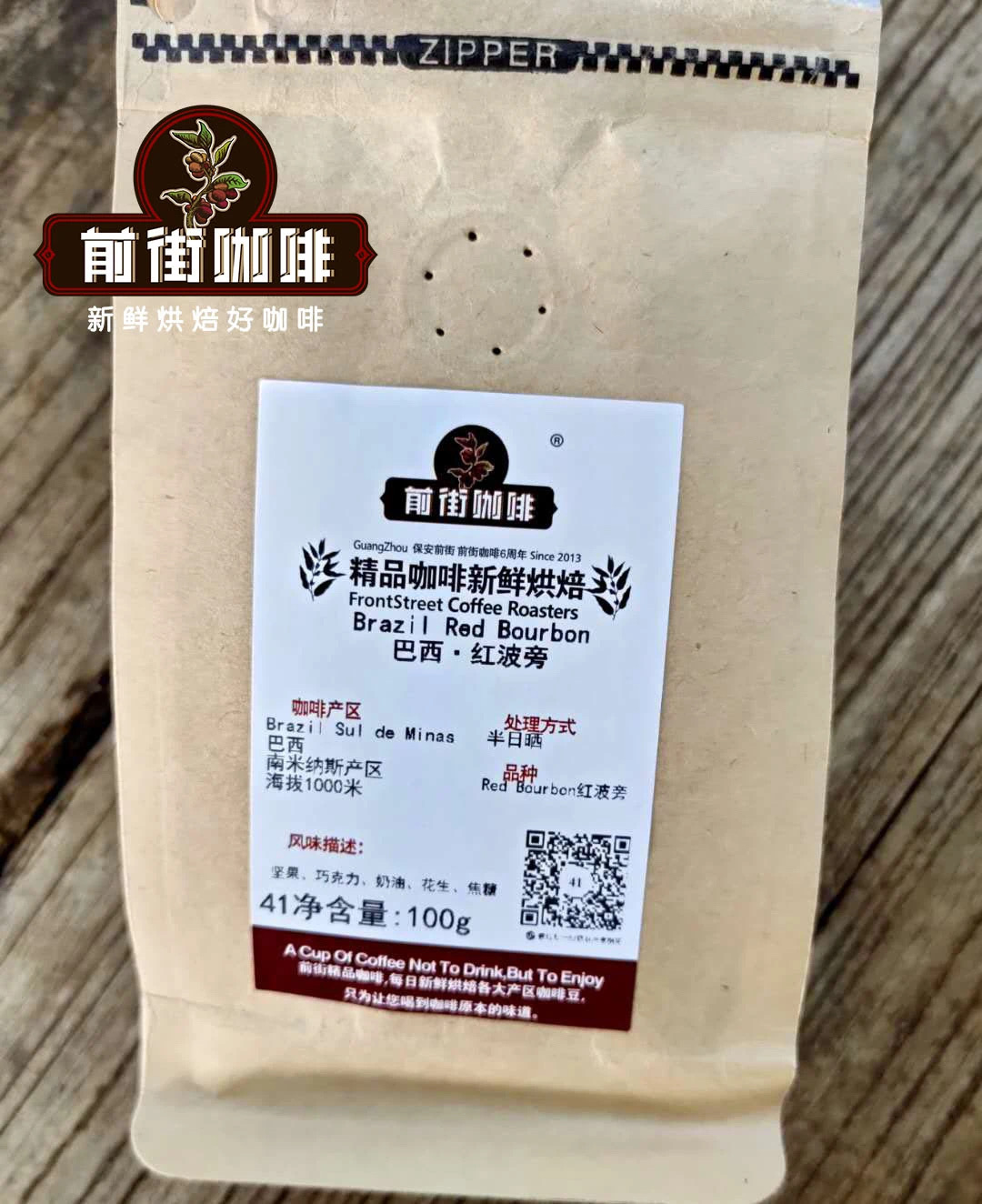
From the late 18th century to the 1920s was the peak period of Brazilian coffee production. Brazil’s coffee output once accounted for 75% of world production. Over a long period, coffee exports accounted for two-thirds of Brazil’s total export revenue, making Brazil a well-deserved "coffee kingdom." However, the economic crisis that broke out in 1929 sharply reduced world coffee consumption and dealt a heavy blow to Brazil’s coffee economy.
After that, the proportion of Brazilian coffee production in export revenue declined sharply. In the past 30 years, with the rise and development of Brazil’s modern industry, especially steel, shipbuilding, automobiles, and aircraft manufacturing, the status of coffee in the national economy has declined year by year, but it is still one of Brazil’s economic pillars, and Brazil remains the world’s largest coffee producer and exporter.
Growing Conditions for Brazilian Coffee Beans
Compared with other Latin American countries, Brazil has lower altitudes, lacks microclimates, and is accustomed to planting coffee trees without shade trees. This has led to Brazilian coffee being somewhat flat in flavor with nothing stunning. For this reason, Brazil is very focused on improving coffee bean quality, continuously improving Arabica coffee varieties, and has also put great effort into research on processing methods.
Brazilian Coffee Bean Processing Methods
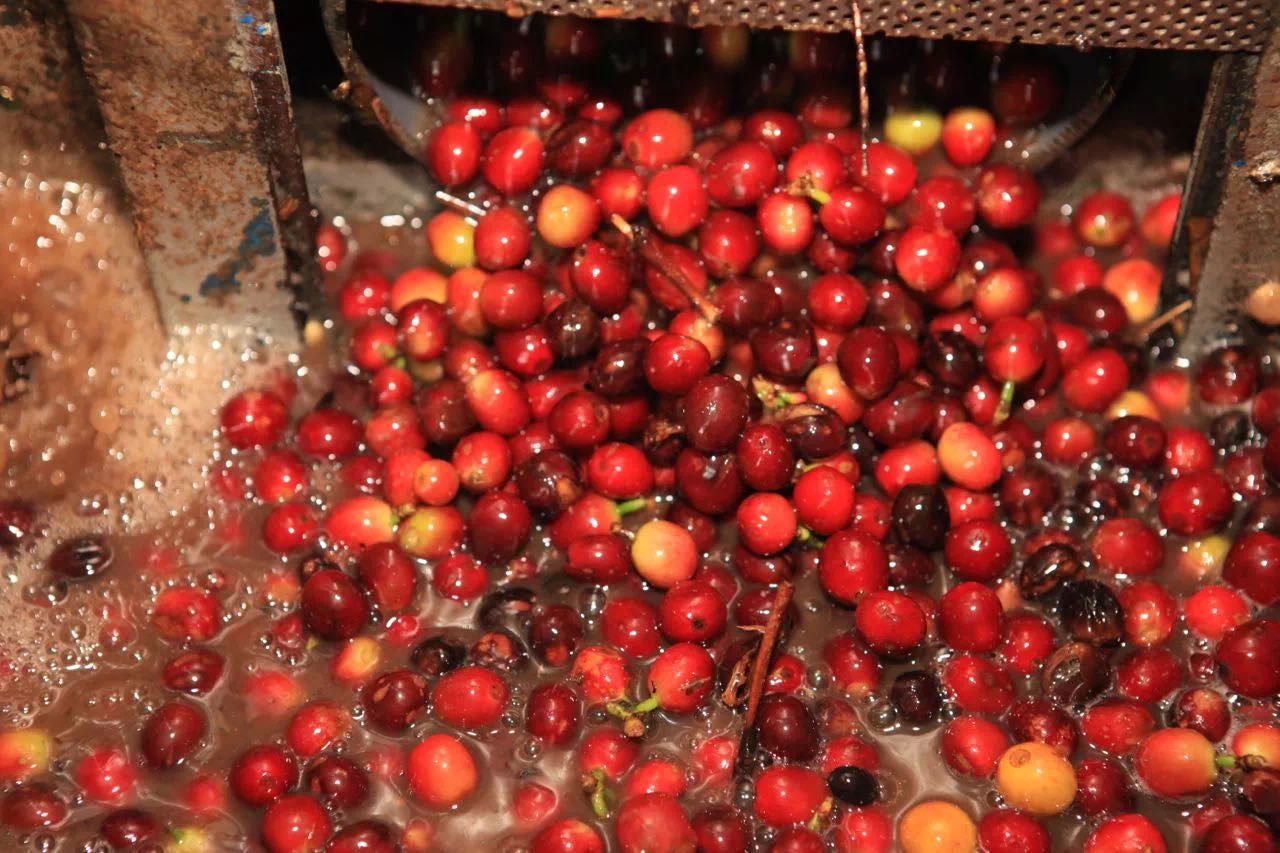
According to Front Street’s understanding, the most commonly used processing methods in Brazil at present include natural processing, semi-natural processing, semi-washed processing, and washed processing. Among them, washed processing started relatively late in Brazil and is not yet highly recognized by the market.
Natural processing method process: Screen highly ripe coffee cherries, place them directly under the sun to dry, and turn the coffee cherries from time to time so they are evenly heated and dried until the moisture content reaches 12%, then remove the skin and pulp.
Semi-natural processing method process: After screening suitable coffee cherries, remove the skin, pulp, and part of the mucilage, then dry them with a small amount of mucilage remaining until the moisture content reaches 12%.
Semi-washed processing method process: Unlike semi-natural processing, the mucilage is completely removed before drying until the moisture content reaches 12%.
Washed processing method process: Likewise, suitable coffee cherries are screened, the skin and pulp are removed, and the mucilage is removed by soaking and fermentation in water. This process can cause the coffee beans to develop acidity, after which they are dried until the moisture content reaches 12%. Semi-natural processing and semi-washed processing directly remove mucilage mechanically, which is different from washed processing.
Among them, Front Street believes that the coffee bean that best represents the flavor characteristics of the Brazilian coffee region is none other than this Front Street Brazil Queen Farm coffee bean.
FrontStreet Coffee Brazil Queen Farm Coffee Beans
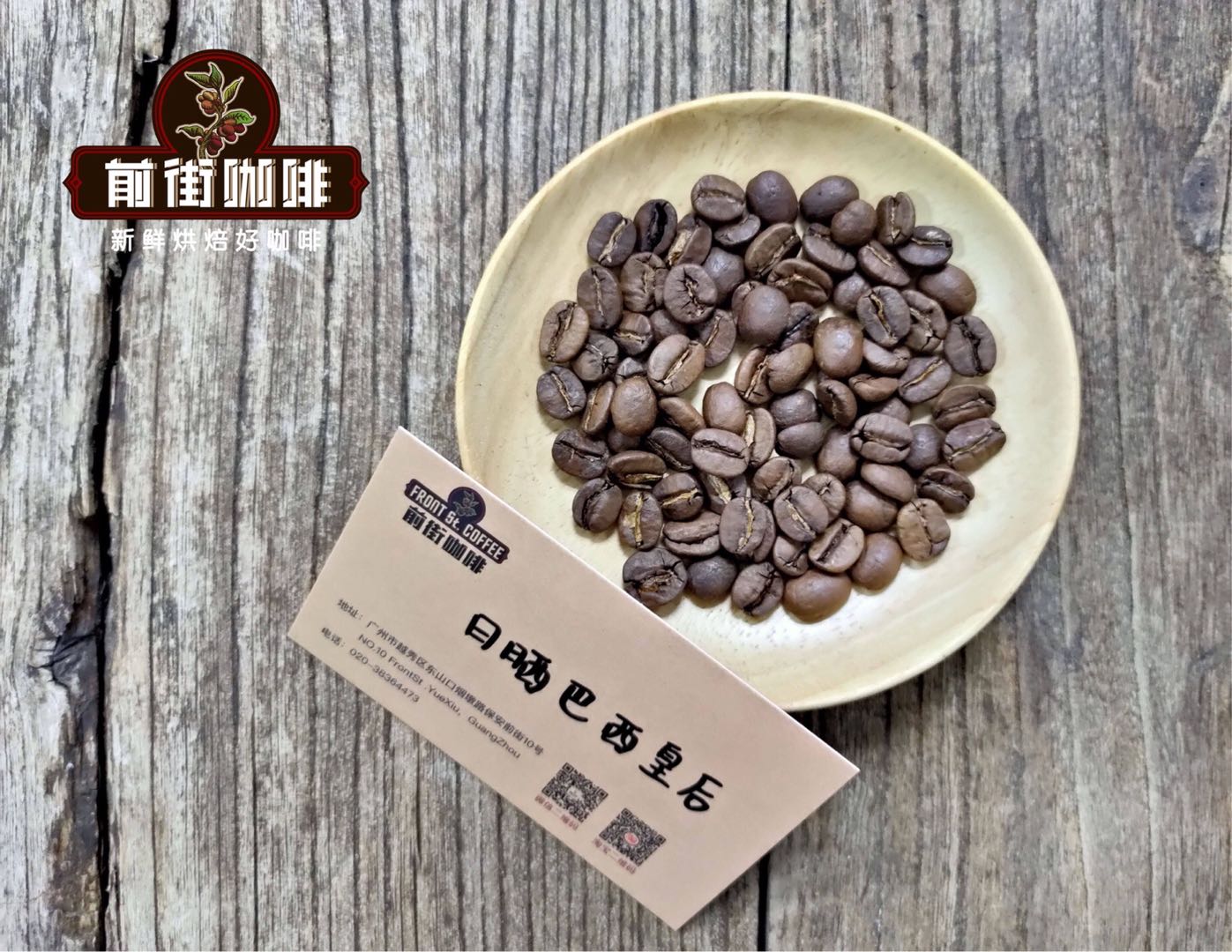
Country: Brazil
Region: Mogiana
Altitude: 1400-1950
Variety: Yellow Bourbon
Processing method: Semi-natural
Flavor: Nuts, creamy peanut, fermented fruit, cane sugar
This coffee from Front Street comes from Queen Farm in the Mogiana region of Brazil. The farm covers 280 mu and is located in Vale da Grama, an ancient volcanic valley in Brazil.
In 2011, the farm won the championship in Brazil’s COE competition. Queen Farm is owned by the renowned and respected coffee family Carvalho Dias. The four major farms under Carvalho Dias have won awards every year since the first Brazil COE competition in 1999, winning more than 12 times in 7 years. In 2004, they even swept the championship, 9th place, 11th place, and so on. This is enough to prove the farm’s strong capability and also helped justify Brazilian coffee.
The farm is a member of a medium-scale farm organization in the local Grama Valley and mainly exports specialty coffee of the Bourbon variety. Environmental protection is quite thorough. Because the terrain is higher and not flat, machines cannot be used for harvesting, so the cherries are completely hand-picked. They also plant low-yield, high-quality Bourbon varieties as the essence of Brazil’s high-quality coffee. Therefore, Front Street believes that the coffee from this farm best reflects Brazil’s high-quality coffee.
Costa Rican Coffee Regions
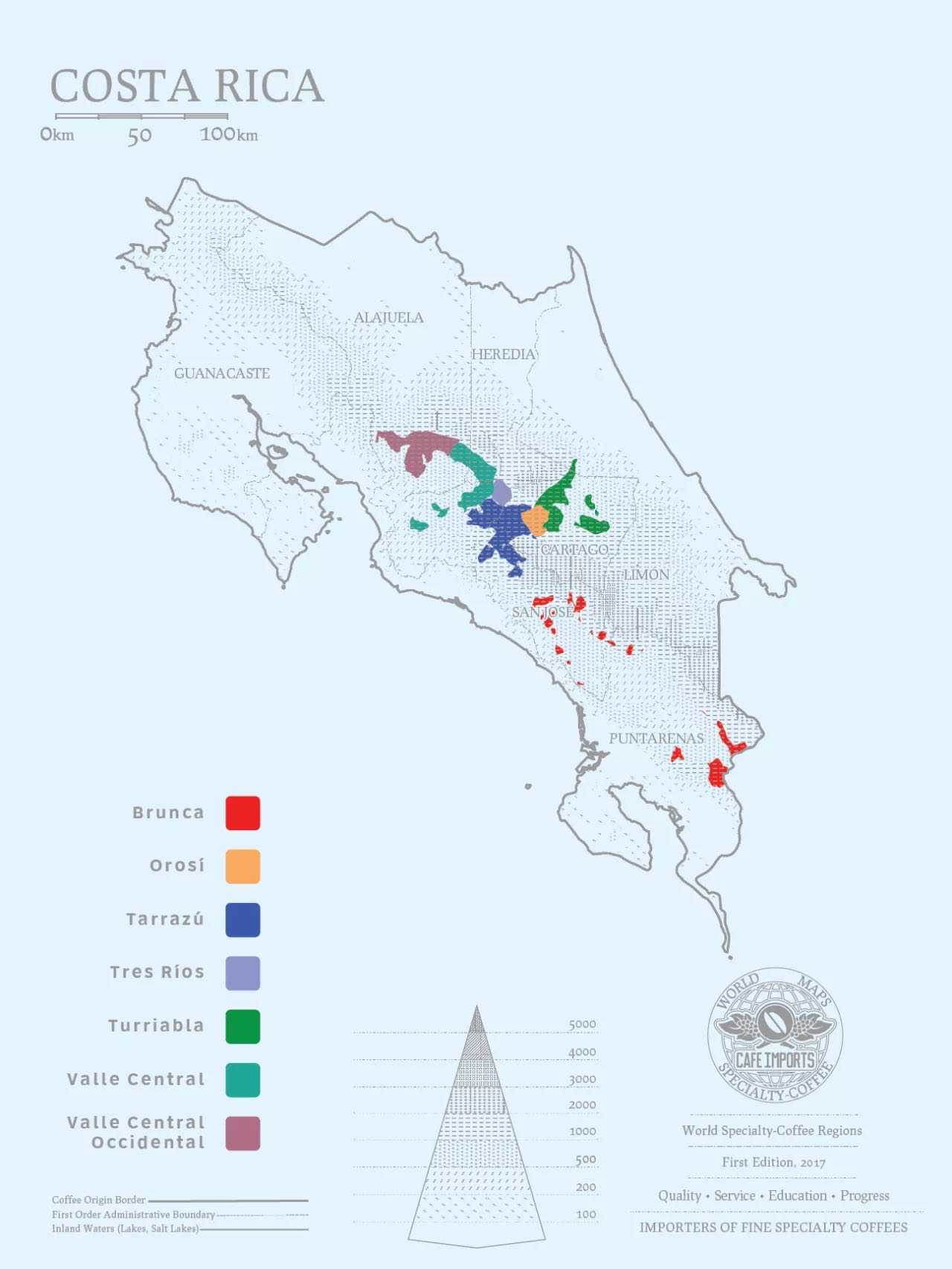
Costa Rica was the first country in Latin America to introduce coffee cultivation, so its coffee organizations and sales systems are very complete. In addition, because Costa Rica is located in the Central American isthmus, it has good drainage, rich volcanic soil, a mild and suitable climate, and stable rainfall. Therefore, coffee produced in Costa Rica has a very pure flavor and pleasant aroma, with a good balance in both acidity and mouthfeel. Coffee enthusiasts who come to Front Street to taste Costa Rican coffee also express their liking for it.
Costa Rican Coffee Bean Varieties
As Front Street mentioned above, Costa Rica is very suitable for growing Arabica coffee, so Costa Rica grows quite a few coffee varieties, including Bourbon, Caturra, Catuai, Villa Sarchi, Villalobos, and others.
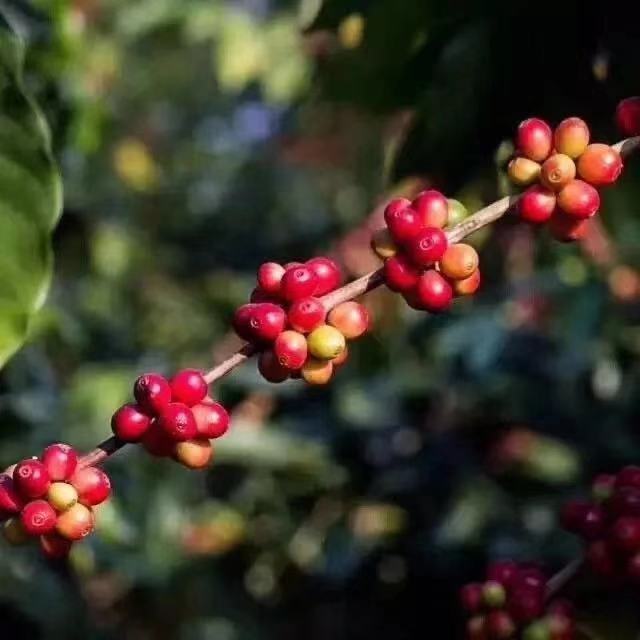
But the more common one is still Caturra variety coffee beans. For example, the Musician Series coffee beans from Front Street Costa Rica Canet Farm are almost all produced using Caturra variety coffee beans.
Caturra is a single-gene mutation of Bourbon, discovered in Brazil in 1937. Its productivity and disease resistance are both better than Bourbon, and the tree is shorter, making harvesting easier. Unfortunately, like Bourbon, it has a biennial fluctuation cycle in productivity.
Caturra’s flavor is comparable to or slightly inferior to Bourbon, but more importantly, it is highly adaptable. It does not need shade trees and can thrive directly under the sun, commonly known as sun-grown coffee. It can adapt to high-density planting, but requires more fertilizer, increasing costs, so initial acceptance among coffee farmers was not high. It is suitable for planting from low altitudes of 700 meters to high altitudes of 1700 meters, with strong altitude adaptability, but the higher the altitude, the better the flavor and the lower the productivity.
Costa Rican Coffee Bean Processing Methods
Coffee enthusiasts who often visit Front Street know that Costa Rican coffee beans are mostly honey processed. According to Front Street’s understanding, this is because most Costa Rican coffee is grown in mountainous areas, where harvest vehicles have difficulty driving up. If coffee is not harvested for a long time, it will also cause waste, and bean buyers cannot pay farmers what they deserve. Therefore, local coffee farmers developed honey processing to solve this problem.
The flavor of honey processing is also as sweet as its name suggests. The difference from washed processing is that it retains the sugary mucilage layer on the coffee beans, so honey-processed coffee beans are sweeter in flavor than washed coffee beans.
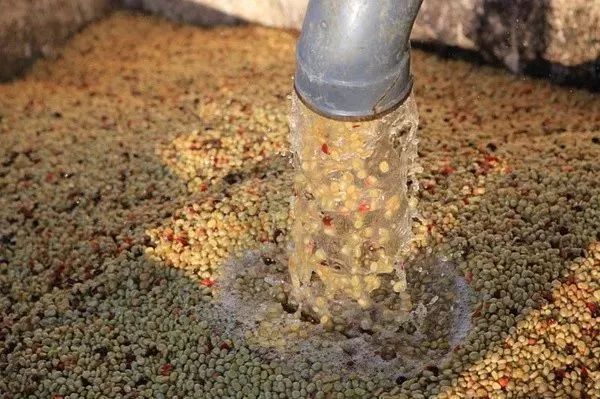
Honey processing method process: This processing method removes the skin and pulp of the coffee cherry, retains the mucilage outside the coffee bean, and then places the mucilage-covered coffee beans outdoors for sun drying. Because the mucilage is relatively sticky and slippery and has a high sugar content, during processing the mucilage wraps the green coffee beans like honey. Because the pulp liquid contains fairly high sweetness and unique enzymes, the parchment beans processed in this way contain richer flavors and very complex positive flavors, with higher sweetness. Therefore, people vividly call this layer of coffee mucilage “honey” and the entire process “honey processing.”
Tarrazu Coffee Region
Next, Front Street must mention Costa Rica’s most famous region, Tarrazu. For example, Front Street Costa Rica Tarrazu everyday coffee beans and Front Street Costa Rica Canet Farm Musician Series coffee beans both come from here.
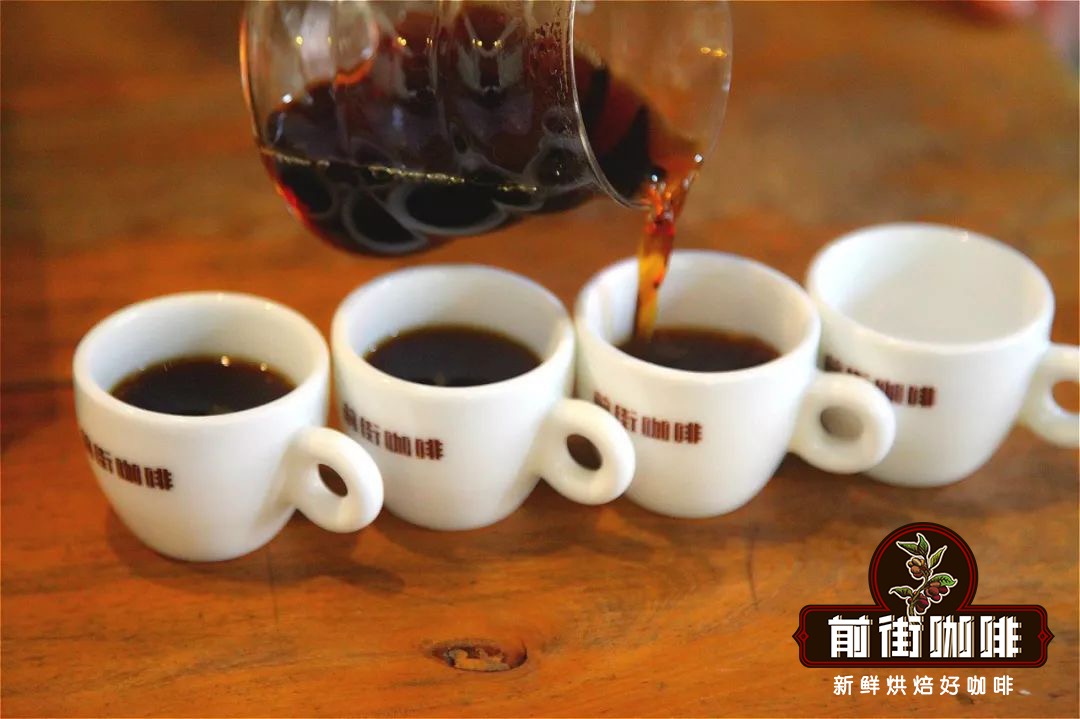
Tarrazu is located south of the capital San Jose, at an altitude of 1200-1700 meters, with fertile soil and good drainage. The coffee season is from December to March of the following year. The main feature of its coffee beans is the incomparably complete mouthfeel created by the high-altitude producing region, with a smooth texture, hard and plump beans, and rich aroma.
FrontStreet Coffee Costa Rica Tarrazu Coffee Beans
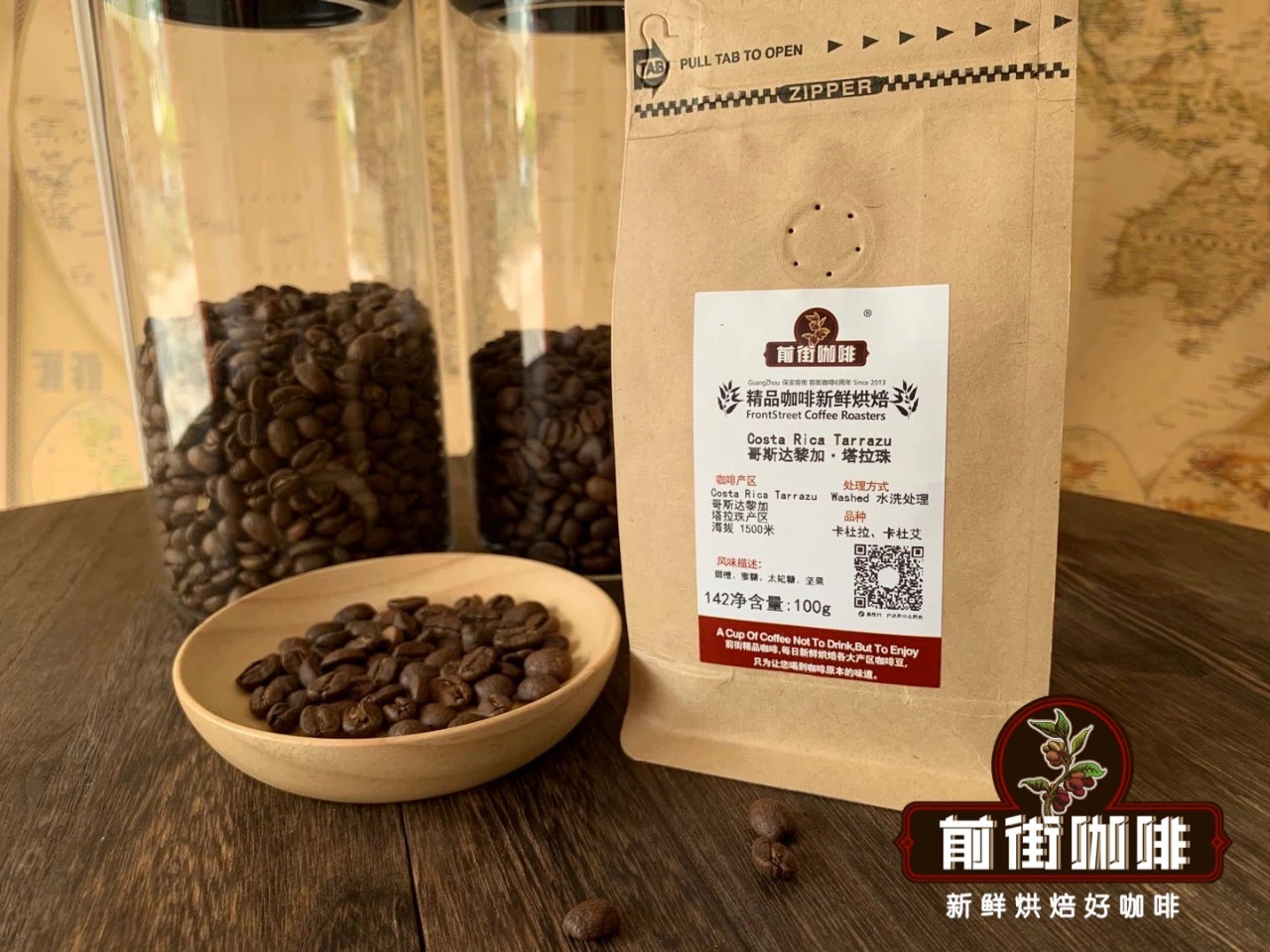
Country: Costa Rica
Region: Tarrazu
Altitude: 1950m
Variety: Caturra
Processing method: Washed
Flavor: Sweet orange, nuts, honey
FrontStreet Coffee Costa Rica Beethoven Coffee Beans
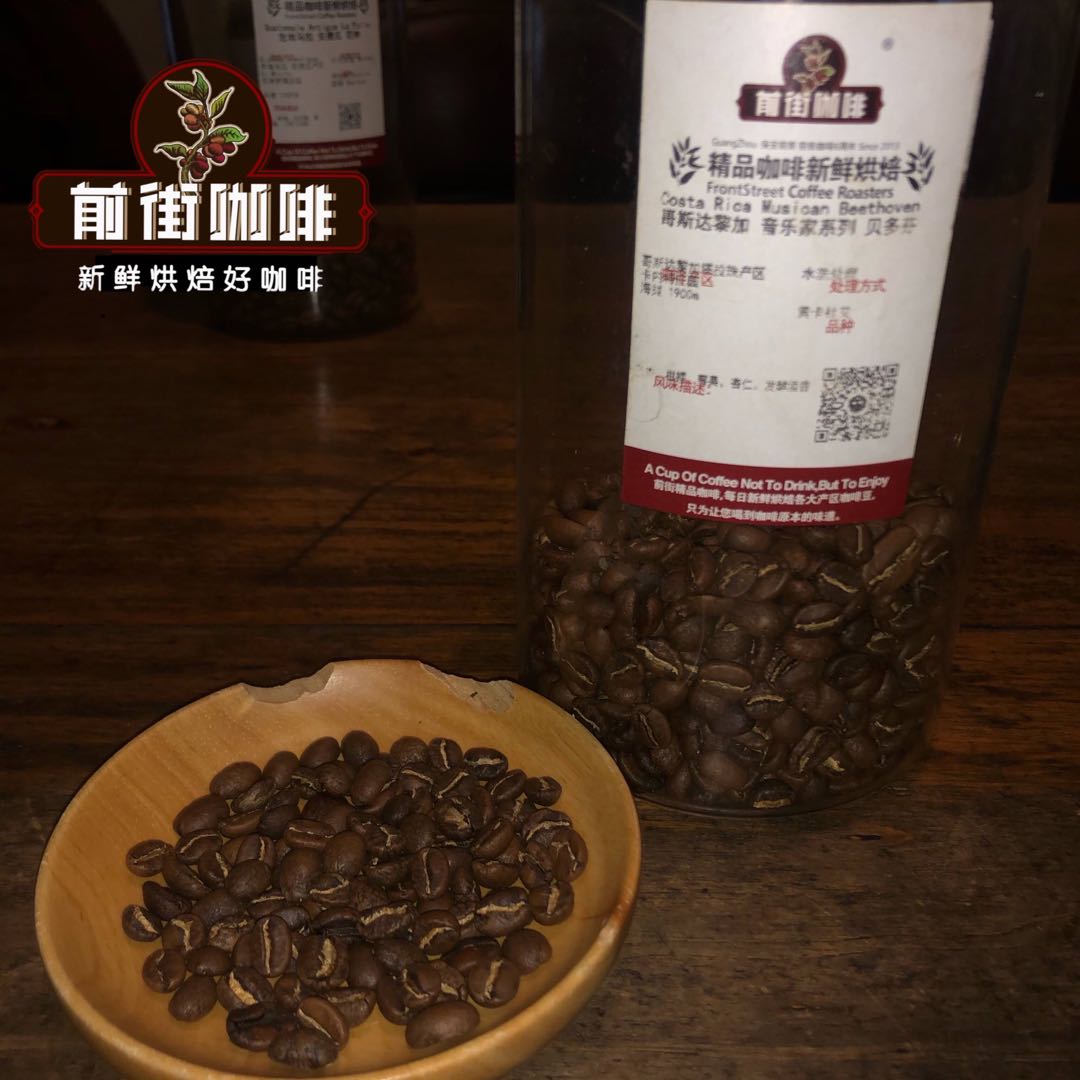
Country: Costa Rica
Region: Tarrazu
Altitude: 1800-1950 m
Variety: Caturra, Catuai
Processing method: Washed processing
Flavor: Citrus berries floral light fermented wine aroma
Moreover, according to Front Street’s understanding, Tarrazu is highly renowned in the specialty coffee world and is one of the world’s major coffee producing regions. In the 2014 COE competition, among the 23 winning beans, 17 came from the Tarrazu region. Tarrazu is located in the fertile volcanic region of Central America, with a humid climate and fertile volcanic rock soil, abundant annual rainfall, high altitude, and dense forest natural shade, providing a uniquely favorable growing environment for coffee. No pesticides or artificial fertilizers are used during cultivation. Nearly 95% of the coffee beans produced in high-altitude Tarrazu are strictly hard beans (SHB), generally grown above 1500 meters.
Asian Coffee Regions
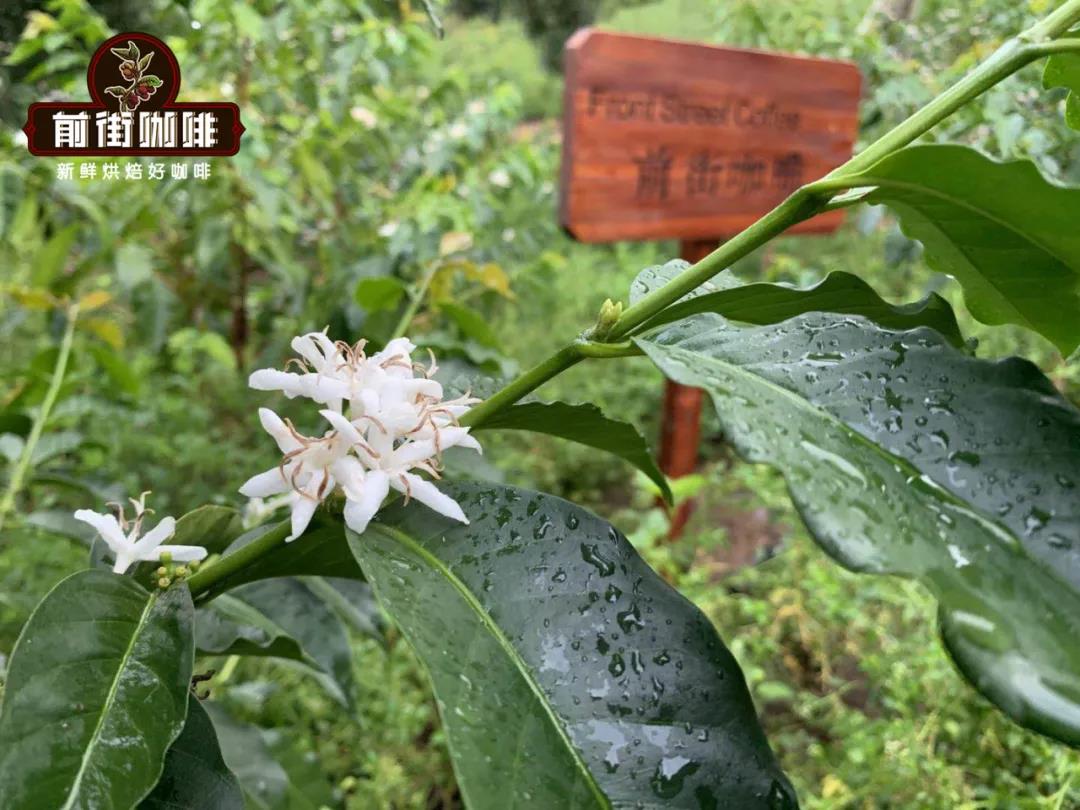
The flavor characteristics of Asian coffee are full-bodied with herbal and spicy flavors, so it is also particularly suitable as a base for espresso. Among the more famous Asian coffee regions, Indonesia is one of them. Coffee enthusiasts at Front Street should be familiar with Indonesian Mandheling. Next, Front Street will talk about Indonesian coffee regions.
Indonesian Coffee Bean Regions
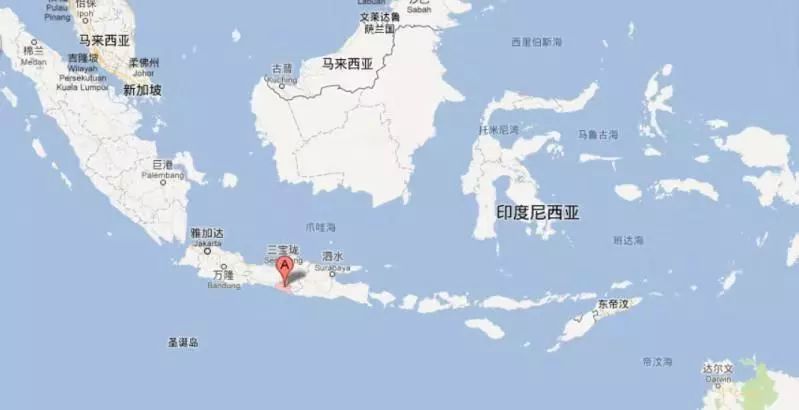
Indonesia is located in Southeast Asia and has a typical tropical rainforest climate, with an average annual temperature of 25-27°C, no distinct four seasons, and annual rainfall of 1600-2200mm. Indonesia is located in a volcanic belt, with fertile soil rich in minerals, which is conducive to coffee bean cultivation and growth. Indonesia’s altitude ranges from 900 to 2100 meters, and the main coffee bean growing areas are concentrated around 1200 meters. Therefore, it is also a very suitable region for coffee cultivation.
Indonesian Coffee Bean Varieties
There are mainly three categories: Arabica coffee beans, Robusta coffee beans, and Liberica coffee beans. Among them, there are more than 20 main subdivided varieties, commonly including Caturra, Catimor, Timor, Typica, S288, S795, Sidikalang, and others.
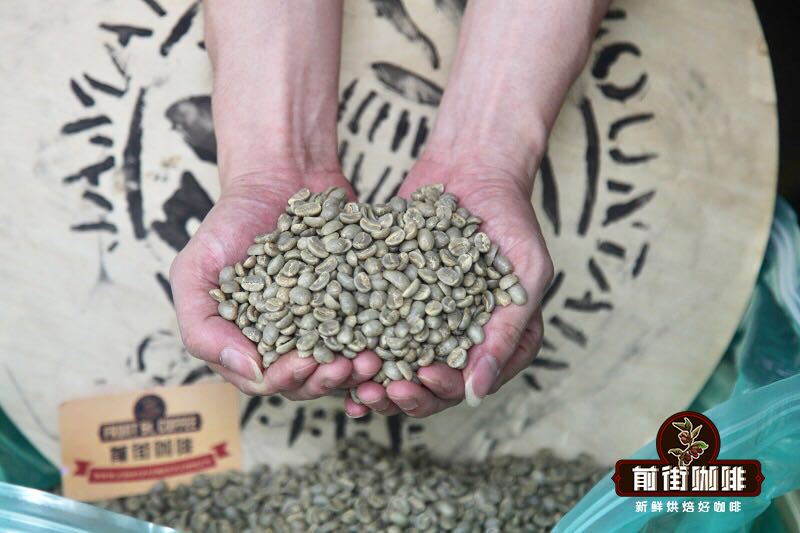
But according to Front Street’s understanding, Indonesia’s total Arabica production accounts for only about 10%. This is because in 1877, leaf rust spread to almost all coffee trees in Indonesia. Arabica coffee beans were almost completely wiped out, causing heavy losses. Later, Indonesia introduced Robusta coffee beans from Africa. Robusta coffee beans have strong disease resistance, making up for the economic losses caused by Arabica coffee beans’ weak disease resistance.
Now Indonesia is the world’s main producer of Robusta coffee beans. Robusta coffee beans are concentrated in southern Sumatra, Indonesia, while Arabica coffee beans are in northern Sumatra, Indonesia. Although Arabica coffee beans account for only about 10% of Indonesia’s total coffee beans, they are enough to attract worldwide attention and affection, including the Mandheling coffee familiar to coffee enthusiasts.
Indonesian Coffee Bean Processing Methods
As Front Street mentioned above, Indonesian Mandheling coffee flavors mostly present herbal and spicy notes. This actually comes down to Indonesia’s local wet-hulling processing method. The reason this processing method appeared is that Indonesia’s climate is very humid, so natural sun-drying is difficult to carry out there. At the same time, Indonesia’s water resources are also very limited, so wet-hulling was developed. This processing method also gives Indonesian Mandheling coffee a unique flavor that is deeply loved by coffee enthusiasts. Next, Front Street will explain how wet-hulling is operated.
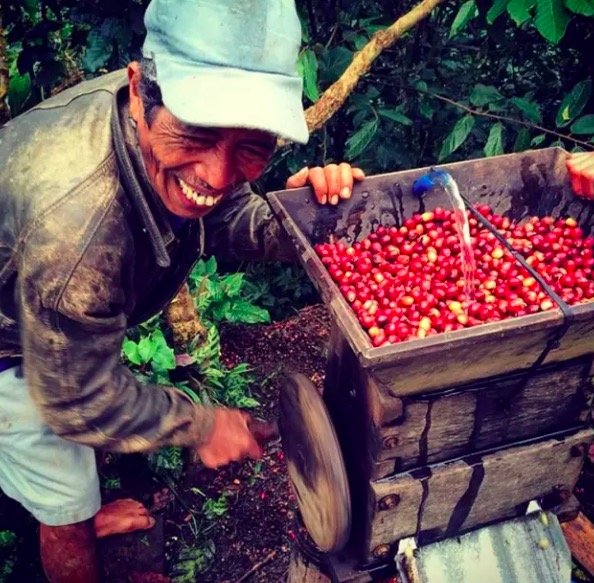
The specific steps of wet-hulling can be divided into the following two stages:
In the first stage, use a wooden depulper to remove the skin and pulp. After 3 hours of fermentation, dry it until the moisture content drops to 30-50%, half dry and half wet.
In the second stage, remove the mucilage and parchment layer, continue the later drying stage, and the drying process takes 2-4 days, with the moisture content reduced to 12-13%.
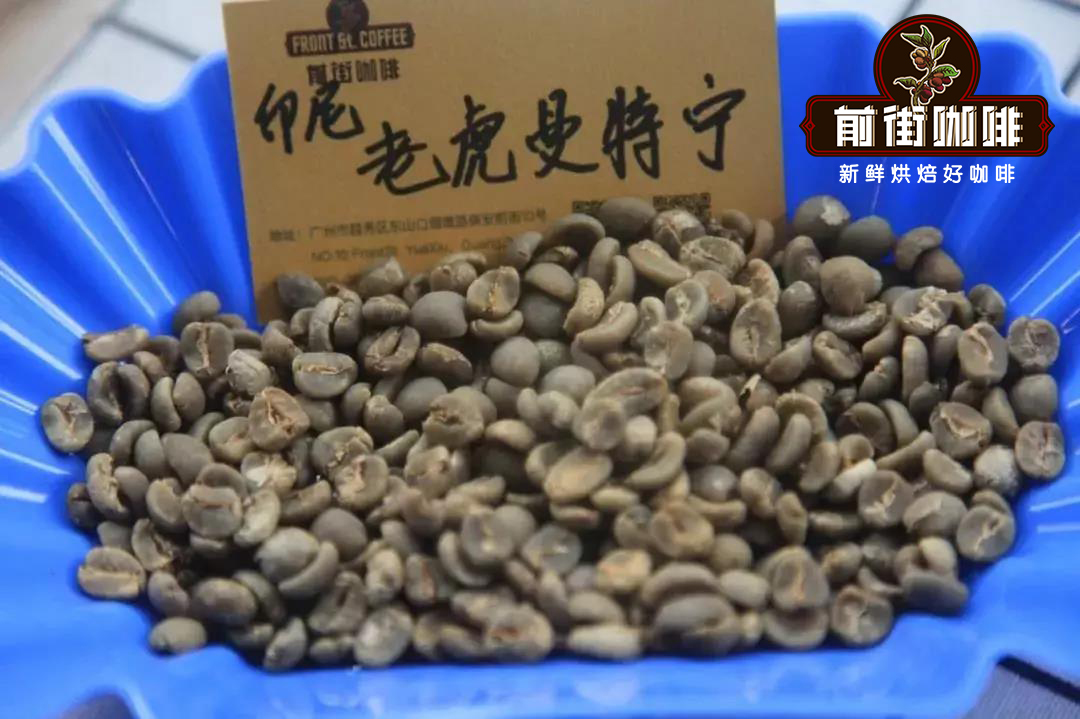
In addition to conventional wet-hulling, there is also aged wet-hulling. Coffee beans are first processed by ordinary wet-hulling and then sealed and stored in a warehouse for 2~3 years. The warehouse environment must be cool and ventilated, and the beans must be turned regularly to prevent mold and spoilage. During this period, the acidity of the coffee beans slowly weakens and turns into sugar, and the color also becomes deeper, mostly yellowish brown or dark brown. The Mandheling coffee beans using this processing method on the FrontStreet Coffee menu are called Front Street Aged Mandheling Coffee Beans.
Main Producing Regions of Indonesian Coffee Beans
According to Front Street’s understanding, Indonesia’s main coffee producing areas include Sumatra, Java, and Sulawesi. Among them, “Mandheling” produced in Sumatra is the most famous. Mandheling is also called “Sumatra coffee.” Most of what is produced in North Sumatra is Gayo, mainly the ateng (Catimor) variety. Lake Tawar at the northern end can be called Aceh coffee or Lake Tawar coffee. The Lintong and Lake Toba areas of South Sumatra can be called Mandheling. The Lintong area is the Mandheling producing region. Mandheling is produced in the mountainous areas around Lake Toba. This lake is located north of Medan, the capital of Sumatra Province, and is a high-altitude freshwater lake. Its average height is about 900 meters above sea level.
FrontStreet Coffee Aged Mandheling Coffee Beans
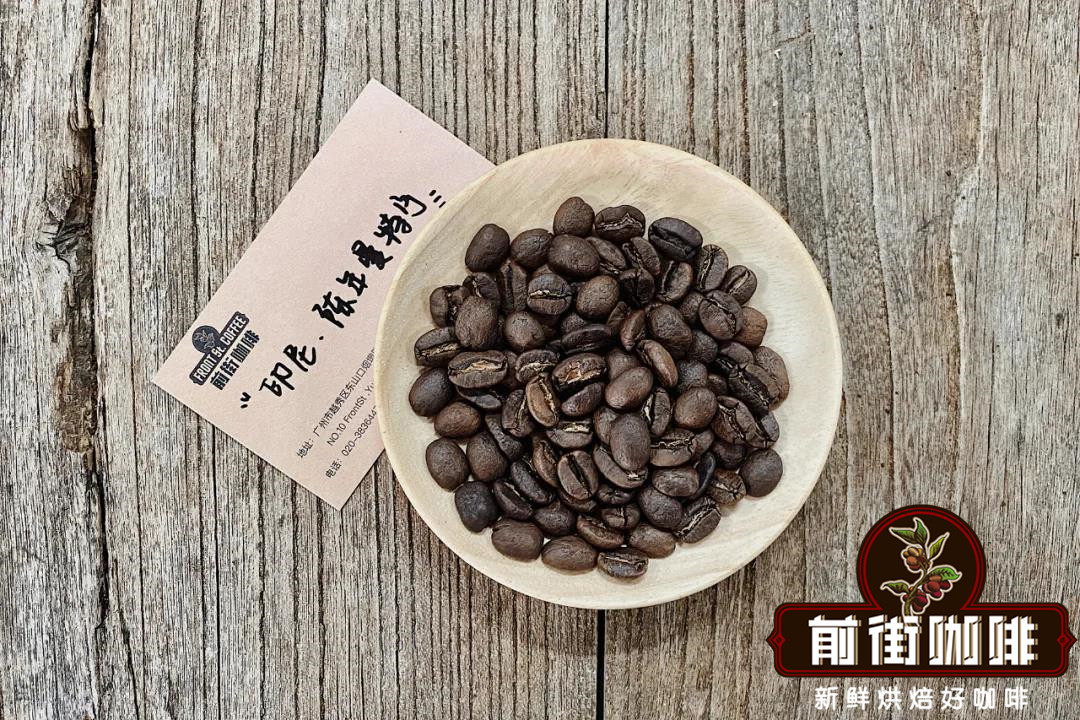
Country: Indonesia
Region: Sumatra
Altitude: 1500m
Variety: Caturra, Catuai
Processing method: Wet-hulled
Flavor: Ripe Pu-erh, caramel, herbs, chocolate, lower acidity.
FrontStreet Coffee Lintong Mandheling Coffee Beans
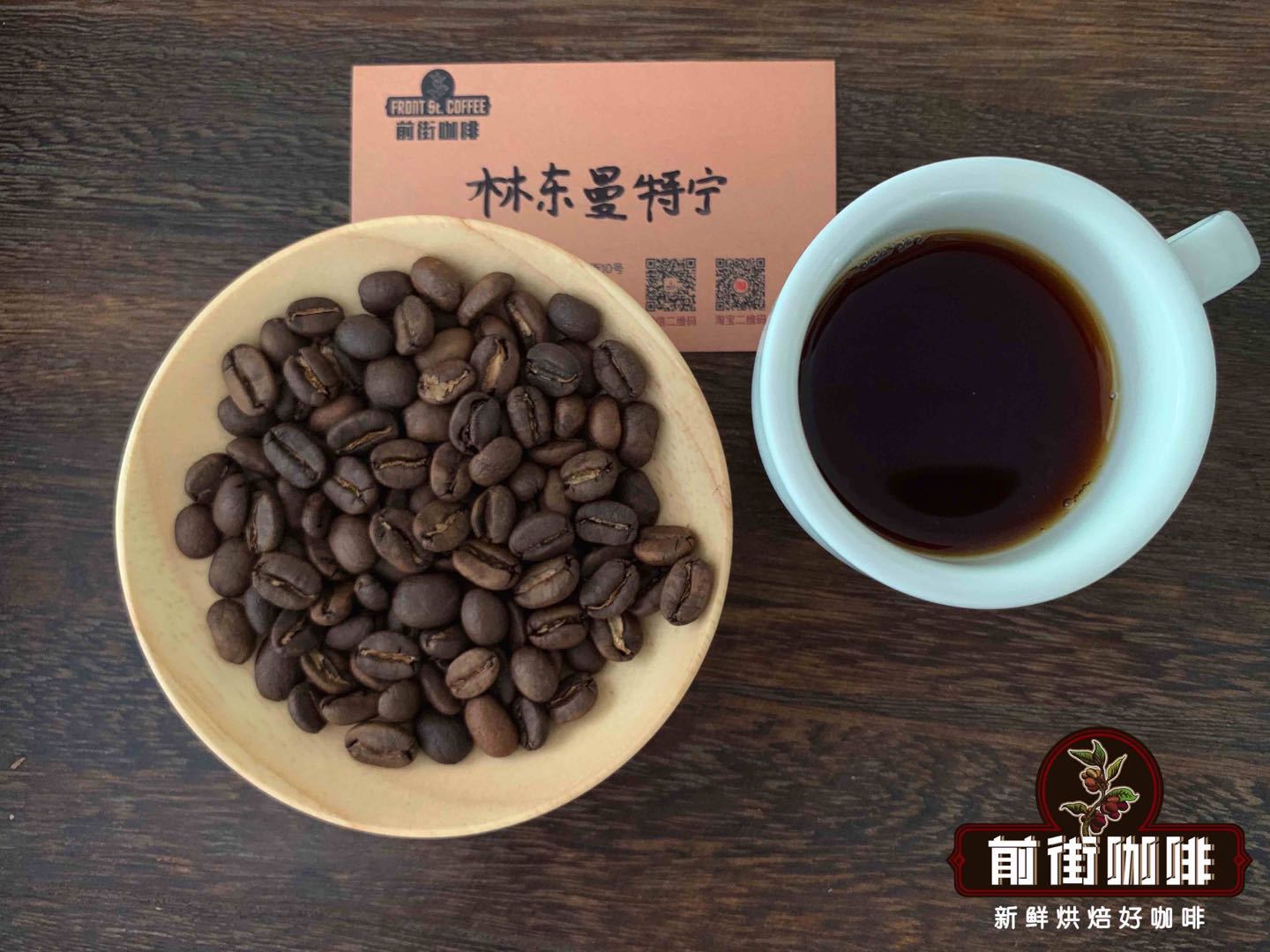
Country: Indonesia
Region: Sumatra (Lintong)
Altitude: 1100-1600m
Variety: Typica, Caturra
Processing method: Wet-hulled
Flavor: Toasted bread, nuts, caramel, pine, herbs
The above is Front Street’s compilation of relevant content on the flavor characteristics of coffee beans from the world’s three major coffee regions. We hope it can help coffee enthusiasts better understand coffee-related knowledge so they can choose coffee beans that suit their own taste.
For more specialty coffee beans, please add the private WeChat of Front Street Coffee (FrontStreet Coffee), WeChat ID: kaixinguoguo0925

Light Roast Pour-Over Floral Coffee Beans Recommendation: Qianjie Yirgacheffe Gedeo Dingding, Qianjie Panama Hacienda La Esmeralda Green Label Geisha Coffee Beans, QianjiePanama Butterfly Coffee Beans
Daily medium-light roast Yirgacheffe pour-over floral coffee bean recommendation, Qianjie Yirgacheffe Guddina, light roast brings the signature white floral notesAromatic, with lemon-citrus fruit notes and a refreshing floral tea note; bright and crisp on the palate. Great value and an ideal entry-level pour-over coffee with floral and fruity notesAn unrivalled choice.
Moka pot, home espresso, and espresso-based milk drinks like latte — recommended beans: Qianjie Classic Espresso Blend, using BrazilianWest, with Mandheling Arabica and a small amount of Vietnamese Robusta fully blended, delivering a rich and outstanding espressocrema; overall style is rich and memorable. Qianjie Brazil Queen's Estate coffee beans and Qianjie Classic Espresso Blend coffee beans are both mochaA highly recommended option for pot-style espresso machines.
Fruity-floral signature espresso latte bean recommendation: Qianjie Strawberry Candy espresso blend, featuring strawberry gummy and rose aromas,Full-bodied sweetness with a grape and almond finish; especially stunning as an iced latte. Made from Costa Rican honey-process beans, PanamaBlended from Panama Geisha coffee beans and select beans from Colombia's Huila region. Not only does it overturn traditional espresso flavor, the cremaalso performs well, with impressive showings in creative specialty drinks.
Now available on Taobao store「 Qianjie Coffee 」To purchase the above coffee beans, Qianjie Coffee offers dozens of selected single-origin pour-over and espresso coffee beans from around the world. Qianjie CoffeeQianjie Coffee is a veteran specialty coffee roaster; beans are freshly roasted within 5 days, with consistent quality and highly competitive pricesGreat value, ships within 24 hours. Qianjie Coffee is recommended by many coffee lovers and platforms.
Taobao Qianjie Coffee Link: https://qianjiecoffee.taobao.com
Or search our shop directly on Taobao 「Qianjie Coffee」
Qianjie Coffee Store Address: 315 Donghuadong Road, Yuexiu District, Guangzhou

Site Recommendations: 耶加雪菲 花魁咖啡 瑰夏咖啡 波旁咖啡 蓝山咖啡 天堂鸟咖啡豆 曼特宁咖啡豆 PWN黄金曼特宁 星巴克菜单 咖啡豆种类
Please indicate the source when reprinting.
2025-06-10 16:56:00
