Papua New Guinea is an island country in the western South Pacific, with more than six hundred large and small islands. It is located in the tropics, with high temperatures and abundant rain, and fertile volcanic soil. Although natural resources are rich, the economy is relatively underdeveloped. Many mountain residents still live a self-sufficient primitive tribal life. Coffee farms are mostly cleared deep in the forests, and about 75% of the coffee comes from small local farms; large-scale plantations are rare. Such conditions instead produce beans with balanced and elegant flavor: relatively high sweetness, bright and uplifting fruity acidity like apricot, a balanced and somewhat rich mouthfeel, retaining high-quality medium acidity while also having good body, with a long finish.

FrontStreet Coffee wants to say that probably not many people know this country, let alone the coffee of this country. Papua New Guinea is a small coffee-producing country, but the quality of its coffee cannot be ignored. The most famous is PNG AA coffee, rich and mellow in flavor, pleasant in aroma, fruity and sweet, with rich layers on the palate, and its scarce production has caused the country's coffee prices to climb steadily. FrontStreet Coffee brought in this bean because it values its representativeness; the country's top coffee is as beautiful and precious as the country's national bird.
Papua New Guinea is an island country in the western South Pacific and a member of the Commonwealth of Nations. The country's name consists of two parts: Papua and New Guinea. There are many small islands here, about more than 600 in total. It is adjacent to Indonesia and borders Australia to the south. It belongs to the Asia-Pacific region, but it is a country in Oceania. It has a tropical climate, with high temperatures and abundant rain. It has fertile and rich volcanic soil. Papua New Guinea is rich in natural resources, but its economy is very underdeveloped. As one of the less developed countries in the world, many mountain residents still live a self-sufficient primitive tribal life, and only the coastal areas are relatively more developed. Many farms clear land in forest areas, and some farms are deep in the forest, almost isolated from the world. Therefore, there are not many large-scale coffee plantations in Papua New Guinea, and about 75% of the coffee comes from small local farms.
Papua New Guinea coffee has relatively high sweetness, bright and uplifting fruity acidity like apricot, a balanced and somewhat rich mouthfeel, and overall a balanced and elegant flavor, clean and smooth, with fruity aroma. Generally speaking, coffee with better acidity finds it hard to guarantee good body, but what is commendable about Papua New Guinea coffee is that it has both high-quality medium acidity and very good body. After tasting, the finish is long.
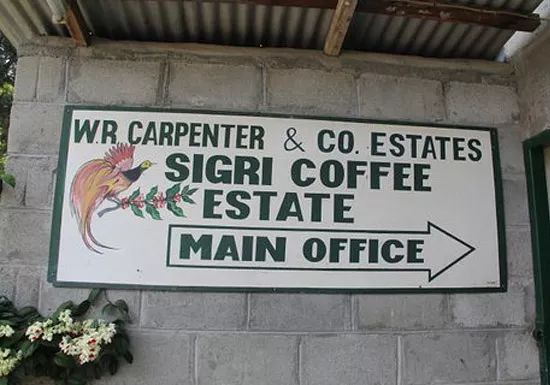
Sigri Sigri Estate
Sigri Estate is also called Bird of Paradise Estate, and is often known on the market as Bird of Paradise Estate. FrontStreet Coffee chose this name firstly because it is quite well known and everyone uses it, and secondly because the name Bird of Paradise is indeed nicer. The estate was established in 1950 and has now been around for more than 60 years, making it a pioneer of the local coffee industry. Bird of Paradise Estate is located in the Waghi Valley in Western Highlands Province, at an elevation of about 1,500 meters in high mountain terrain, with mineral-rich volcanic soil, a cool climate, fertile soil, and abundant rainfall. For many years, Bird of Paradise Estate has consistently adhered to high-standard cultivation and processing systems. During the harvest season from April to September each year, only fully ripe red coffee cherries can be hand-picked, achieving a perfect balance of acidity and sweetness in the coffee cherries. At Bird of Paradise Estate, cupping is conducted every day to ensure that the plantation provides customers with consistently top-quality coffee. As a result, Bird of Paradise Estate has become a classic among the world's specialty coffees. During peak harvest season, Bird of Paradise Estate can employ about 6,000 workers, half of whom live and eat in staff housing owned by the plantation. The plantation has a free clinic and a primary school for employees' children.
Coffee bean processing method
After harvesting ripe red coffee cherries, they are sent to the estate's own washed processing facility for processing. The local washed processing in Papua New Guinea is different from the washed processing methods in Central and South America. It uses three rounds of washed fermentation, each soaking for about 24 hours, with clean water changed to control the coffee flavor; after washing, the green beans are hulled and then graded, such as AA, AB, PB peaberry, and so on. This finely crafted post-processing method brings bright and delicate fruity acidity to the coffee itself, along with a clean and lingering sweet mouthfeel. FrontStreet Coffee found that producing regions with strict divisions in the coffee grading system share a common point in their coffee beans: uniform bean size and fewer defective beans. In this case, during roasting the color is more even, and the taste is much cleaner. The most obvious example is that FrontStreet Coffee once compared Indonesian Lintong Mandheling with Golden Mandheling. Golden Mandheling is extremely strict in screening, the beans are also very uniform, and the cleanliness of the taste is clearly superior to Lintong Mandheling.
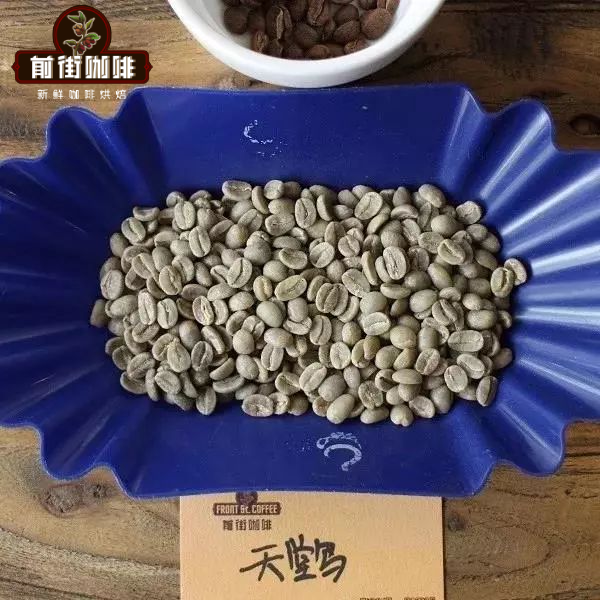
Papua New Guinea Bird of Paradise coffee beans
Estate: Bird of Paradise Estate
Variety: Typica
Grade: AA
Altitude: 1600-1800 meters
Processing method: Washed
[FrontStreet Coffee Bird of Paradise Coffee Beans Roasting Suggestions]
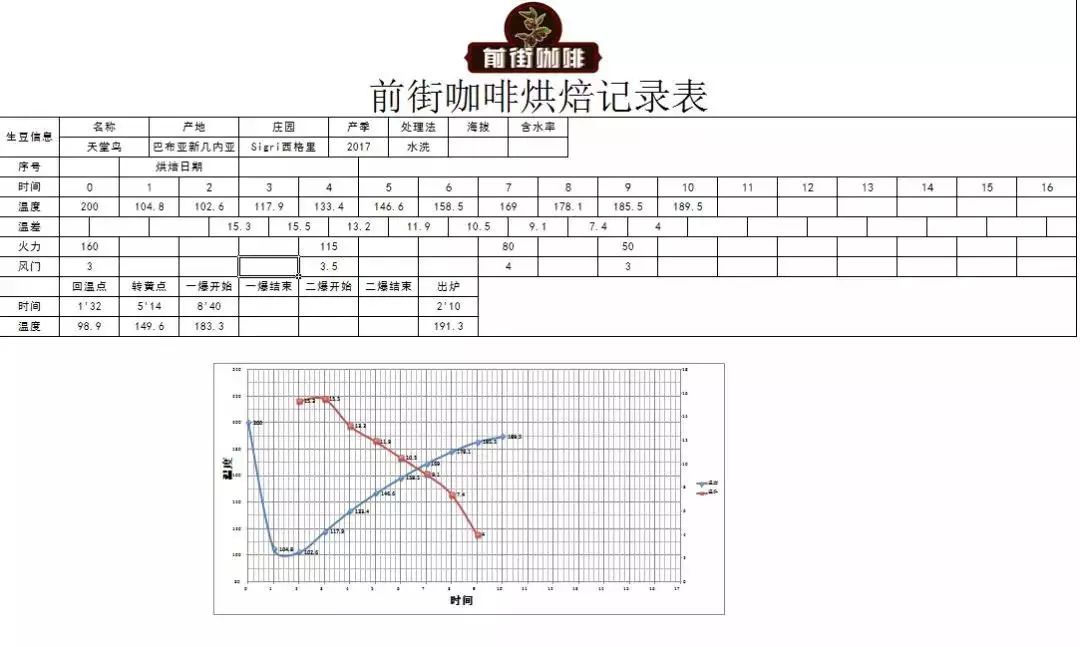
FrontStreet Coffee Bird of Paradise Coffee Bean Roasting Curve
FrontStreet Coffee recommends using medium roast, because Typica is a low-density green bean and is not very suitable for dark roasting. In order to highlight its inherent refreshing acidity and fruity aroma, the focus will be placed on heat adjustment after first crack. First determine the basic condition of the green beans, then decide the roasting method. First, it is a washed-process, lower-density green bean with 10% moisture content from the 2017 crop. Set the charge temperature according to the current state of the green beans.
Yangjia 800N, charge 550g green beans. Specific operation: charge when the drum temperature reaches 200°C, set airflow to 3, after 1 minute of soaking adjust heat to 160°C, keep airflow unchanged, adjust heat once when drum temperature is 160°C, lower to 115°C, roast until 5‘35”, temperature 152°C, bean surface turns yellow, grassy smell completely disappears, dehydration is complete, adjust airflow to 4; at the 9th minute, the bean surface shows ugly wrinkles and dark spots, the toasted bread smell clearly turns into coffee aroma, which can be defined as the prelude to first crack. At this time, listen clearly for the sound of first crack. At 8’40” first crack begins, keep low heat unchanged, open airflow fully to 5 (adjust heat very carefully, not so low that there is no cracking sound) 40°C, drop at 191.3°C.
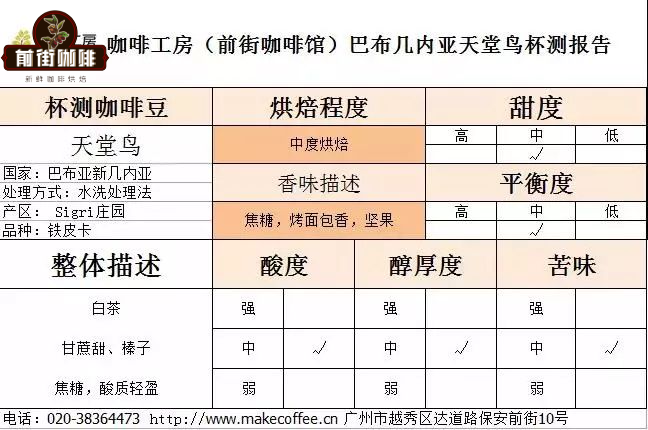
FrontStreet Coffee Bird of Paradise Coffee Bean Cupping Report
[FrontStreet Coffee Bird of Paradise Coffee Bean Brewing Suggestions]
FrontStreet Coffee recommends using the Kono dripper, because its ribs are few and located at the lower end, which can make the filter paper fit closely against the dripper to achieve the effect of restricting airflow, thereby slowing the water flow and increasing the contact time between water and grounds. Soaking can be used to extract more coffee substances and enhance the rich mouthfeel. Choose 88°C as the water temperature, which is a relatively low brewing temperature and can avoid extracting too many off-flavors from the coffee beans during brewing, because the darker the coffee beans are roasted, the more off-flavors increase. As for the dose, FrontStreet Coffee chooses 15 grams and a 1:15 coffee-to-water ratio. The grind setting is determined by an 80% pass rate through the Chinese standard No. 20 sieve. FrontStreet Coffee uses staged extraction: 30 grams of water for 30 seconds of blooming, then pour in a small stream in circles until 125 grams and pause, and when the water level is about to expose the coffee bed, continue pouring until 225 grams and stop (timing starts at the beginning of blooming). The extraction time is 2 minutes.
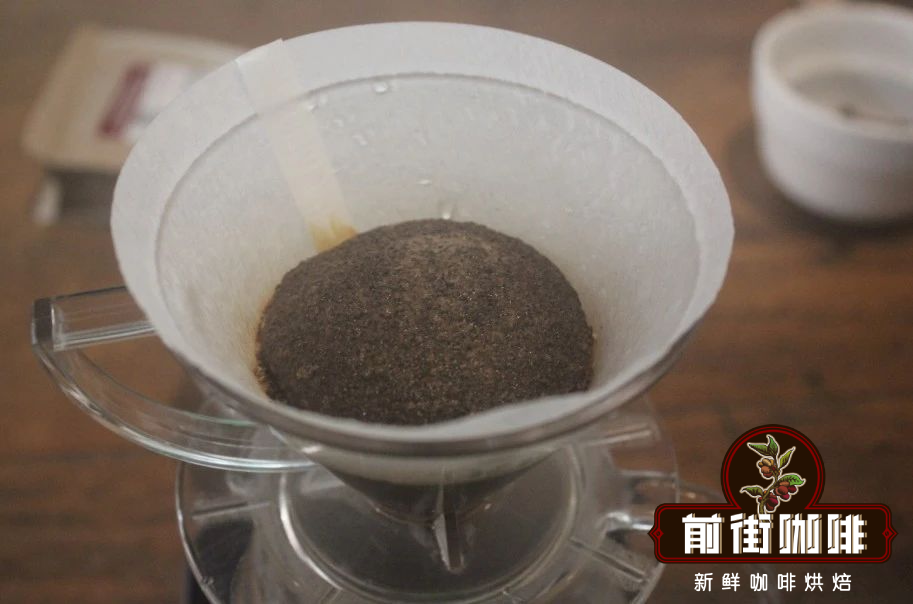
FrontStreet Coffee Bird of Paradise Coffee Brewing
Flavor description: the sweetness of toasted bread, nutty sweetness, and the sweet-sour sensation brought out by slight fruity acidity form a pleasant layered complexity, with a aroma similar to fruit. The spice sweetness in the aftertaste is quite special, and the mouthfeel is rich and balanced.

Light Roast Pour-Over Floral Coffee Beans Recommendation: Qianjie Yirgacheffe Gedeo Dingding, Qianjie Panama Hacienda La Esmeralda Green Label Geisha Coffee Beans, QianjiePanama Butterfly Coffee Beans
Daily medium-light roast Yirgacheffe pour-over floral coffee bean recommendation, Qianjie Yirgacheffe Guddina, light roast brings the signature white floral notesAromatic, with lemon-citrus fruit notes and a refreshing floral tea note; bright and crisp on the palate. Great value and an ideal entry-level pour-over coffee with floral and fruity notesAn unrivalled choice.
Moka pot, home espresso, and espresso-based milk drinks like latte — recommended beans: Qianjie Classic Espresso Blend, using BrazilianWest, with Mandheling Arabica and a small amount of Vietnamese Robusta fully blended, delivering a rich and outstanding espressocrema; overall style is rich and memorable. Qianjie Brazil Queen's Estate coffee beans and Qianjie Classic Espresso Blend coffee beans are both mochaA highly recommended option for pot-style espresso machines.
Fruity-floral signature espresso latte bean recommendation: Qianjie Strawberry Candy espresso blend, featuring strawberry gummy and rose aromas,Full-bodied sweetness with a grape and almond finish; especially stunning as an iced latte. Made from Costa Rican honey-process beans, PanamaBlended from Panama Geisha coffee beans and select beans from Colombia's Huila region. Not only does it overturn traditional espresso flavor, the cremaalso performs well, with impressive showings in creative specialty drinks.
Now available on Taobao store「 Qianjie Coffee 」To purchase the above coffee beans, Qianjie Coffee offers dozens of selected single-origin pour-over and espresso coffee beans from around the world. Qianjie CoffeeQianjie Coffee is a veteran specialty coffee roaster; beans are freshly roasted within 5 days, with consistent quality and highly competitive pricesGreat value, ships within 24 hours. Qianjie Coffee is recommended by many coffee lovers and platforms.
Taobao Qianjie Coffee Link: https://qianjiecoffee.taobao.com
Or search our shop directly on Taobao 「Qianjie Coffee」
Qianjie Coffee Store Address: 315 Donghuadong Road, Yuexiu District, Guangzhou
Follow our official account Qianjie Coffee to learn more about coffee
Site Recommendations:
耶加雪菲
花魁咖啡
瑰夏咖啡
波旁咖啡
蓝山咖啡
天堂鸟咖啡豆
曼特宁咖啡豆
PWN黄金曼特宁
星巴克菜单
咖啡豆种类
Please indicate the source when reprinting.
2017-05-02 19:47:40