Mandheling is one of the most familiar coffee beans in China, but this name is neither a producing region, a place name, a port name, nor the name of a coffee variety. In the 17th century, the Dutch introduced Arabica seedlings to Ceylon and Indonesia. In 1877, coffee leaf rust devastated the coffee trees across the Indonesian islands, and people turned to introducing the highly disease-resistant Robusta. Today, Sumatra Mandheling is a rare type of Arabica, mostly grown on hillsides at altitudes of 750 to 1,500 meters, with a rich aroma, full body, and a slight chocolate and syrup flavor.
In stores or on the Tmall flagship store, customers often ask FrontStreet Coffee how to choose coffee beans. Because FrontStreet Coffee currently displays more than 30 varieties of coffee beans, all collected from various producing regions around the world, each with its own merits, and other coffee producing regions are updated from time to time. Mandheling coffee is one of the most familiar coffee beans in China, so do you know about the history, culture, and stories behind Mandheling coffee? Customers who come to FrontStreet Coffee are not just here to drink a cup of coffee, and FrontStreet Coffee is not just here to serve a cup of coffee.
The Origin of the Mandheling Story
In the 17th century, the Dutch first introduced Arabica seedlings to Ceylon (present-day Sri Lanka) and Indonesia. In 1877, a large-scale disaster struck the Indonesian islands, and coffee leaf rust destroyed almost all the coffee trees. People had to abandon the Arabica they had cultivated for many years and introduced the highly disease-resistant Robusta coffee tree from Africa.
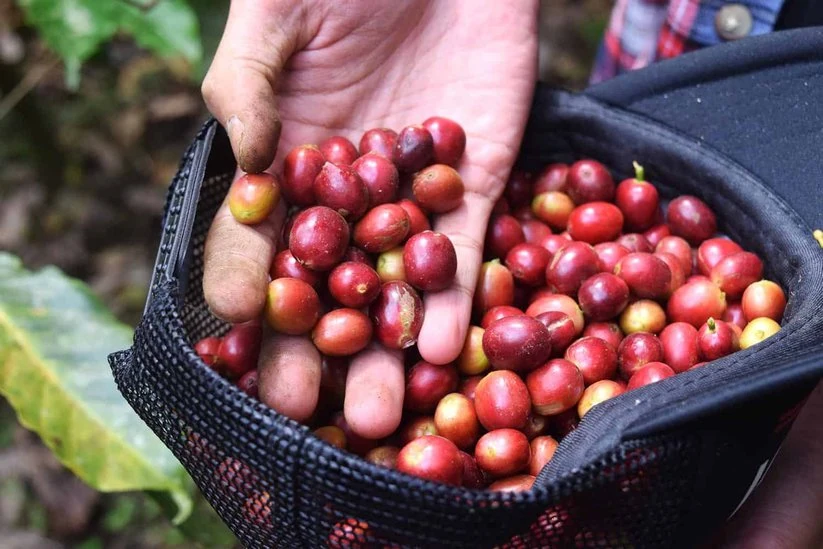
Today, Indonesia is a major coffee-producing country. Coffee is mainly grown in Java, Sumatra, and Sulawesi. Robusta accounts for 90% of total production, while Sumatra Mandheling is a rare Arabica type. These trees are planted on hillsides at altitudes between 750 and 1,500 meters. The mysterious and unique Sumatra variety gives Mandheling coffee a rich aroma, full body, intense flavor, and a slight chocolate and syrup taste. Mandheling coffee beans are relatively large and hard, and defects are very likely to appear during cultivation. After harvesting, they usually require strict manual sorting. If the control process is not strict enough, it is easy for quality to vary greatly. In addition, different roasting levels will directly affect the taste, which is why it has become a single-origin coffee with considerable controversy.
The name Mandheling is very different from other coffee beans. It is not a producing region, place name, port name, or even the name of a coffee variety (for example, Yirgacheffe or Sidamo are names of producing regions in Africa). Its name is merely a mispronunciation of the Indonesian Mandheling ethnic group.
Why would this ethnic group be connected to coffee? In fact, there is a legend of a fortunate misunderstanding: during World War II, Japan occupied Indonesia. A Japanese soldier drank exceptionally delicious coffee in a certain coffee shop and immediately asked the owner the name of the coffee. However, due to the language barrier, the shop owner thought he was asking, "Where are you from?" so he answered, "Mandheling."
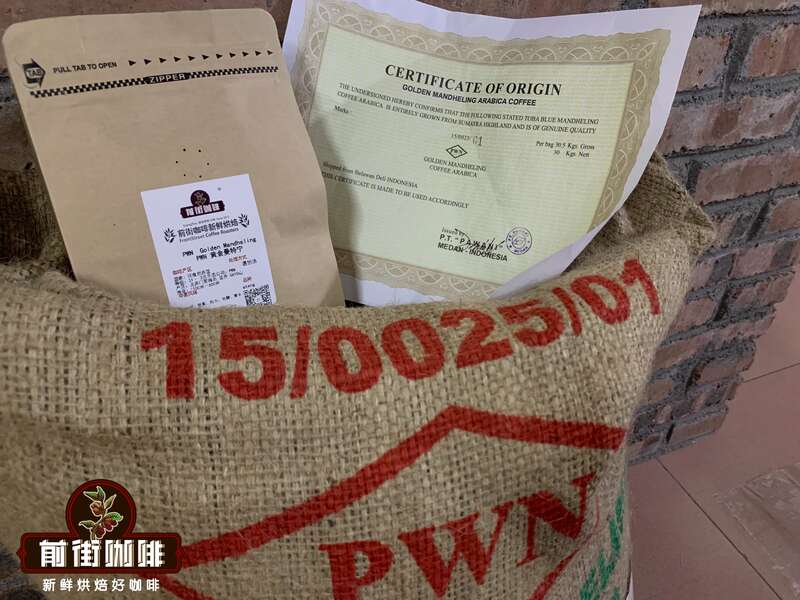
After World War II ended, this Japanese soldier recalled the "Mandheling" he had drunk in Indonesia and asked an Indonesian broker to ship fifteen metric tons of Mandheling to Japan. As a result, it became very popular in the Japanese coffee market, and the name Mandheling has been passed down to this day. (This broker created what is today the well-known Indonesian coffee company Pwani Coffee Company, abbreviated as PWN, which is also the owner of the Golden Mandheling trademark.)
Mandheling Coffee Processing
Sellers often label Lintong and Mandheling Mandheling coffee as dry-processed. In fact, the pulp and coffee seeds are often separated through a variety of mixed methods, and the more common one is a backyard-style wet process. Clever farmers put freshly picked coffee cherries into crude pulpers assembled from scrap metal, wood, and bicycle parts. The pulped, sticky wet beans are then placed in plastic woven bags to ferment overnight. The next morning, the already fermented soft pulp and mucilage are washed off by hand. The coffee still wrapped in silver skin is pre-dried on thin sheets in the front yard and then sent to the middleman's warehouse to remove the silver skin and dry further. Finally, the coffee is transported by truck to the port of Medan (the capital of Sumatra), completing the third and final drying.
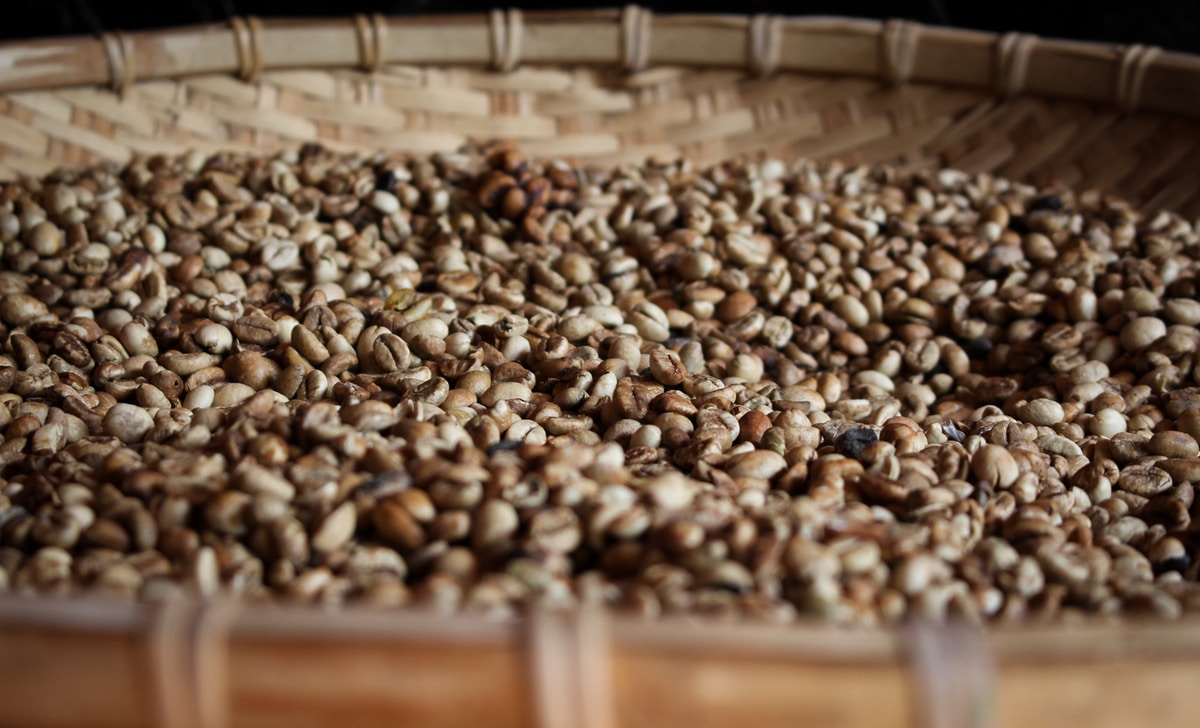
According to other reports, in other Mandheling producing regions, after the peel is removed, the mucilage is allowed to dry and remain attached to the beans, similar to Brazil's semi-washed process. Afterward, the dried mucilage and silver skin are removed by machine. Finally, the same two-stage drying is carried out, first in the middleman's warehouse and then in the exporter's warehouse at the port of Medan.
Processing and Sumatra's characteristics. I describe these processing steps in such detail because it is still unclear to what extent soil and atmosphere, unusual processing techniques, and three-stage drying each affect the formation of the characteristics of Lintong and Mandheling coffees. Only one thing is certain. These processes occasionally produce excellent coffee while also being extremely unstable. Only the ruthless sorting in the exporter's warehouse at the port of Medan can ensure that the deep texture and unique yet understated rich mouthfeel of Lintong and Mandheling can emerge from interference by other miscellaneous flavors.
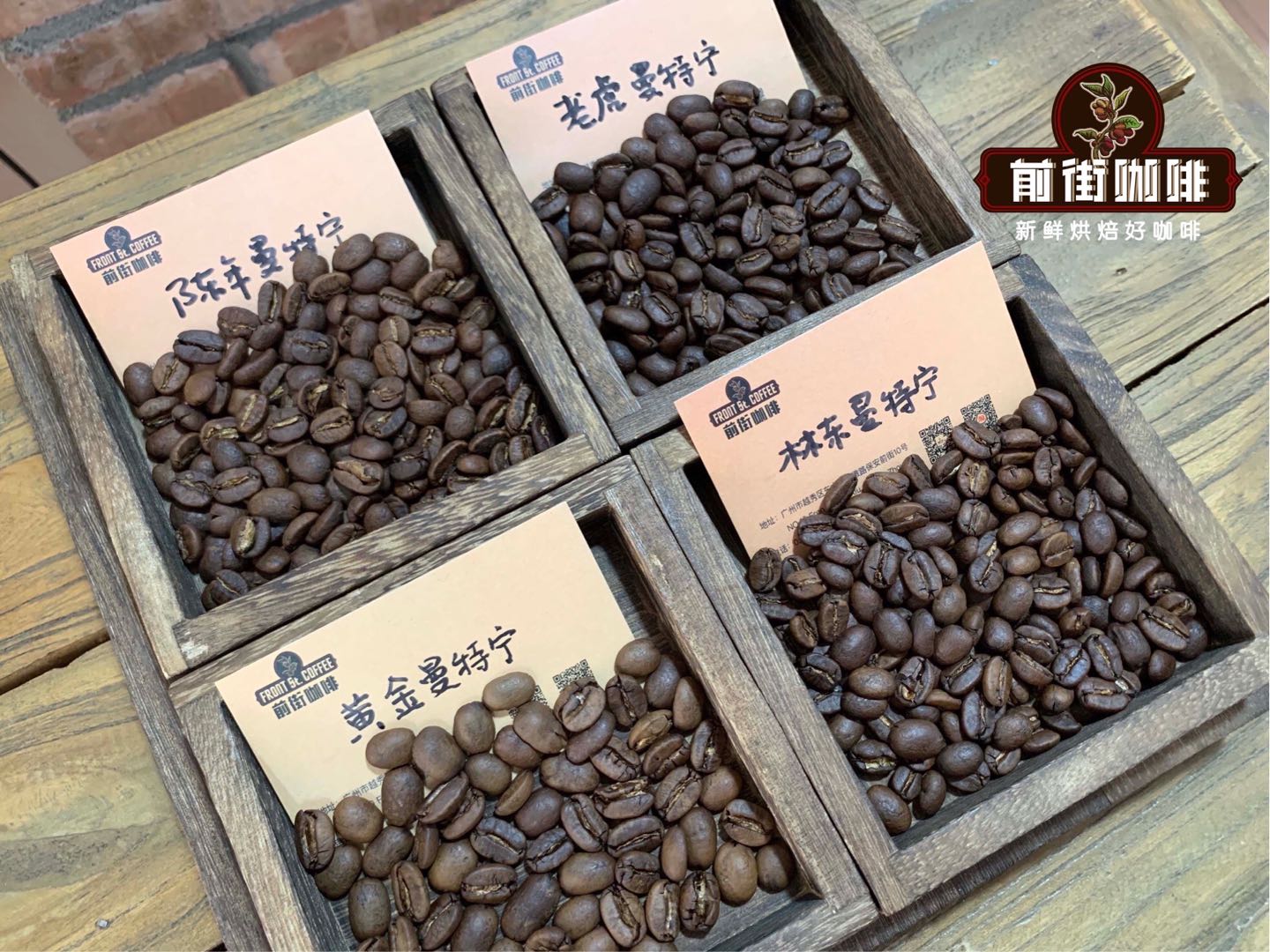
Sumatra Mandheling DP Grade 1 and Aged Sumatra Mandheling
The most famous Asian coffee producing areas are the islands of the Malay Archipelago: Sumatra, Java, and Kalimantan. Among them, Sumatra Mandheling coffee from Indonesia's Sumatra Island is the most renowned. It has two famous names: Sumatra Mandheling DP Grade 1 and Aged Sumatra Mandheling. Sumatra Mandheling DP Grade 1 has a long finish and a wild fragrance, the unique earthy taste of primitive forests.
In addition to the mellow flavor unique to Indonesian coffee, it also has a bittersweet taste, sometimes mixed with a slight faint mustiness, and is deeply loved by those who enjoy heavily roasted coffee. Aged Sumatra Mandheling coffee is called "aged" because it is stored in cellars for three years before export. But aged coffee is by no means stale coffee; rather, it is slightly pale coffee that has undergone special processing. This coffee is richer, with lower acidity, but higher body, a longer finish, and a strong spice flavor, sometimes tart, sometimes walnut-like, and sometimes chocolate-like.
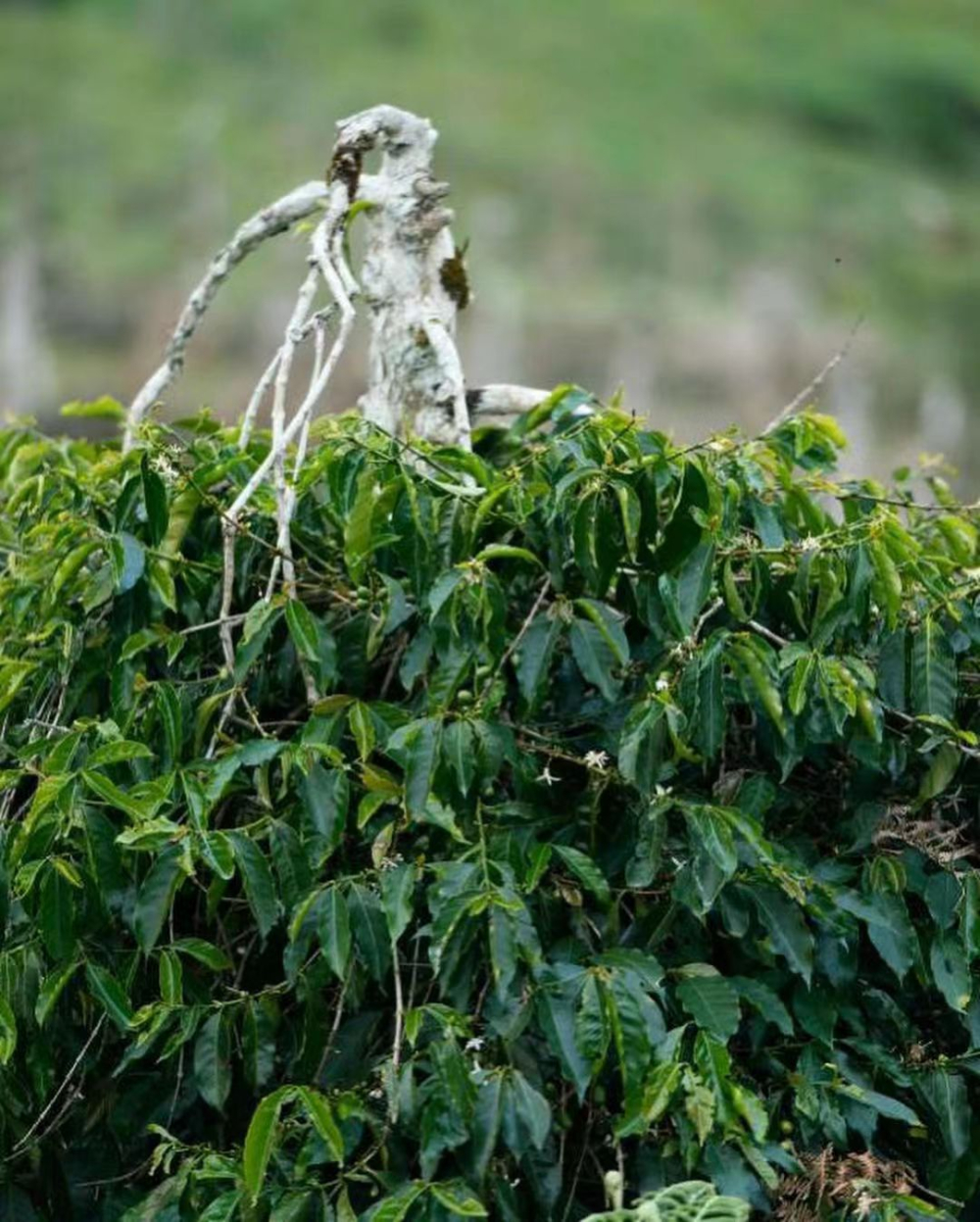
Before Blue Mountain became known to the world, Mandheling coffee was considered the finest in the world. After roasting, the beans are quite large; the green beans are brown or dark green, with a special caramel-like aroma, a mellow and rich mouthfeel, and a sweet-bitter taste without soft acidity, yet with bitterness. Production is relatively small, so the price is slightly higher than ordinary coffee beans.
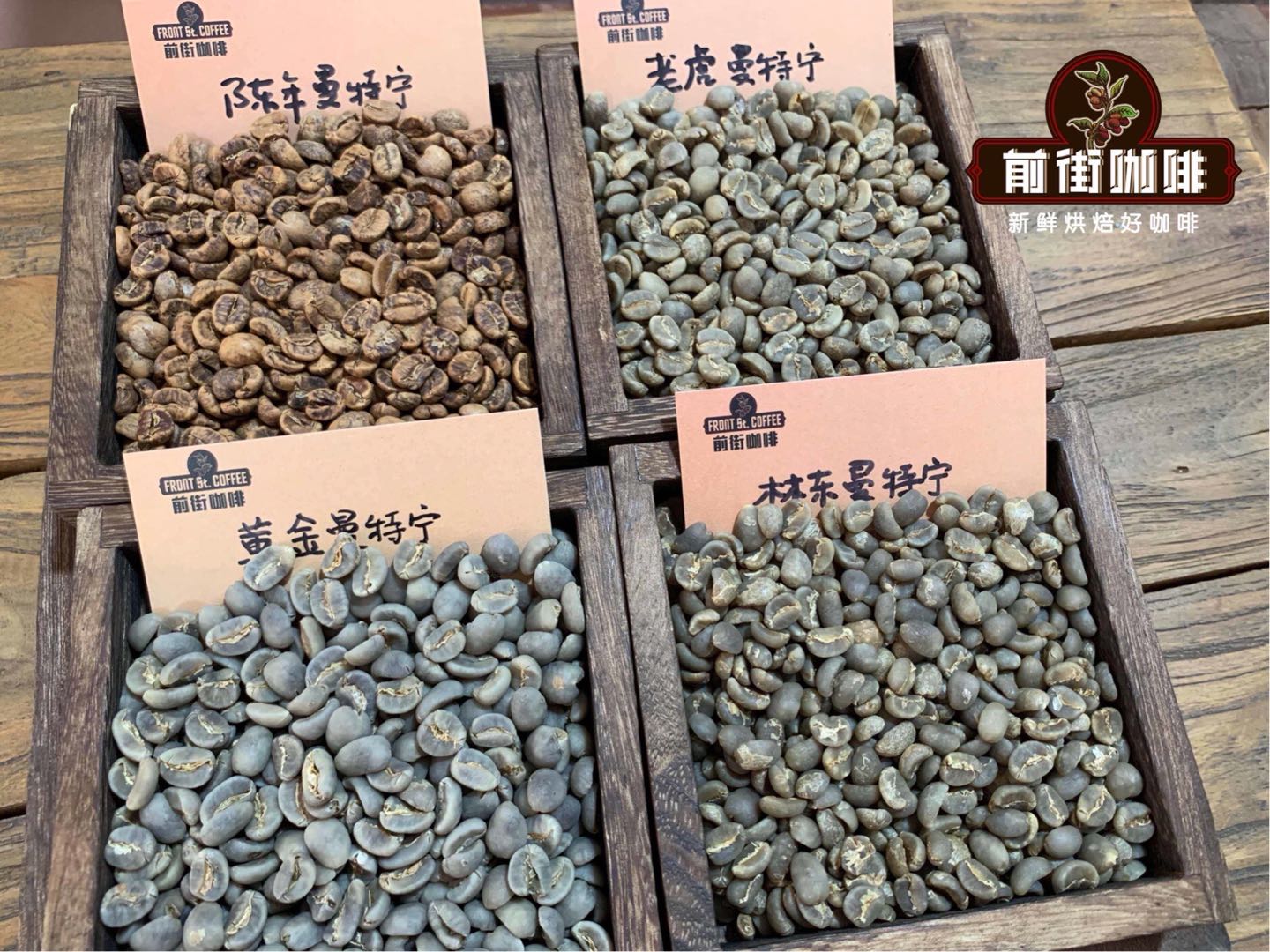
Mandheling Coffee Producing Areas
Mandheling coffee is produced in Sumatra, Indonesia, in Asia, and is also called "Sumatra coffee." The main producing areas include Java, Sulawesi, and Sumatra, of which 90% is Robusta. Among them, the "Mandheling" produced on Sumatra Island is the most famous. Among the finest traditional Arabica coffees produced in northern Sumatra, the best are sold on the market under the names Lintong and Mandheling. To be precise, Lintong refers to coffee grown in a small area southwest of Lake Toba in the Lintong administrative region.
The small coffee-growing areas are scattered across a high, rolling clay plateau covered with ferns. Lintong coffee is not shade-grown, uses no chemicals, and is almost entirely owned by smallholders. Mandheling is a broader designation that includes Lintong coffee and, under similar conditions, Diari (capital Sidikalang) and the growing areas north of Lake Toba.
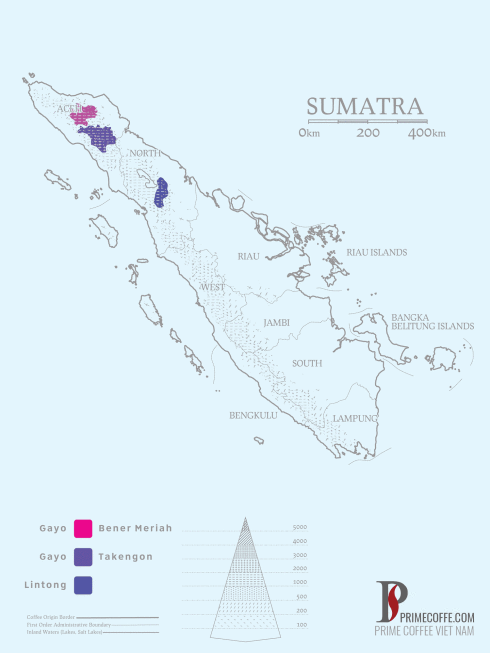
Mandheling Coffee Color
Mandheling's flavor is very rich: aromatic, bitter, and full-bodied, with a slight sweetness. Most coffee lovers drink it as a single origin, but it is also an indispensable variety in coffee blends.
Mandheling has a heavy taste, with rich body and a rich, lively dynamism. It is neither astringent nor sour, and its body and bitterness can be fully expressed. The appearance of Mandheling coffee beans can be said to be the ugliest, but coffee fans say that the uglier Sumatra coffee beans look, the better, mellower, and smoother they taste. Mandheling coffee is considered the fullest-bodied coffee in the world. When tasting Mandheling, you can feel obvious smoothness on the tip of your tongue. It also has relatively low acidity, but this acidity can still be clearly tasted. The lively slight acidity mixed with the richest aroma lets you easily experience the lively elements within the gentle richness. In addition, this coffee also has a faint earthy aroma, which some describe as the aroma of herbaceous plants.
Because Mandheling coffee beans themselves do not have acidic characteristics, special brewing methods are generally based on Mandheling coffee beans. During long heat preservation or when making iced coffee, no unpleasant sour or astringent taste appears.
What are the common types of Mandheling?
Here are four types of Mandheling from FrontStreet Coffee: Lintong Mandheling, Golden Mandheling, Tiger Mandheling, and Aged Mandheling.
1. Lintong Mandheling
A specialty Mandheling produced in the Lintong region, with relatively large beans and a relatively hard texture.
Indonesian coffee varies greatly in quality, but what we usually call Mandheling refers to Typica or its variants grown in the mountainous areas around Lake Toba. Coffee gourmets around the world have commented: Sumatra Mandheling coffee has the best texture in the world. Mandheling coffee beans are relatively large and hard, and because there are many defects, strict selection is required during processing.
Mandheling coffee is an indispensable variety in coffee blends. Its coffee flavor is rich, sweet-aromatic, purely bitter, and full-bodied, with a slight sweetness and slight acidity.
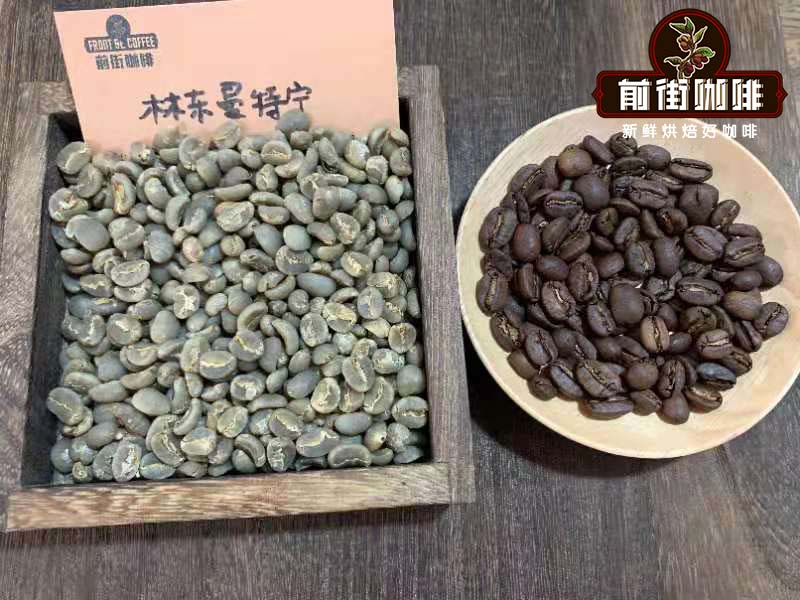
FrontStreet Coffee: Lintong Mandheling Coffee Beans
Producing region: Lintong producing region
Altitude: 1100-1600m
Variety: Typica, Caturra
Processing method: Wet-hulled
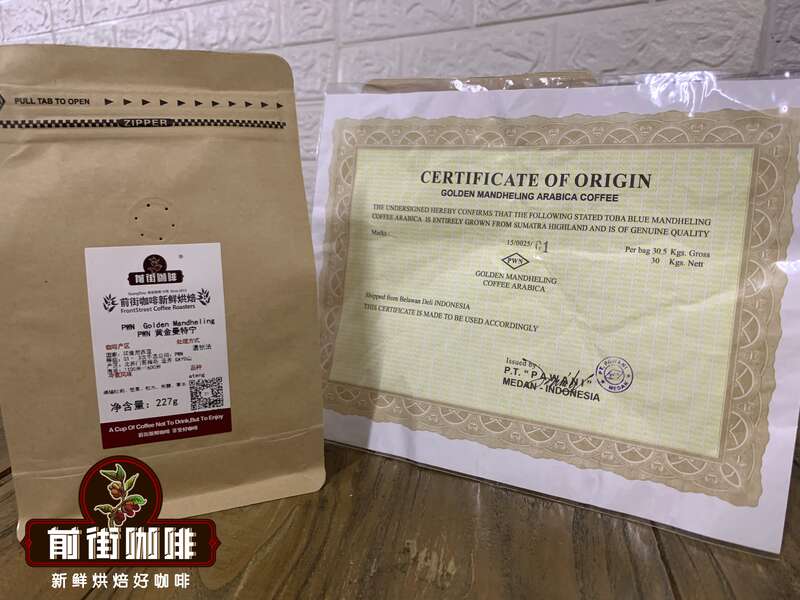
2. Golden Mandheling
Golden Mandheling has been trademarked by Indonesia's PWN company, so Golden Mandheling has become exclusive to PWN. Golden Mandheling is produced in the Gayo Mountains of Aceh, North Sumatra. The variety is Ateng. Ateng is a hybrid between Arabica and Robusta and is widely planted in Sumatra and other small Indonesian islands. It is actually a branch of Catimor; Ateng is the local name. Golden Mandheling 19 screen undergoes four rounds of manual selection, with higher quality requirements.
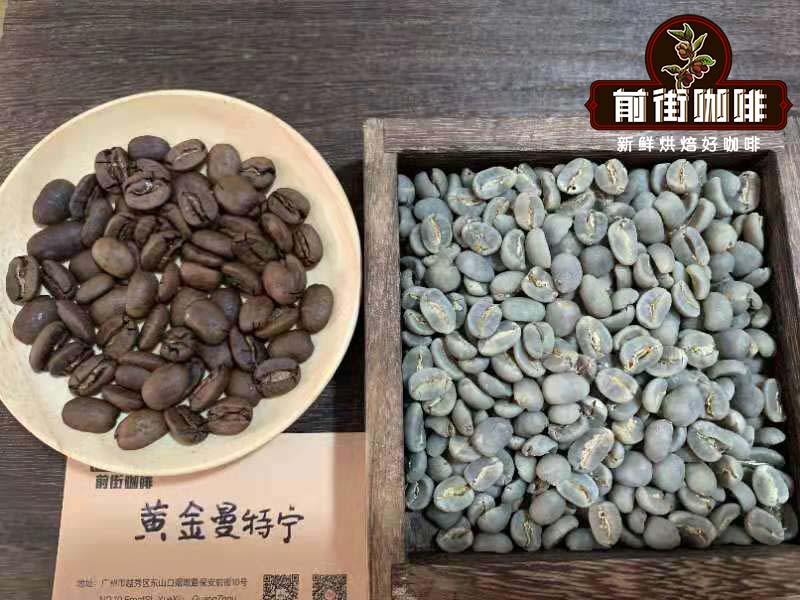
FrontStreet Coffee: PWN Golden Mandheling Coffee Beans
Producing region: Gayo Mountains, Aceh
Altitude: 1100-1600 meters
Variety: Typica
Processing method: Wet-hulled
Roasting Curve
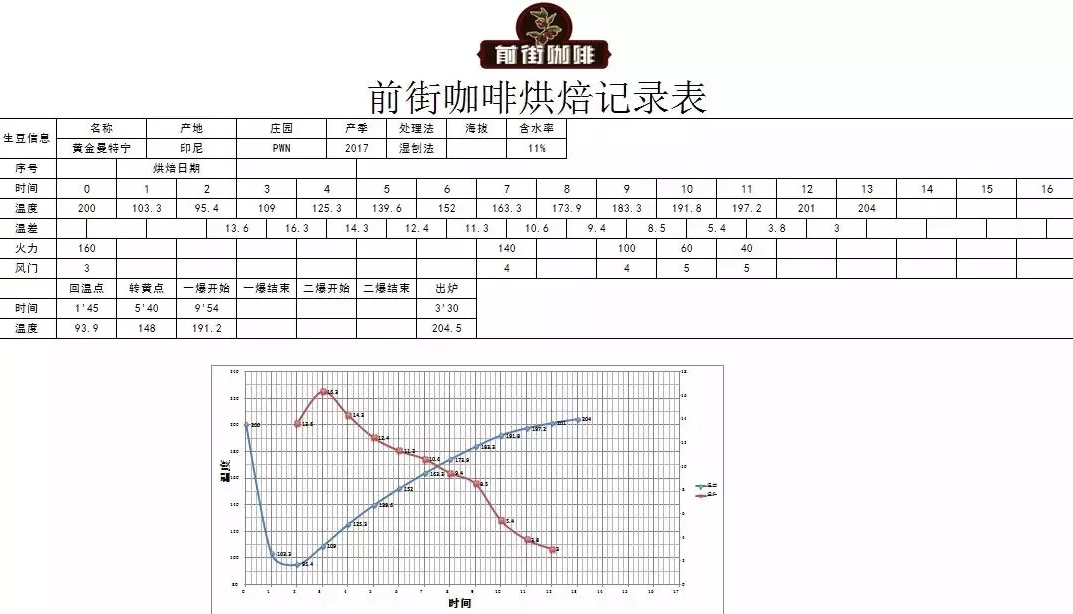
FrontStreet Coffee believes that Golden Mandheling is a green bean with relatively high moisture, and compared with natural-process beans it has a relatively high deviation in moisture, so special attention should be paid during dehydration. For green beans with high moisture content, after adding the green beans, the airflow can be closed immediately, steamed for 30 seconds, and then opened to 3, until the color of the green beans turns light green or white, then open the airflow to 4, and after first crack open it to 5 (maximum).
Brewing Parameters
For everyday Mandheling brewing, FrontStreet Coffee recommends using the KONO dripper, because it can bring out a rounder, fuller body and a more direct flavor expression. The only exhaust part of the Kono dripper is in that one-quarter of the ribs. When the water level passes over the rib area, the water level in the dripper keeps rising, increasing pressure through the weight of the water. Because the outlet is relatively small, the contact time between coffee particles and water can be extended a little. Driven by the water flow, this can more effectively bring out soluble substances. With this brewing method, FrontStreet Coffee can generally achieve the high-body effect customers expect.
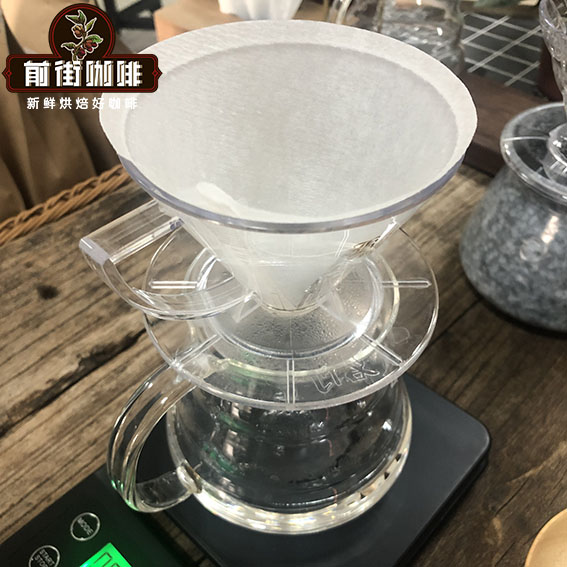
Dripper: Kono dripper
Water temperature: 86℃
Dose: 15 grams
Coffee-to-water ratio: 1:15
Grind size: medium-fine grind (BG#6W)
Brewing Method:Pulsed extraction
Use 30 grams of water for a 30-second bloom, then pour in a small stream in circles until 125 grams for a pause. When the water level drops and is about to expose the coffee bed, continue pouring until 225 grams and stop. When the water level drops and is about to expose the coffee bed, remove the dripper. (Start timing from the beginning of the bloom.) The extraction time is 2'00".
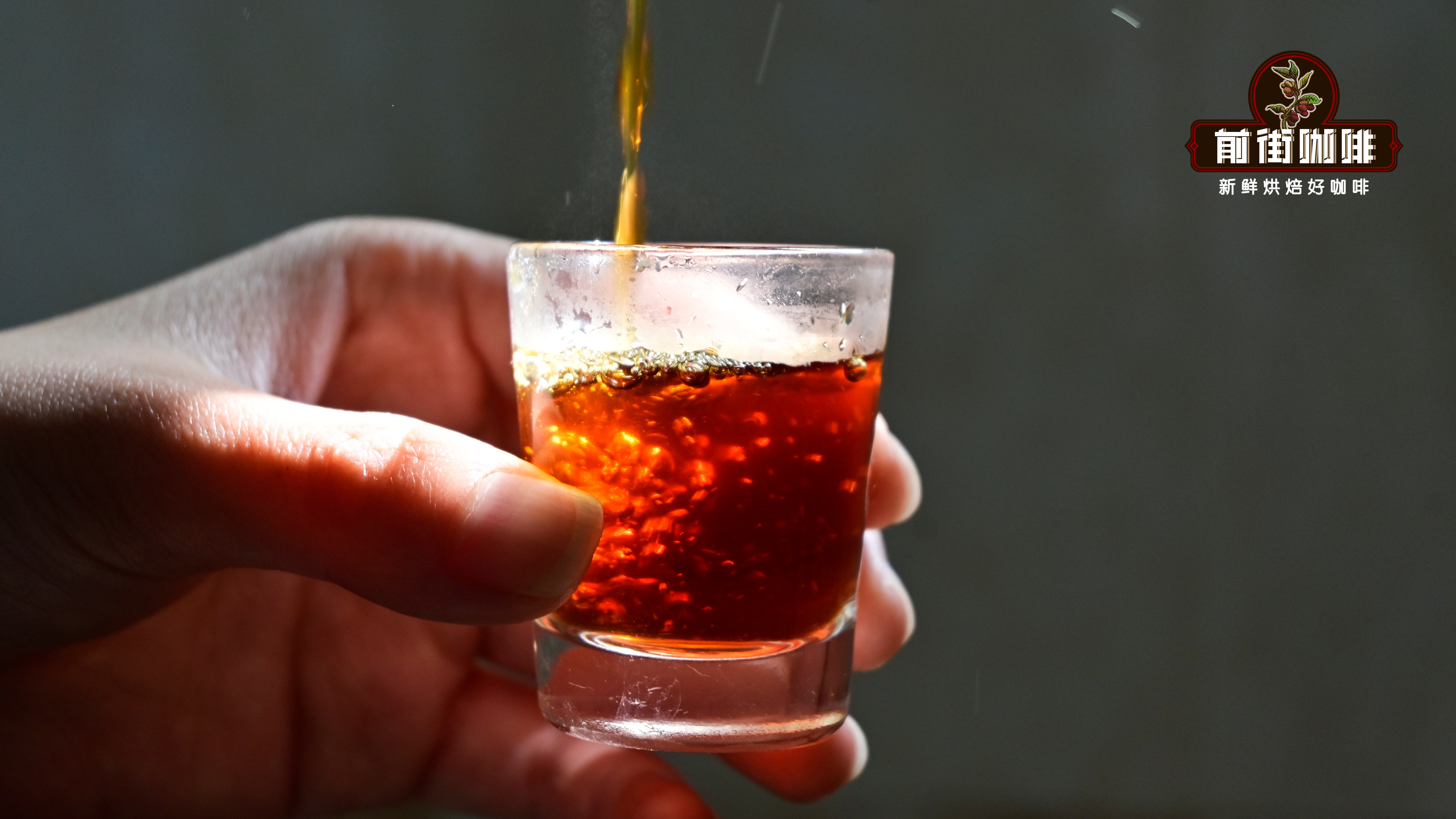
Flavor Description
Layered and changeable, full-bodied and clean, highly balanced, with rich nut and caramel aroma, a chocolate note, and a long finish.
3. Tiger Mandheling
Only Mandheling of 17 screen or above with a defect rate below 4% can be called Tiger Mandheling. Because the main varieties of Tiger Mandheling are Caturra and Typica. Caturra has a citrus and lemon acidity, while Typica has a long sweet finish, making Tiger Mandheling relatively even in mouthfeel and high in cleanliness.
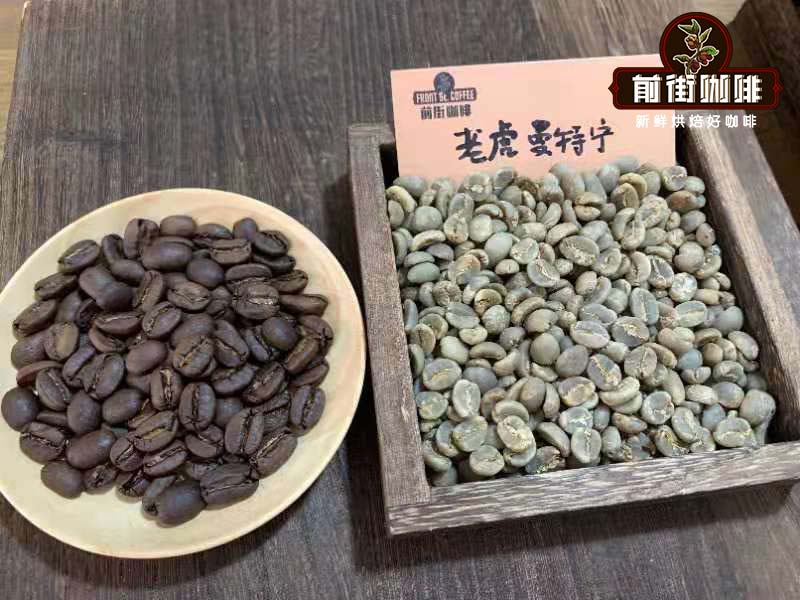
FrontStreet Coffee: Tiger Mandheling Coffee Beans
Producing region: Aceh
Altitude: 1500m
Variety: Typica, Caturra, Sidikalong
Processing method: Wet-hulled
4. Aged Mandheling
Aged coffee beans do not mean simply leaving green coffee beans for a long time; this is not acceptable, because green coffee beans will also deteriorate after being stored for a long time, changing from fresh blue-green to white, then to yellow, becoming bland and tasteless, and even developing insects. Like aged liquor, green beans must undergo proper processing and long-term storage before they can be called truly aged coffee.
The so-called aged bean (Aged bean) means:
Green beans are allowed to age naturally by extending storage time (usually 2 to 3 years). These changes include reduced acidity, color change, and thicker bean texture. The storage environment must be cool and ventilated. Because the storage environment is darker and the time is longer, aged coffee inevitably carries complex flavors such as mustiness or what is commonly called burlap or leather.
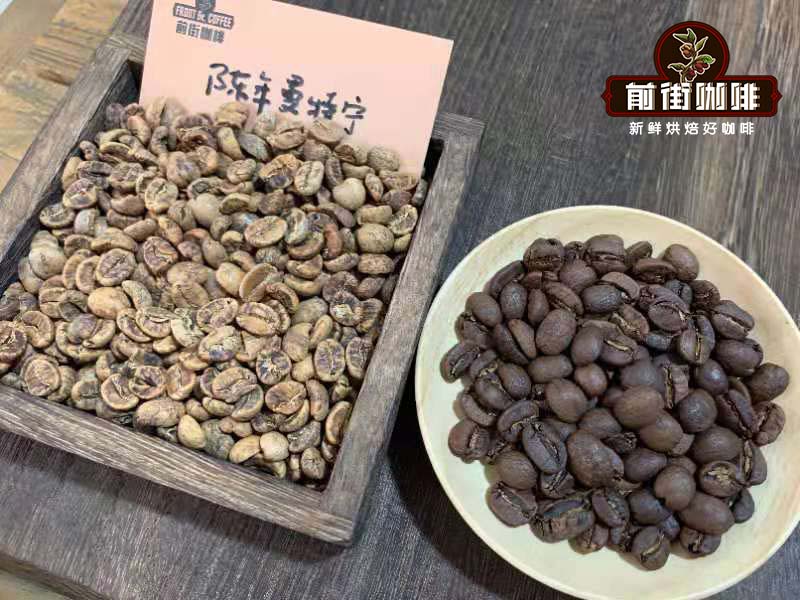
FrontStreet Coffee: Aged Mandheling Coffee Beans
Producing region: Sumatra
Variety: Typica
Processing method: Wet-hulled
For more specialty coffee beans, please add FrontStreet Coffee's private WeChat, WeChat ID: kaixinguoguo0925

Light Roast Pour-Over Floral Coffee Beans Recommendation: Qianjie Yirgacheffe Gedeo Dingding, Qianjie Panama Hacienda La Esmeralda Green Label Geisha Coffee Beans, QianjiePanama Butterfly Coffee Beans
Daily medium-light roast Yirgacheffe pour-over floral coffee bean recommendation, Qianjie Yirgacheffe Guddina, light roast brings the signature white floral notesAromatic, with lemon-citrus fruit notes and a refreshing floral tea note; bright and crisp on the palate. Great value and an ideal entry-level pour-over coffee with floral and fruity notesAn unrivalled choice.
Moka pot, home espresso, and espresso-based milk drinks like latte — recommended beans: Qianjie Classic Espresso Blend, using BrazilianWest, with Mandheling Arabica and a small amount of Vietnamese Robusta fully blended, delivering a rich and outstanding espressocrema; overall style is rich and memorable. Qianjie Brazil Queen's Estate coffee beans and Qianjie Classic Espresso Blend coffee beans are both mochaA highly recommended option for pot-style espresso machines.
Fruity-floral signature espresso latte bean recommendation: Qianjie Strawberry Candy espresso blend, featuring strawberry gummy and rose aromas,Full-bodied sweetness with a grape and almond finish; especially stunning as an iced latte. Made from Costa Rican honey-process beans, PanamaBlended from Panama Geisha coffee beans and select beans from Colombia's Huila region. Not only does it overturn traditional espresso flavor, the cremaalso performs well, with impressive showings in creative specialty drinks.
Now available on Taobao store「 Qianjie Coffee 」To purchase the above coffee beans, Qianjie Coffee offers dozens of selected single-origin pour-over and espresso coffee beans from around the world. Qianjie CoffeeQianjie Coffee is a veteran specialty coffee roaster; beans are freshly roasted within 5 days, with consistent quality and highly competitive pricesGreat value, ships within 24 hours. Qianjie Coffee is recommended by many coffee lovers and platforms.
Taobao Qianjie Coffee Link: https://qianjiecoffee.taobao.com
Or search our shop directly on Taobao 「Qianjie Coffee」
Qianjie Coffee Store Address: 315 Donghuadong Road, Yuexiu District, Guangzhou

Site Recommendations: 耶加雪菲 花魁咖啡 瑰夏咖啡 波旁咖啡 蓝山咖啡 天堂鸟咖啡豆 曼特宁咖啡豆 PWN黄金曼特宁 星巴克菜单 咖啡豆种类
Please indicate the source when reprinting.
2024-10-07 14:06:10
