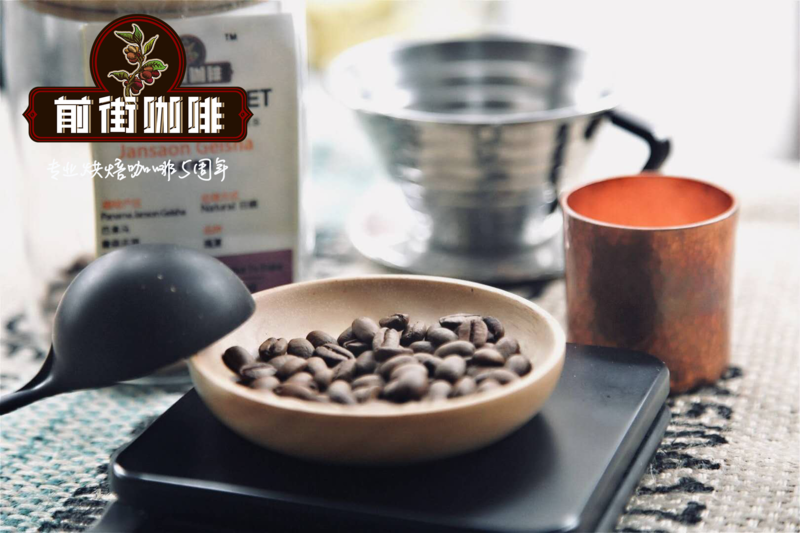
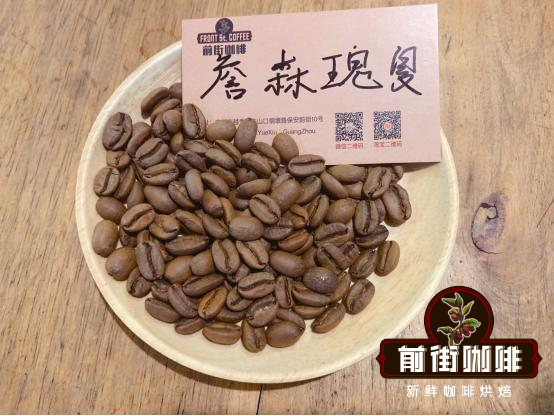
Janson Estate is located in the Volcan region of Panama. The volcanic soil is loose and breathable, and the rich minerals are easily absorbed by the coffee trees, laying the foundation for Geisha's cleanliness and floral aroma. The estate owner, Carl Janson, was originally Swiss. In 1940, he bought this land surrounded by mountains, and the family has run it for three generations. Half of the estate is planted with Geisha. This bean has long been mainly sold domestically and is rare in the country, but its cupping performance once won second place in a Panama competition.
Janson Estate is located in the Volcan region of Panama. The volcanic soil is loose and breathable, and the rich minerals are easily absorbed by the coffee trees, laying the foundation for Geisha's cleanliness and floral aroma. The estate owner, Carl Janson, was originally Swiss. In 1940, he bought this land surrounded by mountains, and the family has run it for three generations. Half of the estate is planted with Geisha. This bean has long been mainly sold domestically and is rare in the country, but its cupping performance once won second place in a Panama competition.
For professional coffee knowledge exchange and more coffee bean information, please follow Coffee Workshop (WeChat official account cafe_style)
Janson Estate is a famous coffee estate in Panama. Its fame is no less than that of Hacienda La Esmeralda, and the Geisha it mainly grows is of very high quality. Why? Front Street will briefly explain one of the reasons. Panama's fertile volcanic soil is the general term for soil formed from volcanic eruptive materials, which include volcanic ash, volcanic lava, and basalt. The characteristic of volcanic soil is that it is usually porous, so it has good water permeability. Also, volcanic lava weathers easily, and the erupted volcanic ash particles are very fine, making them easy for soil microorganisms to absorb and decompose. Compared with other rocky mountain soils, they are more easily absorbed and utilized by plants, creating high-quality Geisha. Of course, this is only one factor, and there are other factors waiting for you to learn about personally in this article.
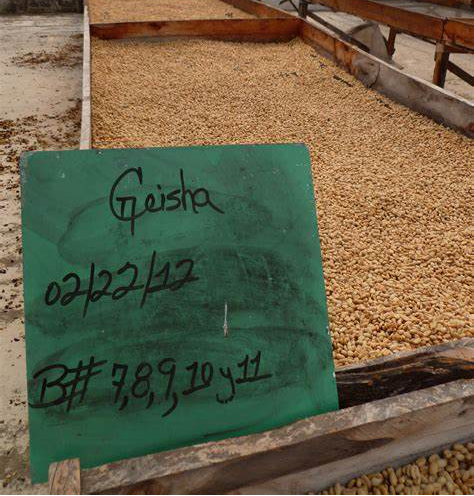
About Janson Estate
In 2004, Panama's Peterson family presented the Geisha variety to everyone for the first time, and since then the international community has gone crazy for Geisha, calling it the champagne of the coffee world. In 2013, the Panama Coffee Award issued by the Specialty Coffee Association of Panama had a new finalist——Carl Janson's Janson Estate Geisha. The estate owner, Mr. Janson (Carl Janson), was originally Swiss. When he came to Panama, he deeply fell in love with Volcan, a place surrounded by mountains similar to his hometown in Switzerland. After marrying his wife Margaret, he bought this estate in 1940. In order to maintain the balance of the natural environment, Janson Estate also operates livestock farming alongside coffee cultivation, and currently three generations of the family jointly manage this estate.
Janson Geisha is relatively rarely heard of in China because Janson Estate mainly sells domestically and does not export. At this high altitude, with nutrient-rich volcanic soil, abundant rainfall, and suitable temperatures, Janson Estate has gradually become the estate with the second-highest Geisha production among Panama's estates, and 50% of the estate is planted with Geisha variety coffee trees. This estate not only has its own processing plant to process its coffee cherries, but also puts great effort into roasting in order to improve the reference value of cupping results. These efforts have increasingly improved the quality of Janson Estate's coffee beans, and the result enabled Janson Estate Geisha to achieve second place in the Best of Panama (BOP) competition.
Variety
Geisha is pronounced the same as the Japanese word for geisha, so it is also sometimes called geisha coffee; because the tree is taller than ordinary coffee trees, it was originally planted in a small area within the estate and used as a windbreak. The estate owner's son, in order to participate in the annual Best of Panama coffee competition, searched all the coffee varieties on the estate for testing, which gave Geisha the chance to appear on stage; afterward it also participated in various worldwide coffee competitions and won a total of eleven championships.
The Geisha variety was discovered in 1931 in the Geisha forest of Ethiopia, then sent to the Coffee Research Institute in Kenya; in 1936 it was introduced to Uganda and Tanzania, and in 1953 to Costa Rica. For a long time, not many people paid attention to Geisha, until one day Don Pachi first brought it from the small town of GESHA in southwestern Ethiopia to Costa Rica, after which Geisha entered Panama along the southern route. Panama's Hacienda La Esmeralda separated it from other varieties and then won the national coffee competition championship in one stroke. Geisha has a full sweetness, an extremely clean mouthfeel, and rich aromas ranging from berries and citrus to mango, papaya, and peach. A very obvious bergamot-like aftertaste is also a typical cupping attribute. To this day, Geisha has remained the champion among coffee varieties.
FrontStreet Coffee Green Bean Analysis
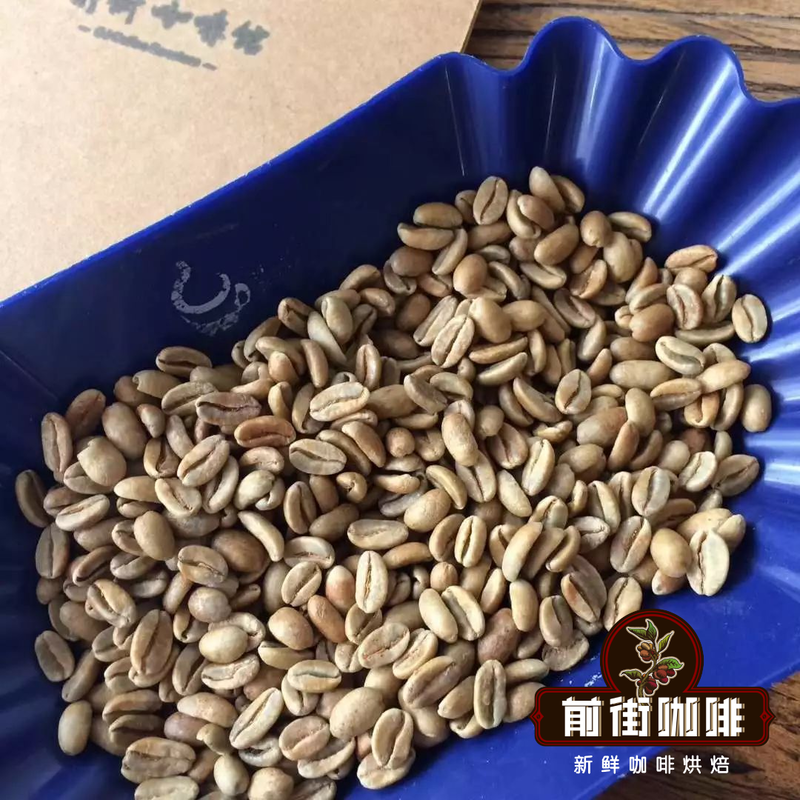
Geisha green coffee beans have a very beautiful blue-green color. Geisha green beans are relatively long and slender, with sharper ends and a warm, jade-like texture. They smell of fresh grass, peach, berries, and the unique milky sweetness of oolong tea that most coffee beans do not have. It seems that aroma and flavor greatly require association, but the faint tea note is something we can clearly perceive.
FrontStreet Coffee Roasting Analysis Roaster Yangjia 600g semi-direct fire
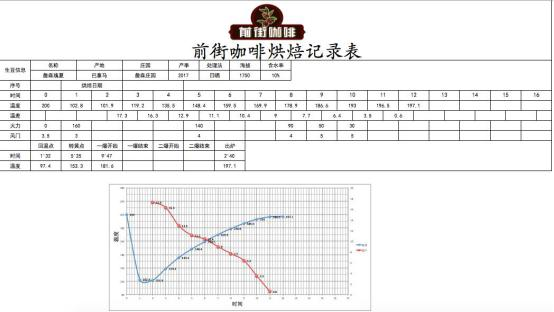
This coffee has relatively large beans and high density, absorbs a relatively large amount of heat during roasting, and the Maillard reaction process is also relatively fast. In the first batch of roasting, I used a relatively high drop temperature of 200 degrees. Before the coffee beans dehydrated and turned yellow, I continuously applied heat to ensure there was enough heat to continue until the end of roasting. In the end, I chose a bean-loading temperature of 200 degrees, relatively reduced the heat, and gradually increased the heat as needed during roasting. Under this method, the coffee's dehydration time was relatively lengthened compared with the first batch, with the temperature rising at 6-8 degrees every thirty seconds. In order to highlight this bean's characteristics and aroma, I used a light roast, as this roast level can better bring out the bean's own characteristics; too dark would lose the floral aroma and fruit acidity. Of course, this also needs to be adjusted according to the characteristics of the coffee beans and the roaster's understanding of the beans themselves. During the roasting stage, a lower starting heat of 140 degrees and a slower roasting rhythm were used to express this coffee's multi-layered flavors.
The roaster was heated to 200 degrees Celsius before loading, the damper was set to 3.5, after 30 seconds the heat was adjusted to 160 degrees, the damper was adjusted to 3, the turning point was 1'32'', and at a roaster temperature of 153.3 degrees the heat was adjusted once. At this time the bean surface turned yellow, the grassy smell completely disappeared, dehydration was complete, the heat was adjusted to 140 degrees, and the damper was adjusted to 4; at 9'00', ugly wrinkles and dark spots appeared on the bean surface, and the toast smell clearly turned into coffee aroma, which can be defined as the prelude to first crack. At this time it is necessary to listen clearly for the sound of first crack. At 9'47" first crack began, the heat was reduced to 50 degrees, and the damper was fully opened to 5 (adjusting the heat must be done very carefully, not so low that there is no crack sound). After first crack, development was 2'40", and the beans were dropped at 197.1 degrees.
FrontStreet Coffee Cupping Results
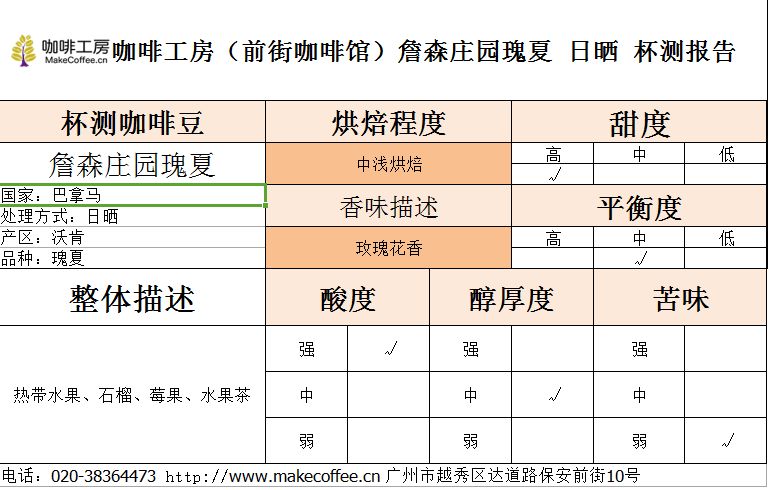
Flavor: maple syrup, lemon citrus, apple, rose, dark chocolate fruity notes, pomegranate, ripe grape, peach and dark berry flavors, multi-layered sweet and sour
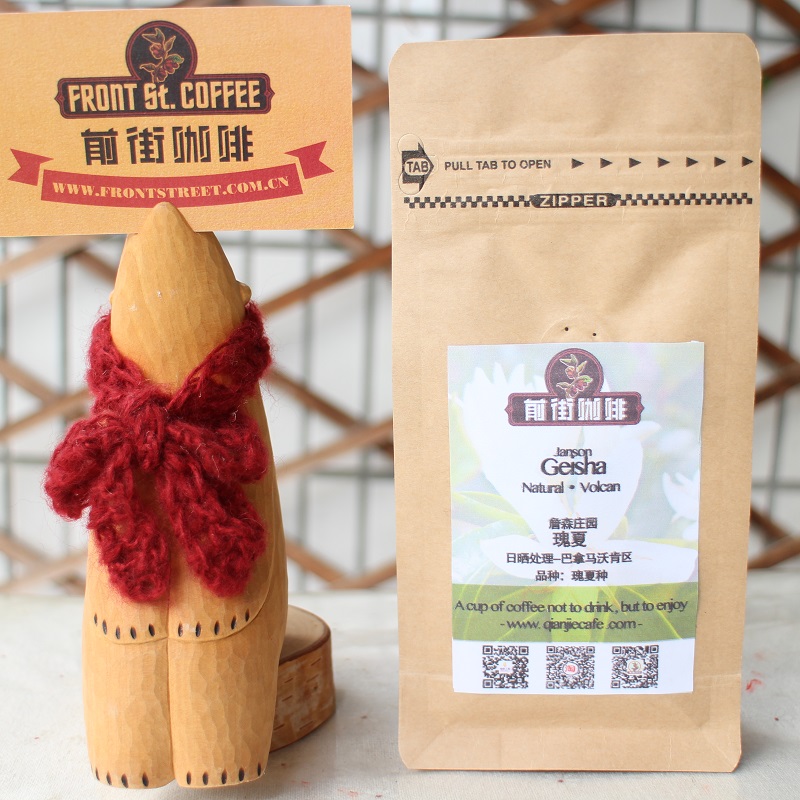
Panama Janson Estate Geisha
Estate: Janson Estate
Region: Volcan
Variety: Geisha
Processing method: Natural
Altitude: 1750M
FrontStreet Coffee Recommended Brewing Method: Pour-over
Grind size: 3.5 (Japan Fuji R440) Water temperature: 91°C V60, 15g powder, water temperature 91 degrees, grind 3.5, water-to-coffee ratio close to 1:15
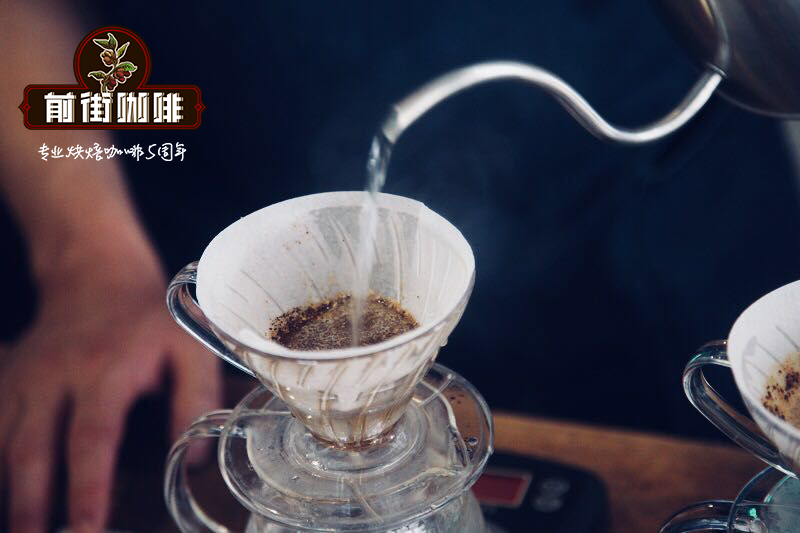
Bloom with 30g water for 30s. Pour hot water from the pour-over kettle in clockwise circles centered on the middle of the dripper. Start timing when brewing. Pour water until 30g, then stop pouring and wait 35 seconds before the second pour. For the second pour, do the same as before, drawing clockwise circles centered on the middle of the dripper. Do not let the water stream hit the place where the coffee grounds meet the filter paper, to avoid channeling. The cake cup is an immersion-style dripper, so pouring at 91 degrees can bring out Geisha's flavor very well. Stages: pour to 120ml and stop, then slowly pour to 225ml, that is 30-120-95
FrontStreet Coffee Flavor Description
What makes Geisha special is that it has very obvious and clear floral and citrus flavors, very high cleanliness, soft and elegant acidity, lasting cotton-like sweetness, and the mouthfeel of fine black tea.
 For more specialty coffee bean knowledge, please add the personal WeChat of FrontStreet Coffee, WeChat ID: kaixingoguo0925

Light Roast Pour-Over Floral Coffee Beans Recommendation: Qianjie Yirgacheffe Gedeo Dingding, Qianjie Panama Hacienda La Esmeralda Green Label Geisha Coffee Beans, QianjiePanama Butterfly Coffee Beans
Daily medium-light roast Yirgacheffe pour-over floral coffee bean recommendation, Qianjie Yirgacheffe Guddina, light roast brings the signature white floral notesAromatic, with lemon-citrus fruit notes and a refreshing floral tea note; bright and crisp on the palate. Great value and an ideal entry-level pour-over coffee with floral and fruity notesAn unrivalled choice.
Moka pot, home espresso, and espresso-based milk drinks like latte — recommended beans: Qianjie Classic Espresso Blend, using BrazilianWest, with Mandheling Arabica and a small amount of Vietnamese Robusta fully blended, delivering a rich and outstanding espressocrema; overall style is rich and memorable. Qianjie Brazil Queen's Estate coffee beans and Qianjie Classic Espresso Blend coffee beans are both mochaA highly recommended option for pot-style espresso machines.
Fruity-floral signature espresso latte bean recommendation: Qianjie Strawberry Candy espresso blend, featuring strawberry gummy and rose aromas,Full-bodied sweetness with a grape and almond finish; especially stunning as an iced latte. Made from Costa Rican honey-process beans, PanamaBlended from Panama Geisha coffee beans and select beans from Colombia's Huila region. Not only does it overturn traditional espresso flavor, the cremaalso performs well, with impressive showings in creative specialty drinks.
Now available on Taobao store「 Qianjie Coffee 」To purchase the above coffee beans, Qianjie Coffee offers dozens of selected single-origin pour-over and espresso coffee beans from around the world. Qianjie CoffeeQianjie Coffee is a veteran specialty coffee roaster; beans are freshly roasted within 5 days, with consistent quality and highly competitive pricesGreat value, ships within 24 hours. Qianjie Coffee is recommended by many coffee lovers and platforms.
Taobao Qianjie Coffee Link: https://qianjiecoffee.taobao.com
Or search our shop directly on Taobao 「Qianjie Coffee」
Qianjie Coffee Store Address: 315 Donghuadong Road, Yuexiu District, Guangzhou
Follow our official account Qianjie Coffee to learn more about coffee
Site Recommendations:
耶加雪菲
花魁咖啡
瑰夏咖啡
波旁咖啡
蓝山咖啡
天堂鸟咖啡豆
曼特宁咖啡豆
PWN黄金曼特宁
星巴克菜单
咖啡豆种类
Please indicate the source when reprinting.
2017-09-19 14:32:17