Costa Rica's honey-processed coffee is often mistaken for having honey added, but the word "honey" actually refers to the mucilage remaining on the coffee cherry. Hacienda Canet is located in the famous Tarrazu region, where fertile volcanic ash soil, high altitude, and a cool climate nurture coffee beans with bright acidity and a clean texture. Mozart from the Musician Series presents a sweetness-forward flavor profile through honey processing, and behind it all is the country's long history of coffee cultivation.
For professional coffee knowledge exchange and more coffee bean information, please follow Coffee Workshop (WeChat official account cafe_style)
Front Street has tasted many specialty coffees. If one were to choose a country whose coffee flavor is represented by sweetness, Costa Rica's honey-processed coffee beans would certainly be mentioned. Costa Rican coffee most commonly uses honey processing. However, when it comes to the word "honey," many friends who are unfamiliar with coffee bean processing methods mistakenly think that honey is added during processing. This is not the case. The word "honey" refers to the mucilage of the coffee cherry, and honey processing is merely a generalized theoretical term.
History of Costa Rican Coffee

In 1729, coffee was introduced to Costa Rica from Cuba. Since then, Costa Rica became the earliest country in Central America to cultivate coffee and the first to grow coffee for commercial value. In 1821, after Costa Rica gained independence from Spain, the local government began to support the coffee industry through a series of policies. At that time, it had been over a hundred years since coffee was introduced to Costa Rica, but approximately 70,000 coffee trees had already been planted, demonstrating the speed of its development. In 1825, the Costa Rican government implemented a tax exemption policy. In 1832, the local government enacted a law: "Those who cultivate coffee shall own the land," meaning that if a coffee farmer planted coffee on any vacant, unoccupied land, they would directly own that land. This policy encouraged many people to plant coffee and promoted coffee development, and it is precisely this policy that led to Costa Rican coffee today mostly coming from private estates. Coffee farmers hold a highly esteemed status in Costa Rica. In 1897, citizens of the capital San Jose witnessed the inauguration of the National Theatre donated by a wealthy coffee magnate. In addition, Costa Rica has amended its laws to explicitly stipulate that only Arabica may be planted domestically, and Robusta is considered contraband within the country.
Costa Rica's Producing Regions
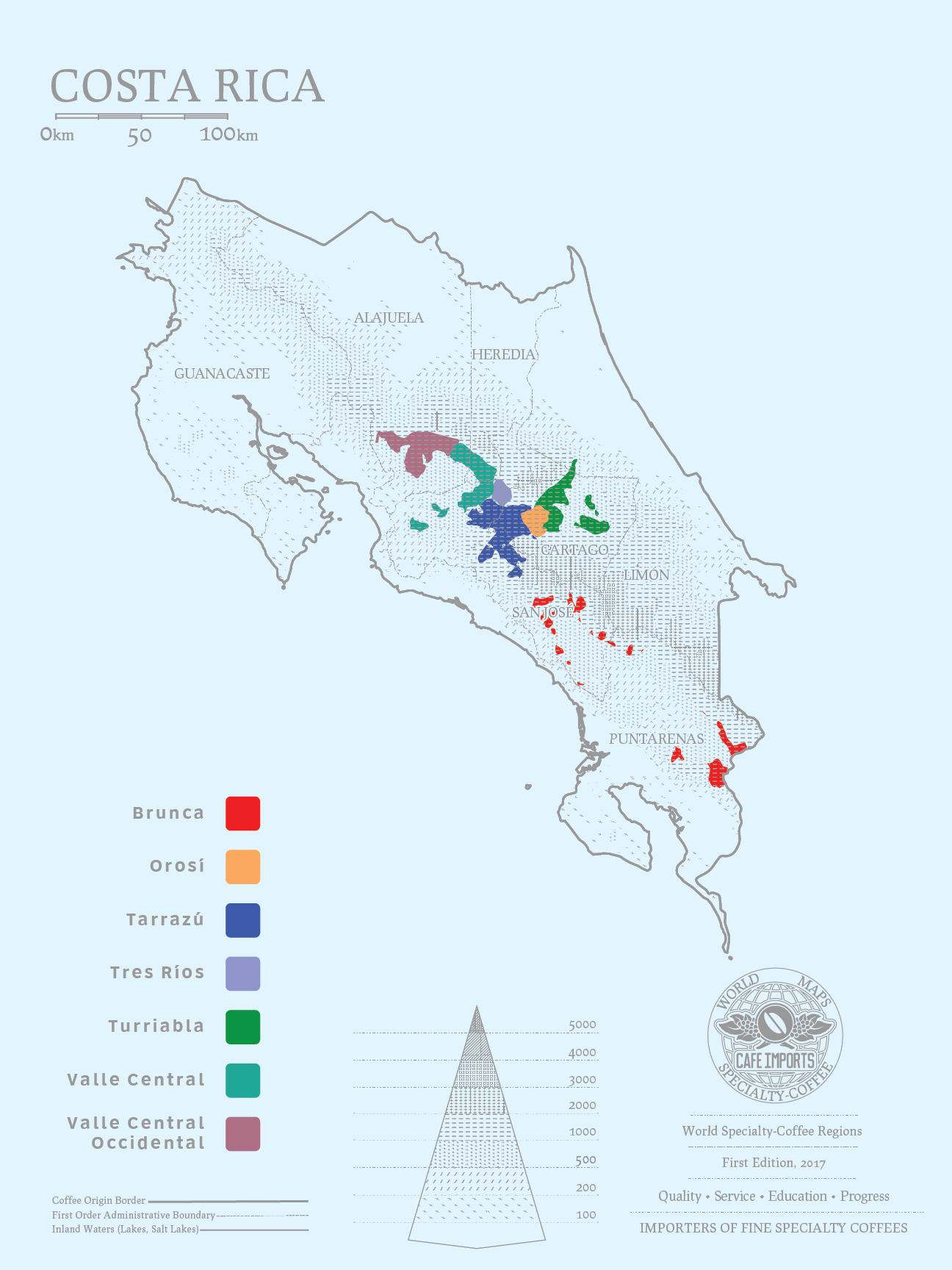
Costa Rica is located in Central America and was the first country in Central America to which coffee was introduced, with a long history. The volcanic soil is very fertile with good drainage. In particular, the Central Plateau has fertile volcanic ash from volcanic terrain, mild and suitable temperatures, and stable and abundant rainfall, which are essential factors for growing good coffee.
The country has eight main producing regions: Valley Central Occidental, Valley Central, Tarrazu, Tres Rios, Orosi, Brunca, Turrialba.
Tarrazu Producing Region
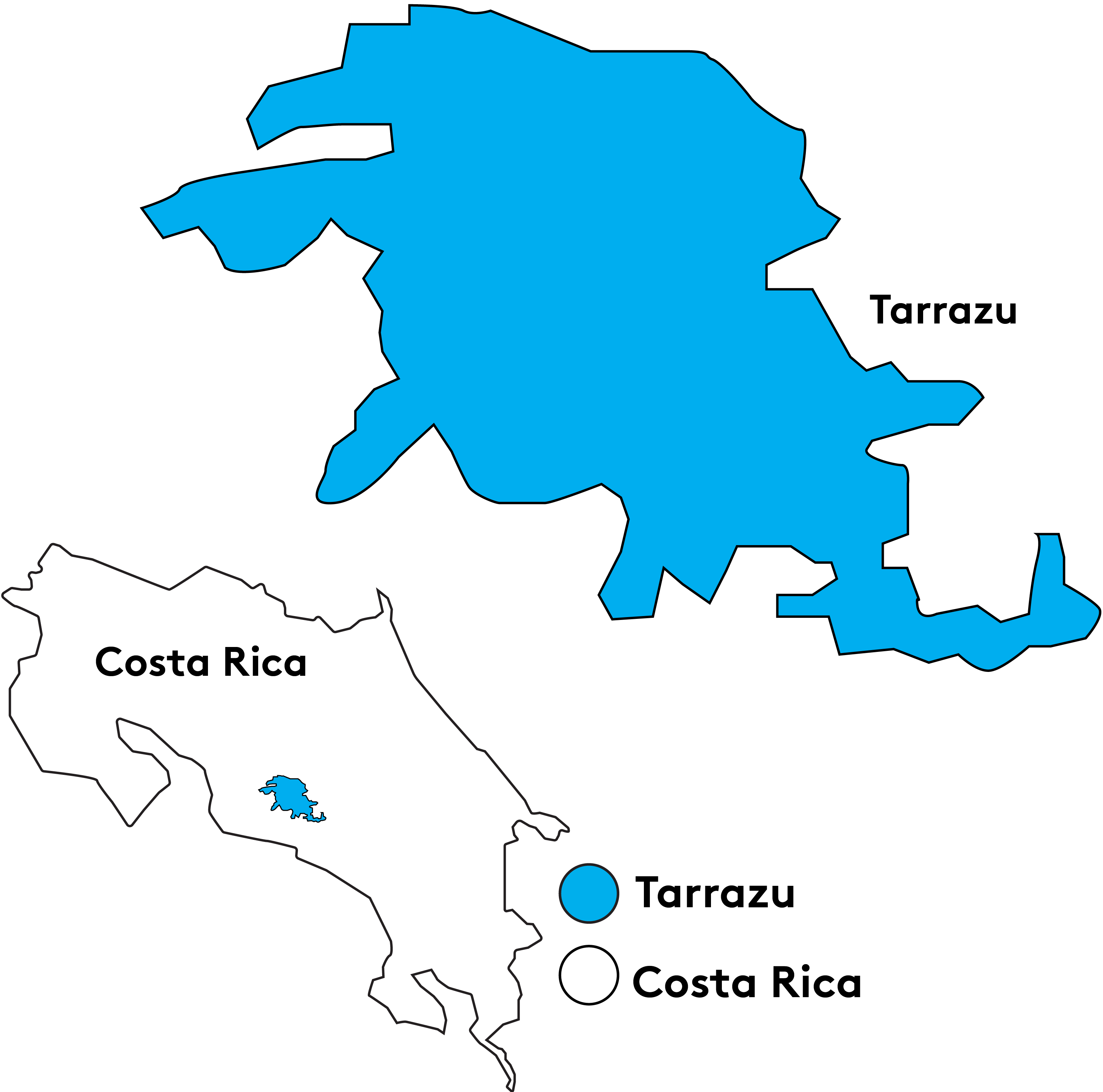
The Tarrazu producing region is located in a volcanic area at an altitude of about 2,000 meters, with fertile volcanic ash soil and a high-altitude cool environment, producing coffee beans with rich flavors, bright high-quality acidity, and a clean, clear texture. In Tarrazu, the rainy and dry seasons are distinct. The rainy season runs from May to November, lasting seven months, which coincides with the coffee tree growing period; the dry season runs from December to April of the following year, lasting five months. The local coffee cherry harvest period runs from November to March of the following year, lasting five months, which also coincides with the dry season. This climate with distinct wet and dry seasons provides ideal conditions for cultivation and also produces coffee cherries with consistent ripeness.
Hacienda Canet
Hacienda Canet (Finca Canet) is a small 5-hectare estate located in the town of San Marcos in the Tarrazu producing region, in the highest coffee-growing area of Tarrazu, which is the most densely fruit-cultivated area in Costa Rica. It is owned by the Robles brothers Leo, Elian and Melvin, three brothers who have worked together growing and producing for over 10 years and also share a small wet mill (Beneficio). They launched the Musician Series with four bean offerings, using different green bean processing techniques to highlight different unique characteristics.
According to Front Street's understanding, the Musician Series coffee beans came about because the owner of Hacienda Canet is very passionate about classical music and would assign names to coffee beans based on the flavors produced by different processing methods, matching which coffee bean feels like which musician. As mentioned above, Tarrazu is the highest-altitude producing region in Costa Rica, so Hacienda Canet produces SHB-grade high-altitude strictly hard beans. Such beans are inherently sweet in flavor, with fruity aromas, wine-like notes, and tea-like notes.

Costa Rican Honey Processing
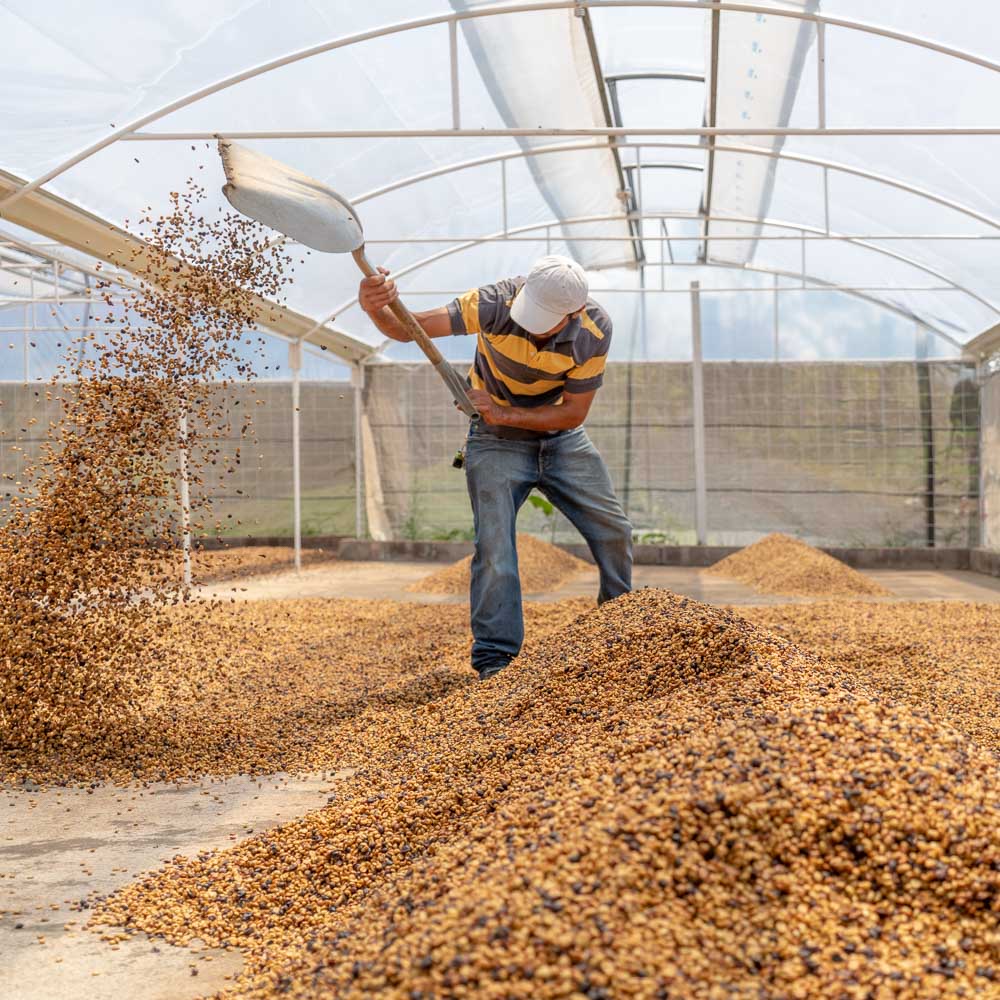
The honey processing method is called Honey Process or Miel Process, and the coffee is called Honey Coffee. Coffee farms in countries such as Costa Rica, Panama, and Guatemala all adopt this processing method, and Costa Rican honey-processed coffee beans are especially well known. Honey processing refers to the process of producing green beans that are sun-dried with the mucilage (also called pectin) still attached. After the coffee beans have the outer pulp removed, there is a sticky gelatinous substance (pectin). Traditional washed processing uses clean water to wash it off, but because some high-altitude producing regions have water resource limitations, this direct sun-drying method was born.
The taste difference between honey processing and washed processing: higher sweetness than washed, higher sugar content, and relatively higher body.
Costa Rican honey-processed coffee beans retain the cleanliness of washed processing. Although the brightness of the coffee decreases somewhat, sweetness and caramel mouthfeel are increased. According to different degrees of honey processing, Costa Rican honey-processed coffee beans are further divided into yellow honey, red honey, and black honey.

Speaking of this, Front Street would like to highly recommend the Musician Series coffee beans from Hacienda Canet in the Tarrazu producing region of Costa Rica. Mozart's music is delicate, subtle, and gorgeous, with a bright style and beautiful melodies. Among the Musician Series coffee beans, one bean has a delicate red berry sweetness with subtle floral aromas. The style is both the delicacy of red berries and the gorgeousness of floral aromas, with a raisin-like fermented sensation driving this melody to present beautifully in the mouth.
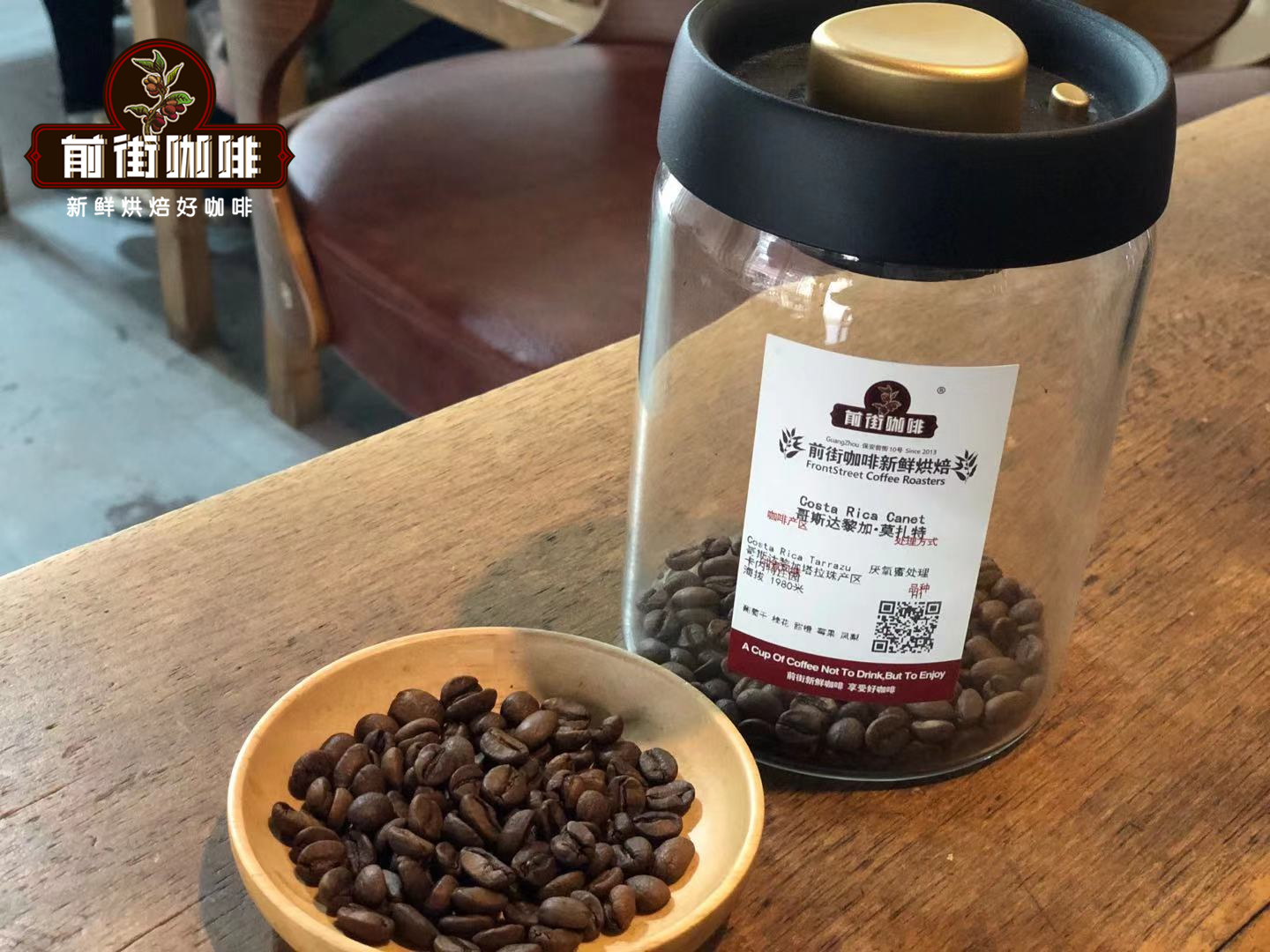
Country: Costa Rica
Region: Tarrazu
Farm: Hacienda Canet
Altitude: 1980m
Variety: H1
Processing: Raisin honey processing
H1
Seeing the variety H1 on the small label of our FrontStreet Coffee Mozart packaging, some friends may wonder: what is the H1 variety?
H1, full name Centroamericano H1, was further researched by the Sebaco laboratory in Nicaragua. H1 is a hybrid of Rume Sudan and Saga Mor T-5296. Rume Sudan was discovered in the Rume Valley of the Boma Plateau in Sudan, hence the name.
This coffee has good quality and excellent flavor but poor disease resistance. However, hybrid varieties can well inherit its excellent flavor genes. The genetically stable H1 variety has high productivity, potential high quality, strong adaptability, and strong resistance to leaf rust, but is susceptible to American leaf spot disease.
Raisin Honey Processing
Raisin honey processing is a method that retains 100% pectin with zero water usage. It increases the difficulty of honey processing, requiring strict control of timing. On the day of harvesting coffee cherries, the harvested coffee fruit is poured into a large water tank; ripe, full fruits sink to the bottom; underdeveloped or overripe fruits float to the surface, and these floating beans need to be removed. The sorted coffee cherries are placed on raised beds to dry for at least three days, then the cherry skin is removed, pectin is retained, and then drying continues.
FrontStreet Coffee Brewing Suggestions
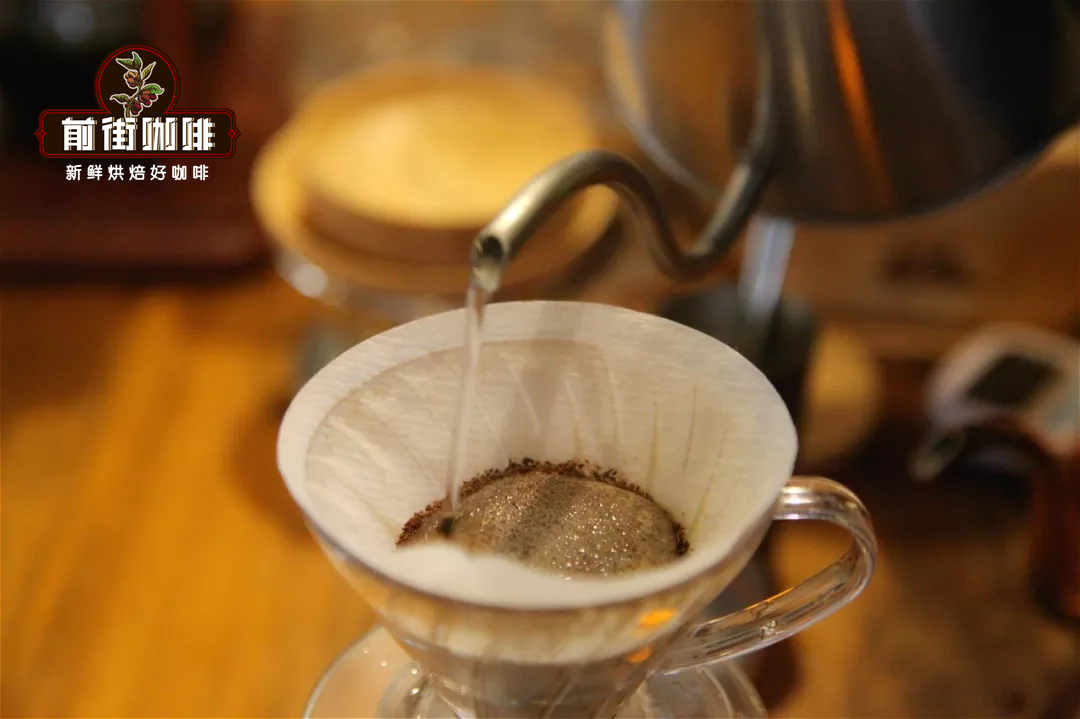
Dripper: V60#01
Water temperature: 90-91℃
Dose: 15g
Grind: Medium-fine (80% passing through China standard No. 20 sieve)
Ratio: 1:15
Three-stage extraction: Bloom with 30g of water for 30 seconds, then pour in a small stream in circles to 125g and pause; when the water level is about to expose the coffee bed, continue pouring to 225g and stop; when the water level is about to expose the coffee bed again, remove the dripper. (Timing starts at bloom) Extraction time is 2 minutes.
Flavor description: The wet aroma is osmanthus and fermented aromas. On the palate, there are complex floral notes and fermented sauce-like notes, with raisin and dried-fruit sweetness, starfruit and berry-like acidity, and a sugarcane sweetness in the aftertaste.

Light Roast Pour-Over Floral Coffee Beans Recommendation: Qianjie Yirgacheffe Gedeo Dingding, Qianjie Panama Hacienda La Esmeralda Green Label Geisha Coffee Beans, QianjiePanama Butterfly Coffee Beans
Daily medium-light roast Yirgacheffe pour-over floral coffee bean recommendation, Qianjie Yirgacheffe Guddina, light roast brings the signature white floral notesAromatic, with lemon-citrus fruit notes and a refreshing floral tea note; bright and crisp on the palate. Great value and an ideal entry-level pour-over coffee with floral and fruity notesAn unrivalled choice.
Moka pot, home espresso, and espresso-based milk drinks like latte — recommended beans: Qianjie Classic Espresso Blend, using BrazilianWest, with Mandheling Arabica and a small amount of Vietnamese Robusta fully blended, delivering a rich and outstanding espressocrema; overall style is rich and memorable. Qianjie Brazil Queen's Estate coffee beans and Qianjie Classic Espresso Blend coffee beans are both mochaA highly recommended option for pot-style espresso machines.
Fruity-floral signature espresso latte bean recommendation: Qianjie Strawberry Candy espresso blend, featuring strawberry gummy and rose aromas,Full-bodied sweetness with a grape and almond finish; especially stunning as an iced latte. Made from Costa Rican honey-process beans, PanamaBlended from Panama Geisha coffee beans and select beans from Colombia's Huila region. Not only does it overturn traditional espresso flavor, the cremaalso performs well, with impressive showings in creative specialty drinks.
Now available on Taobao store「 Qianjie Coffee 」To purchase the above coffee beans, Qianjie Coffee offers dozens of selected single-origin pour-over and espresso coffee beans from around the world. Qianjie CoffeeQianjie Coffee is a veteran specialty coffee roaster; beans are freshly roasted within 5 days, with consistent quality and highly competitive pricesGreat value, ships within 24 hours. Qianjie Coffee is recommended by many coffee lovers and platforms.
Taobao Qianjie Coffee Link: https://qianjiecoffee.taobao.com
Or search our shop directly on Taobao 「Qianjie Coffee」
Qianjie Coffee Store Address: 315 Donghuadong Road, Yuexiu District, Guangzhou

Site Recommendations: 耶加雪菲 花魁咖啡 瑰夏咖啡 波旁咖啡 蓝山咖啡 天堂鸟咖啡豆 曼特宁咖啡豆 PWN黄金曼特宁 星巴克菜单 咖啡豆种类
Please indicate the source when reprinting.
2017-10-12 20:28:41
