The rich, full-bodied taste of Mandheling is highly recognizable among specialty coffees. It is smooth on entry, with bitterness and body blended quite completely, and it leaves a faint herbal aroma and sweetness in the finish. Its homeland is the mountainous area around Lake Toba at the northern tip of Sumatra, Indonesia, at an altitude of about 900 meters. Dutch colonists moved coffee cultivation north to this area in the early years, and the Lintong and Lake Toba areas thus became the core producing region of Mandheling. What is commonly called Mandheling today mostly refers to Typica and its variants grown around Lake Toba. When brewing by hand, mastering the grind and water temperature can steadily bring this richness into the cup.
For professional barista exchanges, please follow Coffee Workshop (WeChat public account cafe_style )
Mandheling is a world-famous specialty coffee. This coffee, relying on its low-acid mouthfeel and mellow, rich flavor, has conquered the taste buds of many people, and it is a coffee-producing country that Front Street has been exploring for so many years. Mandheling is a beautiful misunderstanding. Front Street has shared the background story of Mandheling many times, and I believe many people are already familiar with it. The flavor of Mandheling can be said to be very classic yet with a wonderful mouthfeel. It is mostly dominated by a heavy main tone. On entry, you can feel the rich body but also a rich and lively dynamism. It is low in acid yet not astringent, and its body and bitterness can be said to be blended perfectly. No wonder that before Blue Mountain coffee was discovered, Mandheling was once considered the coffee with the fullest body in the world. When tasting Mandheling, the smoothness on the tip of the tongue can be clearly felt, but there is a faint aroma of herbal plants, and the sweetness in the later stage is even more intoxicating, giving Front Street a kind of obsession with Mandheling.
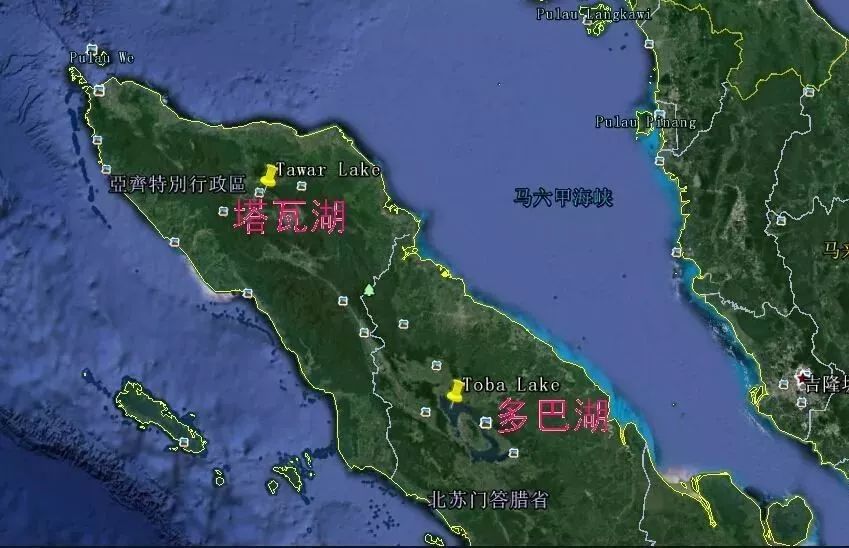
Sumatra Producing Region, Indonesia
Indonesia is located in Southeast Asia. Its coffee history dates back to 1696, when Dutch coffee farm owners tried to find broader coffee-growing land. After much exploration, they finally settled on Java Island in Indonesia. Over the course of 30 years, Indonesia had already established a sufficient foundation in the coffee market. However, today the representative coffee of Indonesia is Mandheling, and this is actually not an unexpected result, because most of the Java coffee initially sold to Europe came from the Sumatra region, and Mandheling comes from Sumatra. Therefore, Sumatra can be said to be an important coffee-producing area in Indonesia.
Mandheling is also called "Sumatra coffee." The homeland of high-quality Mandheling, the Lake Toba area, is located at the northern tip of Sumatra Island, Indonesia. Lake Toba is located in the central part of North Sumatra Province. Dutch colonists moved "Java coffee" north to the Lake Toba area in 1888. The Lintong area of South Sumatra and the Lake Toba area can be called Mandheling; the Lintong area is the Mandheling producing region. Mandheling is produced in the mountainous area around Lake Toba (Lake Toba). This lake is located north of Medan, the provincial capital of Sumatra, and is a highland freshwater lake. The average altitude is about 900 meters. What is usually called Mandheling refers to coffee beans of Typica or its variants grown in the mountainous area around Lake Toba.
[Tawar Lake]
Lake Tawar is located in the Gayo mountain area north of Aceh Province, Sumatra. At the northern tip of Sumatra Island, most of what is produced in North Sumatra is Gayo, mainly the Ateng variety. The northern Lake Tawar area can be called Aceh coffee or Lake Tawar coffee. Its area is less than one-tenth that of Lake Toba. However, in recent years its coffee quality and production have surpassed those of Lake Toba.
The Name Mandheling
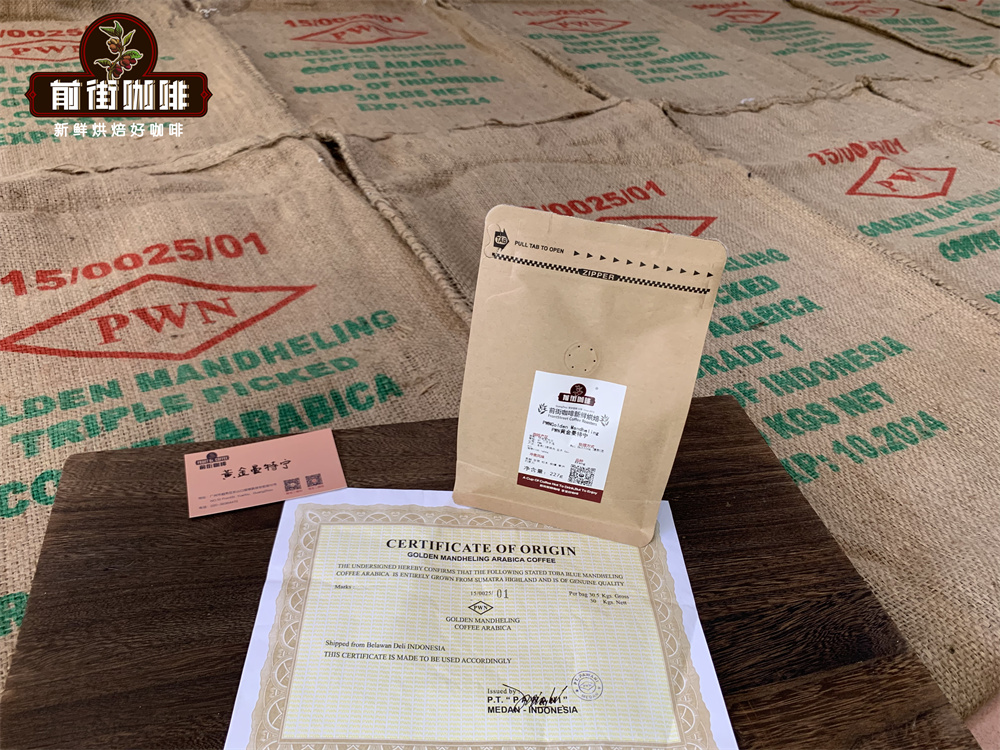
Mandheling originally referred to the name of a tribe in Indonesia. After Japanese soldiers returned to Japan following colonization in Indonesia, they could not forget the delicious local coffee. So, through trade connections, they asked local people to help collect high-quality coffee beans, among which was this Mandheling. The Japanese loved this coffee bean very much. Because the commercial source was inconvenient to disclose, the local person casually said “Mandheling,” and thus Mandheling accidentally became the name of a coffee bean. This local person was the owner of Indonesia's PWN company (Pwani Coffee Company). PWN was the first company to export Golden Mandheling coffee beans to Japan, and only Mandheling produced by this company is authentic Golden Mandheling. FrontStreet Coffee has used Front Street PWN Golden Mandheling for many years. PWN also changed from 60 kg per bag at the beginning to 30 kg per bag later, and the producing region also changed from Lintong to the GAYO mountains.
Processing Method
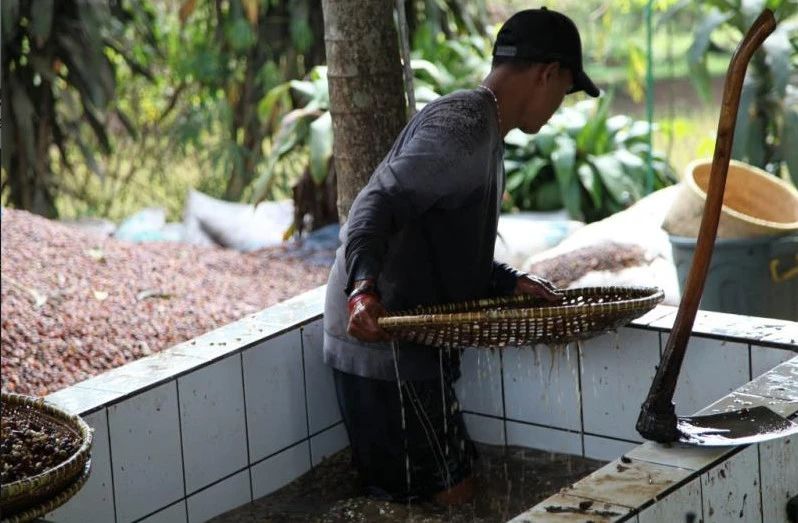
-Special processing method wet-hulling- Mandheling mostly adopts Sumatra's unique coffee bean processing method——wet-hulling. Because the local weather is often rainy, with constant typhoons, it cannot achieve the good weather required for natural sun-drying, and the local economy is not good either, so it is likewise unable to use the more expensive washed method. This gave rise to the wet-hulling method with strong local characteristics. Indonesian coffee development today is no longer the poor scene of the past. There are quite a few estates and companies with certain conditions that can use the washed method, but why has wet-hulling not been abandoned? FrontStreet Coffee believes that wet-hulling is the factor that made Mandheling coffee known to the world. Whenever Mandheling coffee is mentioned, people think of wet-hulling, so they have already become mutually complementary.
The specific steps of wet-hulling can be divided into the following two stages: In the first stage, the skin and pulp are removed with a wooden pulper. After 3 hours of fermentation, the beans are sun-dried until the moisture content drops to 30-50%, half-dry and half-wet. In the second stage, the pectin and parchment layer are removed, and drying continues for the later stage. The drying process takes 2-4 days, and the moisture content drops to 12-13%.
Golden Mandheling is produced in the Lintong area in northern Sumatra, Indonesia. Harvesting is limited to fully manual picking of fully ripe fruit one by one to ensure the initial bean selection quality. The coffee cherries are processed using the SEMI-WASHED semi-washed method, naturally sun-dried, hulled, and then subjected to another fine drying process, two rounds of green bean cleaning, and four rounds of Hand-Pick manual sorting! Therefore, it can be said to be a strictly selected top-grade Mandheling coffee.
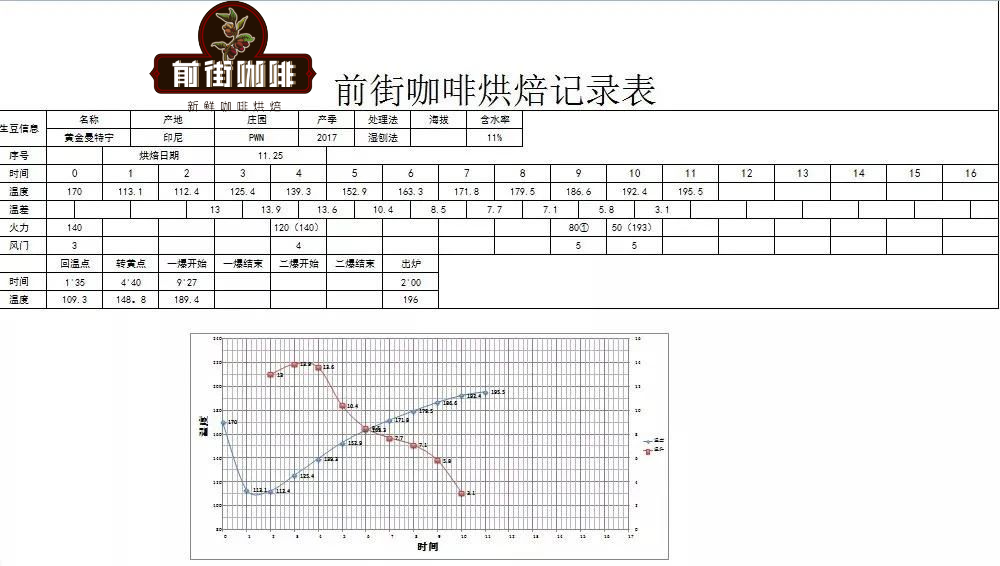
FrontStreet Coffee Golden Mandheling Roasting Analysis
Golden Mandheling is a green bean with relatively high moisture. It has a relatively high deviation in moisture compared with sun-dried beans, so special attention must be paid during dehydration. For green beans with high moisture content, after putting in the green beans, you can immediately close the damper, steam for 30 seconds, then open it to 3, until the color of the green beans turns light green or white, open the damper to 4, and after first crack open it to 5 (maximum).
FrontStreet Coffee recommends keeping data records before roasting, including the moisture content, density, origin, processing method, roasting environment temperature and humidity in the roasting room, etc., and planning your roasting curve. Record the relevant chemical and physical change phenomena during roasting. This will help you better understand the final roasting result and help improve the roasting curve.
When the roaster temperature reaches 200°C, load the beans, set the damper to 3, and after 1 minute adjust the heat to 160°C with the damper unchanged. Roast until 5‘40”, when the temperature is 148°C, the bean surface turns yellow, the grassy smell completely disappears, and dehydration is complete. Adjust the heat to 140°C and change the damper to 4; at 9‘40, the bean surface shows ugly wrinkled folds and dark streaks, and the toasted bread smell clearly turns into coffee aroma. This can be defined as the prelude to first crack. At this time, listen clearly for the sound of the first crack point. At 9’54” first crack begins. Reduce the heat to 60°C and open the damper fully (adjust the heat very carefully, not so low that there is no crackling sound). Drop the beans at 204.5°C.
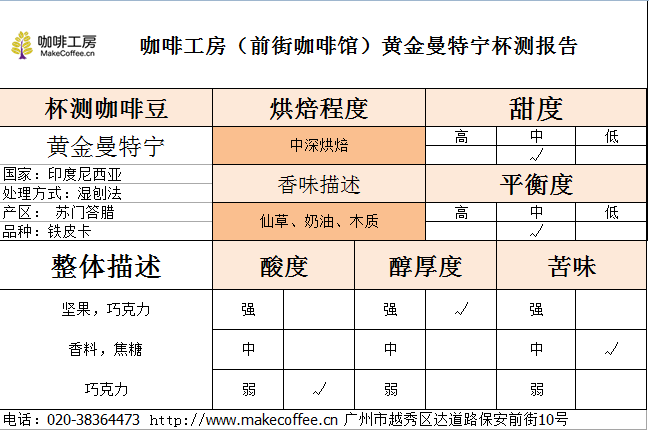
FrontStreet Coffee Golden Mandheling Cupping Report
Golden Mandheling tastes cleaner than Lintong Mandheling. The original herbal, earthy, and woody flavors of Mandheling are almost gone, but the caramel sweetness is stronger, and the fruity acidity is also brighter and more elegant. Generally, Lintong Mandheling is best dropped after second crack, which can effectively reduce miscellaneous flavors, but Golden Mandheling has excellent transparency and sweetness whether dropped before or after second crack, and the room for roasting interpretation is broader.
How to brew Indonesian Mandheling coffee?
Front Street recommends using freshly roasted coffee beans for brewing, so that you can experience the rich flavor of the coffee to the greatest extent. The coffee beans shipped by FrontStreet Coffee are all within5 days of roasting, because Front Street deeply understands that the freshness of coffee beans has a great impact on flavor. The purpose of Front Street roasting is「freshly roasted good coffee」, so that every customer who places an order receives the freshest coffee when they get it. The resting period for coffee is about4-7 days, so when the customer receives it, it is exactly at its best flavor.
For daily brewing of Mandheling, FrontStreet Coffee generally uses the KONO dripper, because the mouthfeel it brings out is rounder and fuller, and the flavor expression is more direct. However, the KONO dripper has relatively poor exhaust effect, because its ribs are straight and its depth is only one quarter of the dripper. Apart from the area above this quarter, it fits tightly against the cup wall and forms a sealed state.
Therefore, after the beans have passed the resting period, I will choose the KONO dripper, because the only exhaust part of this dripper is in that quarter of ribs. When the water level passes over the rib area, the water volume in the dripper keeps rising, and pressure is increased by the weight of the water. Because the outlet is relatively small, the contact time between coffee particles and water can be extended a little longer. Driven by the water flow, this can more effectively bring out soluble substances and generally achieve the high-body effect expected by customers.
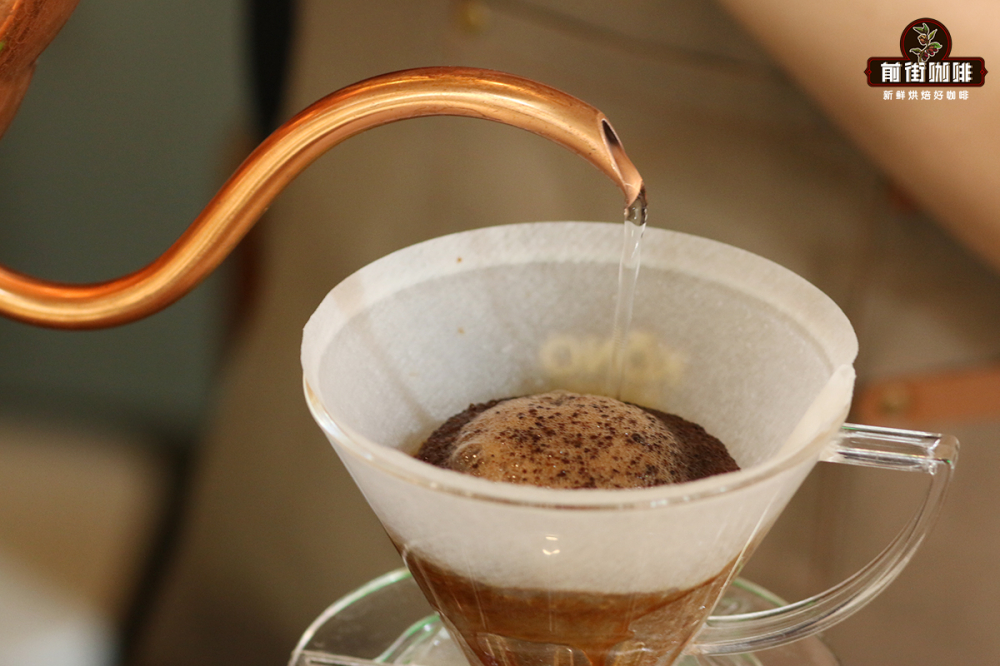
Because we want to better express Mandheling's spice and herbal flavors as well as its rich mouthfeel, FrontStreet Coffee uses medium-dark roasting for Mandheling coffee beans. Medium-dark roasted beans generally have a higher dehydration rate, so they are lighter in weight. During brewing, the grounds do not completely sink to the bottom. As soon as water is poured in, it is immediately absorbed. Due to vigorous degassing, there are bubbles around the grounds, thus creating channels. The fresher the beans, the longer these channels last, causing the water level to drop quickly. I generally use a thick water stream, slowly in circles, using the one-pour method.
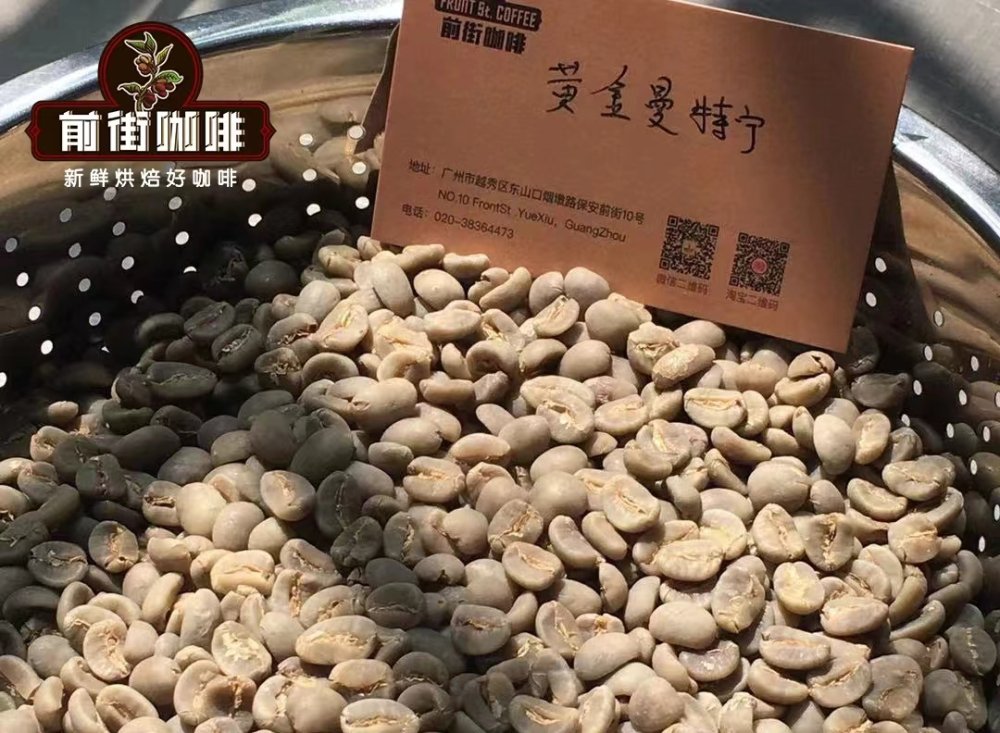
Take FrontStreet Coffee Sumatra Golden Mandheling as an example
Origin: Gayo Mountain, Aceh, Indonesia
Altitude: 1100-1600m
Variety: Ateng
Processing method: Wet-hulled
Grade: G1, 3 times hand-sorted
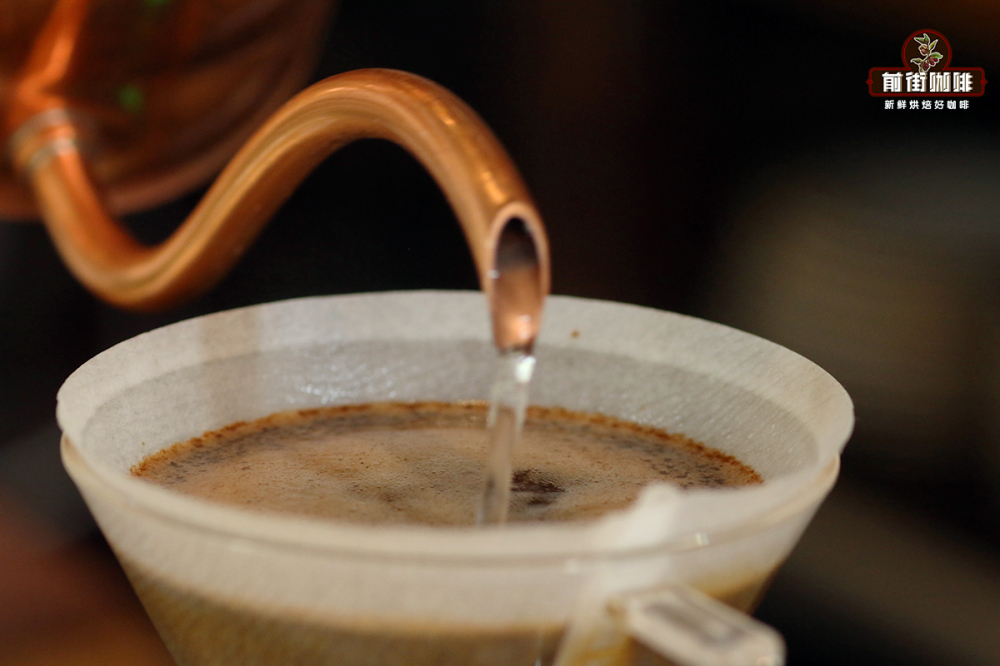
FrontStreet Coffee Brewing Mandheling Coffee
1. Dripper: KONO
2. Water temperature: 88°C
3. Grind size: medium-coarse grind, 70% passing through a No. 20 sieve
5. Blooming time: 30 seconds
6. Coffee-to-water ratio 1:15
Method: For the first pour, use 30g of water and bloom for 30s, then pour directly in circles. Stop pouring after reaching 125g. When the liquid level drops to 1/2, pour directly in the center until the water amount reaches 225g. Extraction time about 2:00.
[Golden Mandheling Brewing Flavor]: Nuts, spices, herbs, licorice, chocolate, caramel, with a clean and gentle flavor
For more specialty coffee knowledge, please add the private WeChat of FrontStreet Coffee. WeChat ID: kaixinguoguo0925

Light Roast Pour-Over Floral Coffee Beans Recommendation: Qianjie Yirgacheffe Gedeo Dingding, Qianjie Panama Hacienda La Esmeralda Green Label Geisha Coffee Beans, QianjiePanama Butterfly Coffee Beans
Daily medium-light roast Yirgacheffe pour-over floral coffee bean recommendation, Qianjie Yirgacheffe Guddina, light roast brings the signature white floral notesAromatic, with lemon-citrus fruit notes and a refreshing floral tea note; bright and crisp on the palate. Great value and an ideal entry-level pour-over coffee with floral and fruity notesAn unrivalled choice.
Moka pot, home espresso, and espresso-based milk drinks like latte — recommended beans: Qianjie Classic Espresso Blend, using BrazilianWest, with Mandheling Arabica and a small amount of Vietnamese Robusta fully blended, delivering a rich and outstanding espressocrema; overall style is rich and memorable. Qianjie Brazil Queen's Estate coffee beans and Qianjie Classic Espresso Blend coffee beans are both mochaA highly recommended option for pot-style espresso machines.
Fruity-floral signature espresso latte bean recommendation: Qianjie Strawberry Candy espresso blend, featuring strawberry gummy and rose aromas,Full-bodied sweetness with a grape and almond finish; especially stunning as an iced latte. Made from Costa Rican honey-process beans, PanamaBlended from Panama Geisha coffee beans and select beans from Colombia's Huila region. Not only does it overturn traditional espresso flavor, the cremaalso performs well, with impressive showings in creative specialty drinks.
Now available on Taobao store「 Qianjie Coffee 」To purchase the above coffee beans, Qianjie Coffee offers dozens of selected single-origin pour-over and espresso coffee beans from around the world. Qianjie CoffeeQianjie Coffee is a veteran specialty coffee roaster; beans are freshly roasted within 5 days, with consistent quality and highly competitive pricesGreat value, ships within 24 hours. Qianjie Coffee is recommended by many coffee lovers and platforms.
Taobao Qianjie Coffee Link: https://qianjiecoffee.taobao.com
Or search our shop directly on Taobao 「Qianjie Coffee」
Qianjie Coffee Store Address: 315 Donghuadong Road, Yuexiu District, Guangzhou

Site Recommendations: 耶加雪菲 花魁咖啡 瑰夏咖啡 波旁咖啡 蓝山咖啡 天堂鸟咖啡豆 曼特宁咖啡豆 PWN黄金曼特宁 星巴克菜单 咖啡豆种类
Please indicate the source when reprinting.
2023-03-06 11:24:53
