SOE refers to Single Origin Espresso, using one bean to fully present the flavor profile of a certain producing region. After the concept of specialty coffee became widespread, the unique characteristics of each producing region have become increasingly familiar to coffee enthusiasts, and SOE has become popular along with it. When selecting beans, one must consider both whether the bean's own fruity and floral acidity and body can hold up under the high concentration of espresso, and also take into account its performance when paired with milk. The differences between beans from different regions are often amplified more clearly after being extracted as espresso.
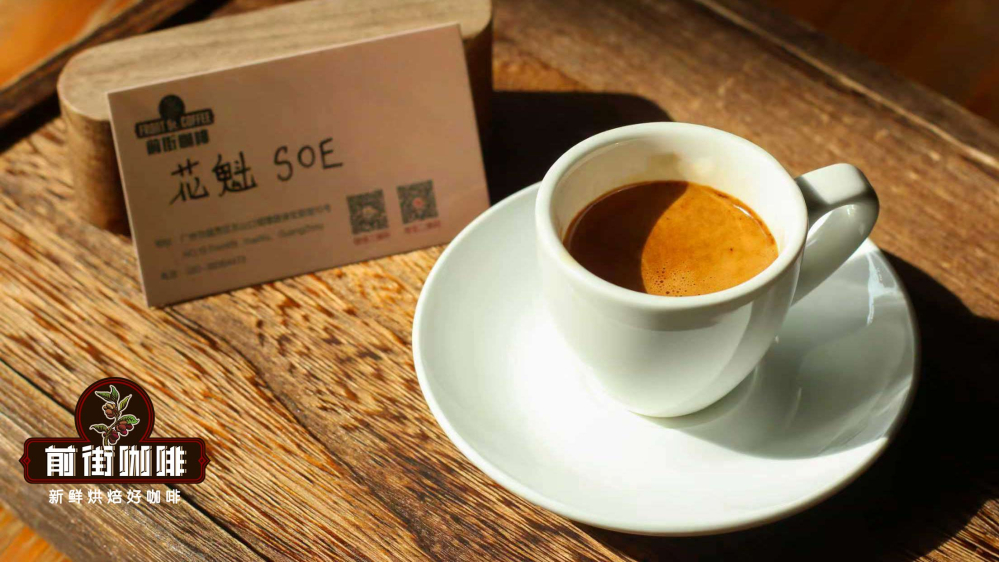
After the concept of "specialty coffee" emerged, the unique flavors of each producing region have become increasingly well-known to coffee connoisseurs, and SOE has become increasingly popular in the coffee market. So how do you choose a suitable SOE coffee bean?
SOE
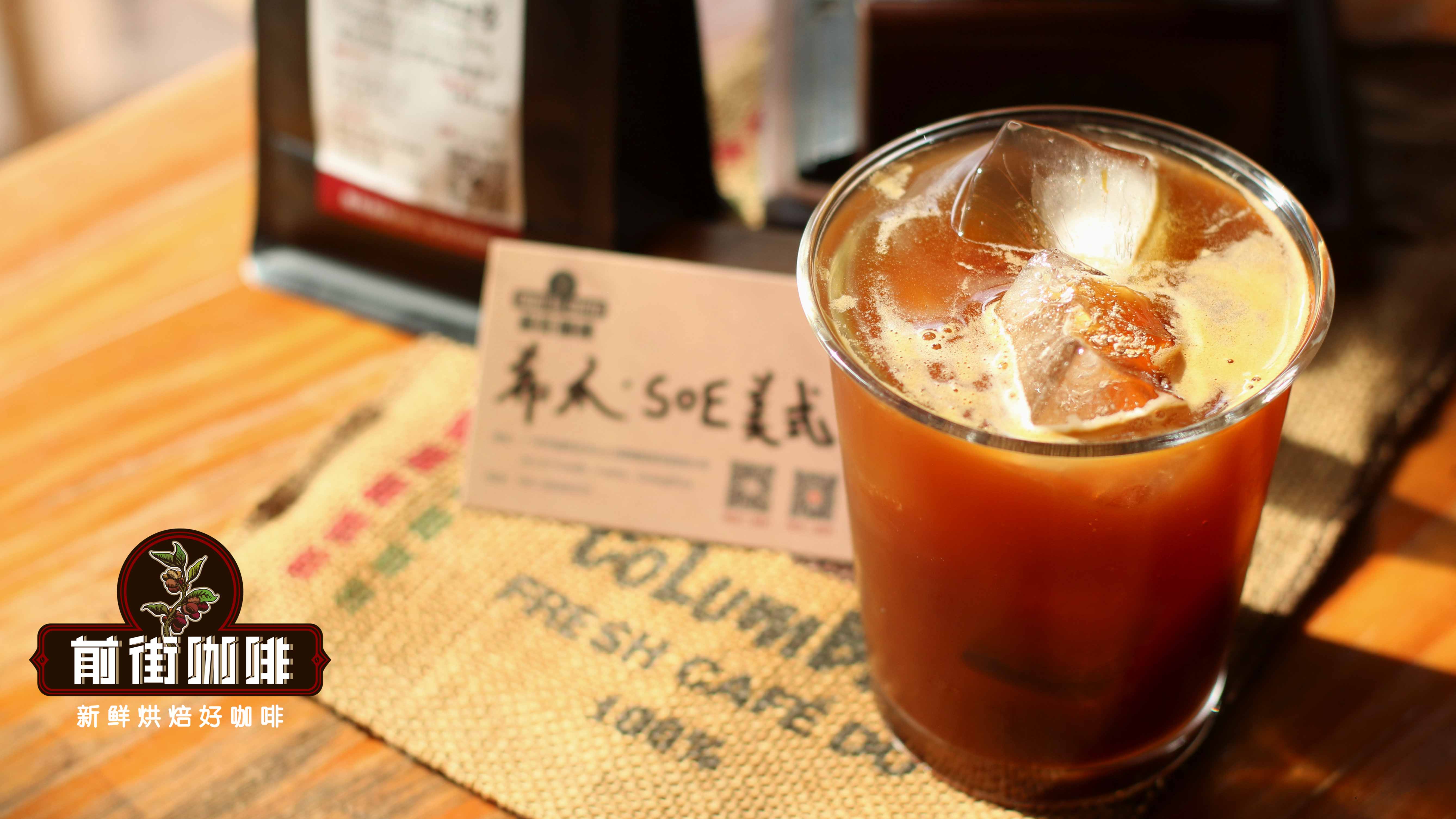
SOE is the abbreviation of "Single Origin Espresso," meaning "single origin espresso." Its focus is to highlight the coffee flavor of a certain origin; in practice, it is using single origin coffee beans to showcase their flavor in the form of espresso.
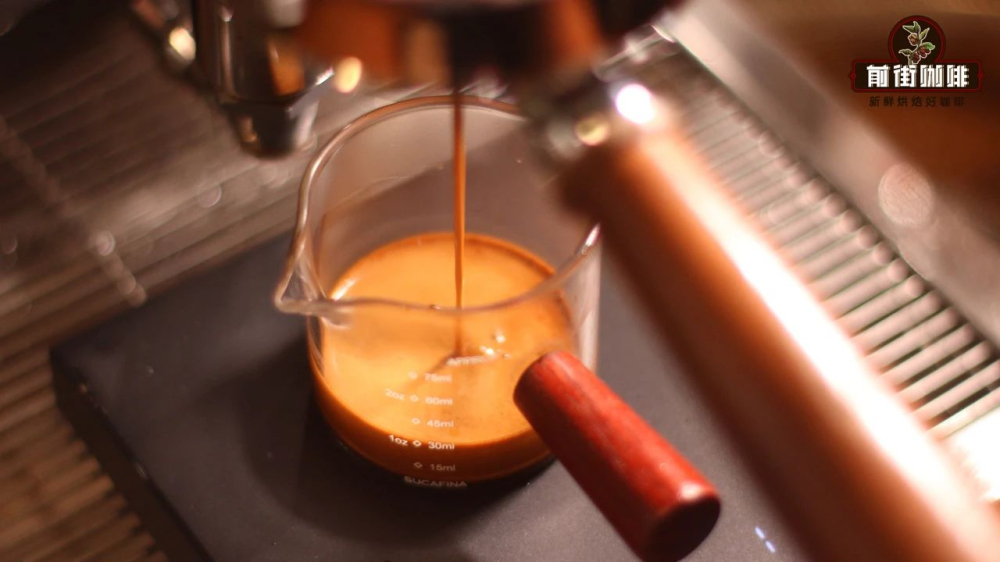
Since its birth, SOE has been labeled as coffee with the good flavors of its producing region, which means the coffee chosen can highlight the unique flavor of the region, giving people a refreshing impression.
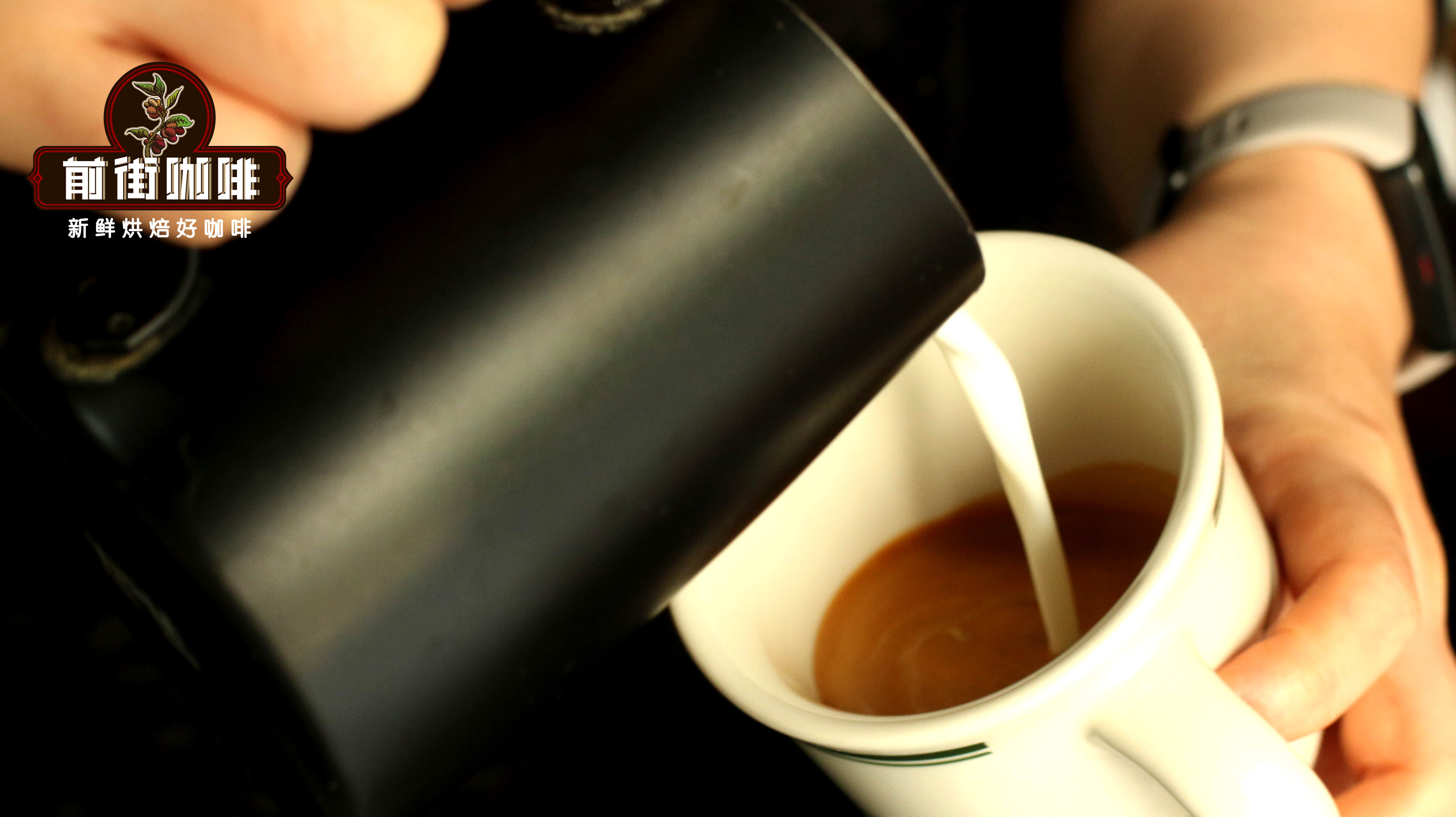
The characteristic of espresso output is that it enhances the flavor characteristics of the producing region. Besides "concentrating" the coffee's aroma, it also increases its acidity. Secondly, for most people, the purpose of producing espresso is to use it as a base for milk coffee, so the requirement for crema is naturally indispensable.
Unlike pour-over and other drip-style coffees, espresso releases most of its aromatic compounds in just twenty to thirty seconds, and espresso has a layer of golden Crema, which is what we call crema. Besides the coffee's own oils, it also includes the carbon dioxide released from freshly roasted coffee beans.
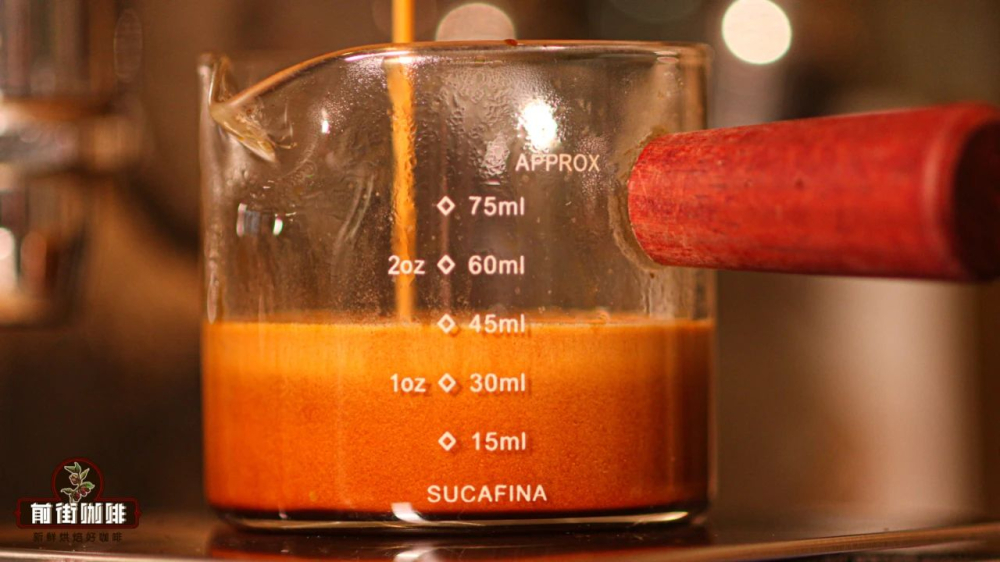
Crema is essentially the insoluble oils in coffee beans wrapping around carbon dioxide, and the carbon dioxide is saturated with the coffee's flavor compounds. Therefore, the richness of crema determines, to a certain extent, the richness of espresso's flavor. Sufficient crema is what supports the flavor display of a cup of espresso. This is also the reason why freshly roasted beans have more crema.
In other words, the general espresso requirement is just that much acidity, along with more suitable crema performance. So, setting flavor aside, what degree of roast is suitable for SOE espresso use?
Here, we use espresso, which uses very finely ground coffee powder, at a 1:1.9~1:2 dry coffee to liquid yield ratio, under high temperature (94°C) and high pressure (9bar), 25s~35s, as a reference benchmark for the extracted coffee liquid.
Qianjie tried using three different roast levels of everyday beans, including light-roasted Yirgacheffe, medium-roasted Brazil, and dark-roasted Mandheling beans, to make a standard espresso, observing the richness of crema at different roast levels.
Extraction Parameters | Coffee Grounds Weight | Coffee Liquid Weight | Extraction Time |
Yirgacheffe | 20g | 38g | 28 seconds |
Brazil | 20g | 38g | 30 seconds |
Mandheling | 20g | 38g | 30 seconds |
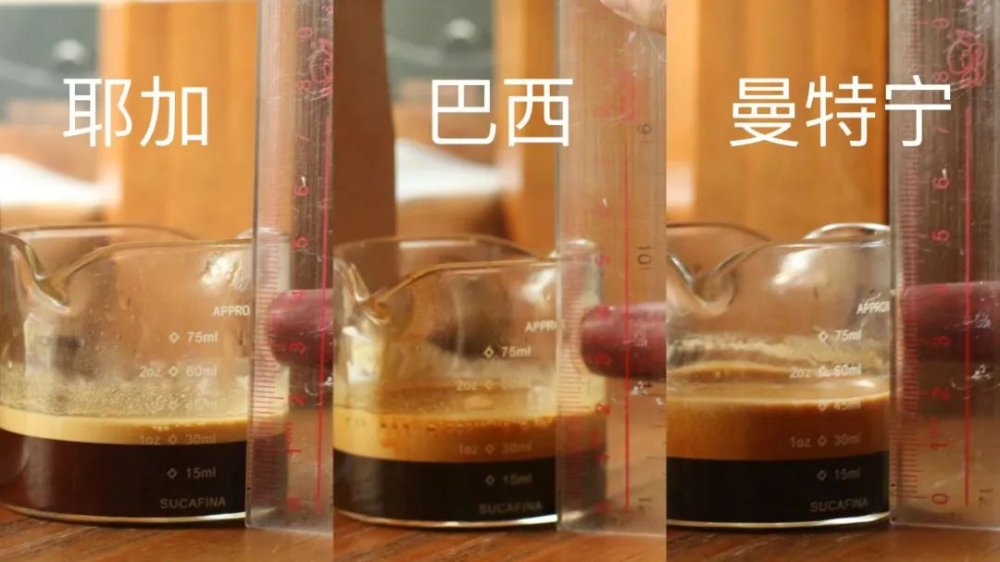
From this, we can intuitively see that under the same extraction parameters, the light-roasted Yirgacheffe has less crema than the medium-roasted Brazil and Mandheling, and the crema color is also lighter than the latter two; while the medium-roasted Brazil has less crema than Mandheling. That is, in terms of crema richness: Yirgacheffe < Brazil < Mandheling. Therefore, this is why we tend to choose medium-roasted and medium-dark-roasted beans when selecting coffee beans for making espresso in our daily lives.
Of course, this is a trade-off made from the perspective of crema requirements. In terms of taste, the light-roasted Yirgacheffe offers a rich citric acidity at the first sip, but it is fleeting with a short finish and a thin body.
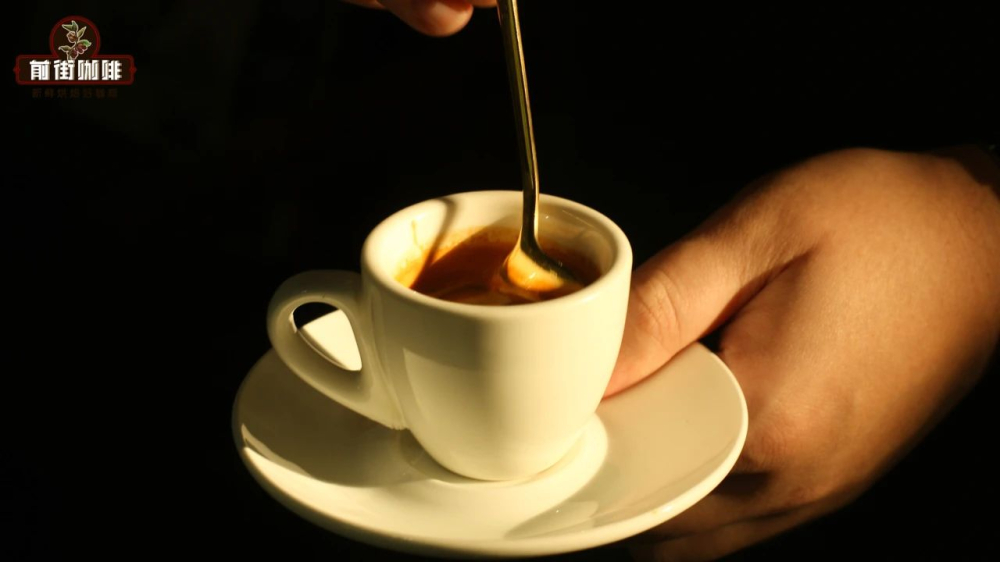
The medium-roasted and dark-roasted Brazil and Mandheling, on the other hand, have an overall bitter flavor with rich nutty and chocolate notes, sufficient sweetness, a smooth and full body, and a long aftertaste; Mandheling has an extra herbal note at the finish compared to Brazil.
The light-roasted Yirgacheffe does not perform as well in terms of crema, but if what you pursue is the acidity of espresso, then you can also choose to use light-roasted coffee beans to make SOE; however, if you want a cup of SOE with rich crema and a smooth, full body, then Qianjie still recommends using medium to medium-dark roasted coffee beans to make SOE.
Although a high-quality SOE can well reflect the taste of a producing region, its shortcoming is also that it can only reflect the taste of the producing region. For example, the light-roasted Qianjie Yirgacheffe mentioned above—if you like its acidity and elegant floral aroma but always feel the body is insufficient and the mouthfeel too thin. If the roaster follows your suggestion and changes the roasting curve to increase the body, it will lose some of the fruity acidity and floral aroma. "Blending" is the most cost-effective choice to solve this kind of problem, complementing and matching according to the flavor characteristics of different producing regions to achieve balance in taste.
This is just a comparison result we made using everyday beans with the most basic flavors. In daily application, we tend to choose higher-priced single origin specialty coffee beans as SOE options, such as the Qianjie Sidra with grape and passion fruit flavors. In this case, because these single origin beans already have outstanding aroma, when expressed through espresso, setting aside the crema requirement, most beans will be very outstanding, and the only drawback is—too expensive!!!
If we go even more extreme, crossing beyond everyday beans and even beyond SOE, the result of making a Geisha blend can be imagined—for example, Qianjie's Costa Rica Blend Milasu, which is medium-roasted to meet the crema requirement while also being composed of outstanding specialty beans. Under espresso, a candy-like aroma is nothing surprising.
Therefore, this article merely uses the angle of the effect of roast level on crema to let us clearly understand the benchmark of crema performance and provide the reason for using medium-roasted and medium-dark-roasted coffee beans to produce espresso. If you want to drink a stronger acidity while also being able to accept an SOE with less ideal crema performance, light-roasted coffee beans can also seem to meet your requirements.

Light Roast Pour-Over Floral Coffee Beans Recommendation: Qianjie Yirgacheffe Gedeo Dingding, Qianjie Panama Hacienda La Esmeralda Green Label Geisha Coffee Beans, QianjiePanama Butterfly Coffee Beans
Daily medium-light roast Yirgacheffe pour-over floral coffee bean recommendation, Qianjie Yirgacheffe Guddina, light roast brings the signature white floral notesAromatic, with lemon-citrus fruit notes and a refreshing floral tea note; bright and crisp on the palate. Great value and an ideal entry-level pour-over coffee with floral and fruity notesAn unrivalled choice.
Moka pot, home espresso, and espresso-based milk drinks like latte — recommended beans: Qianjie Classic Espresso Blend, using BrazilianWest, with Mandheling Arabica and a small amount of Vietnamese Robusta fully blended, delivering a rich and outstanding espressocrema; overall style is rich and memorable. Qianjie Brazil Queen's Estate coffee beans and Qianjie Classic Espresso Blend coffee beans are both mochaA highly recommended option for pot-style espresso machines.
Fruity-floral signature espresso latte bean recommendation: Qianjie Strawberry Candy espresso blend, featuring strawberry gummy and rose aromas,Full-bodied sweetness with a grape and almond finish; especially stunning as an iced latte. Made from Costa Rican honey-process beans, PanamaBlended from Panama Geisha coffee beans and select beans from Colombia's Huila region. Not only does it overturn traditional espresso flavor, the cremaalso performs well, with impressive showings in creative specialty drinks.
Now available on Taobao store「 Qianjie Coffee 」To purchase the above coffee beans, Qianjie Coffee offers dozens of selected single-origin pour-over and espresso coffee beans from around the world. Qianjie CoffeeQianjie Coffee is a veteran specialty coffee roaster; beans are freshly roasted within 5 days, with consistent quality and highly competitive pricesGreat value, ships within 24 hours. Qianjie Coffee is recommended by many coffee lovers and platforms.
Taobao Qianjie Coffee Link: https://qianjiecoffee.taobao.com
Or search our shop directly on Taobao 「Qianjie Coffee」
Qianjie Coffee Store Address: 315 Donghuadong Road, Yuexiu District, Guangzhou

Site Recommendations: 耶加雪菲 花魁咖啡 瑰夏咖啡 波旁咖啡 蓝山咖啡 天堂鸟咖啡豆 曼特宁咖啡豆 PWN黄金曼特宁 星巴克菜单 咖啡豆种类
Please indicate the source when reprinting.
2025-12-30 13:37:55
