Ice drip coffee relies on ice cubes naturally melting into low-temperature water, which passes through the coffee grounds drop by drop. The entire process often lasts several hours. The low temperature reduces the volatilization of aromatic compounds; when the coffee liquid enters the mouth and warms up, the aromas hidden within are instead released in a concentrated burst, and the mouthfeel becomes fuller. Compared with the high-temperature rapid extraction of pour-over, these are two completely different brewing paths.
Ice drip coffee relies on ice cubes naturally melting into low-temperature water, which passes through the coffee grounds drop by drop. The entire process often lasts several hours. The low temperature reduces the volatilization of aromatic compounds; when the coffee liquid enters the mouth and warms up, the aromas hidden within are instead released in a concentrated burst, and the mouthfeel becomes fuller. Compared with the high-temperature rapid extraction of pour-over, these are two completely different brewing paths.
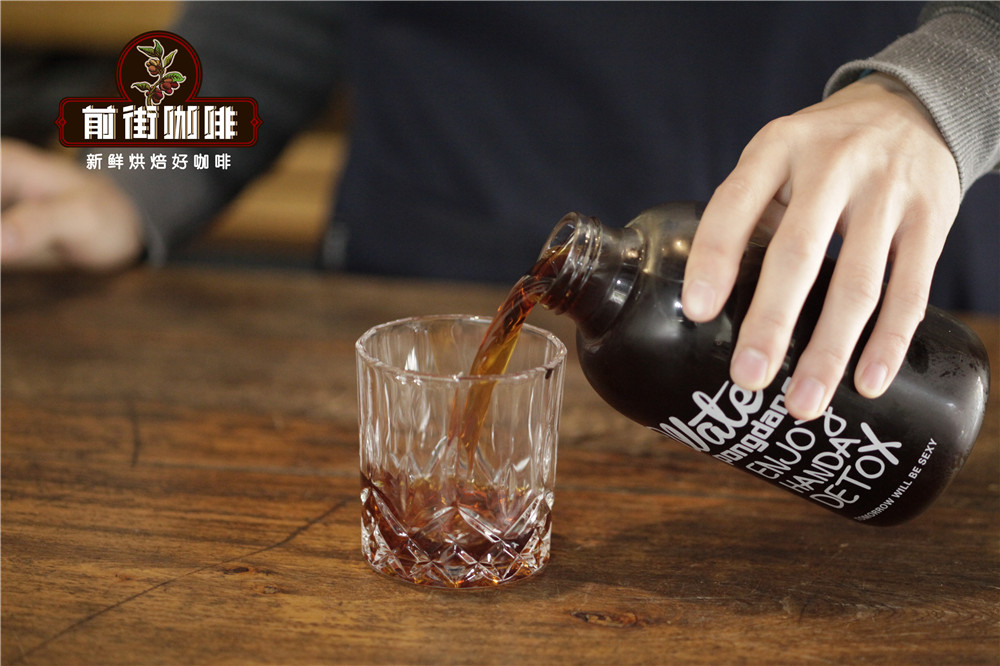
Ice drip coffee, also called ice-brewed coffee or water-drop coffee, is known in English as Ice Drip coffee, and is a method of making a coffee beverage. What is generally referred to as cold brew coffee is made by soaking ground coffee beans in room-temperature water for as long as ten-plus hours, after which special filter paper or a filter is needed to separate the water from the coffee components. There is also a type of ice drip coffee that uses ice cubes naturally melting into ice water, dripping drop by drop into coffee grounds to extract the coffee. This process is slow and often takes several hours, so ice drip coffee is relatively expensive, but its taste is excellent. It is a completely different brewing method from the pour-over coffee we commonly use.
Ice drip coffee, as the name suggests, is coffee brewed with low-temperature water, while the pour-over coffee we normally drink is brewed with high-temperature water. These two are completely different operations! The advantage of high-temperature extraction is that it can quickly extract the flavor compounds of coffee, causing the tannic acid in coffee to rapidly break down into pyrogallic acid, producing sourness, sweetness, and bitterness—which is what Front Street often calls the process of releasing coffee flavors. The disadvantage of high-temperature extraction is that it easily causes the coffee flavors to be fully released and then begin to release the flavors of the coffee beans' woody fiber—what we often call off-flavors, woody notes, and other unpleasant tastes.
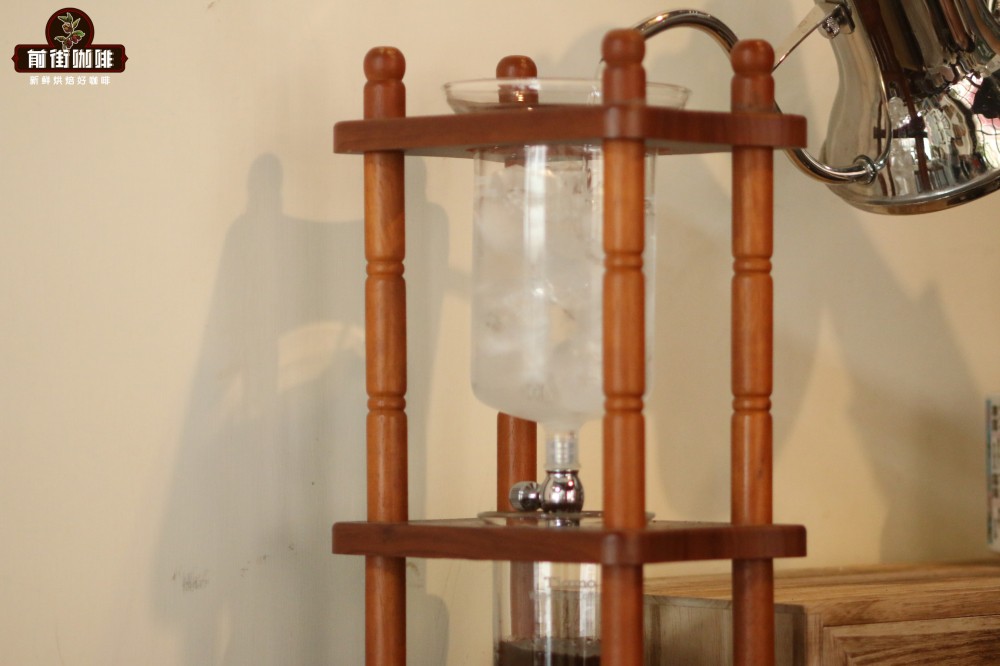
Low-temperature coffee extraction uses near-zero-degree ice water for extraction, allowing the flavors in the coffee to volatilize less under low-temperature conditions and storing the coffee aromas in the coffee liquid as much as possible. Then, when it is drunk and enters the mouth, the temperature of the coffee liquid rises, and the aromas contained in the coffee liquid suddenly burst out in a big way, letting the coffee drinker feel a strong aroma at the back root of the tongue in the mouth cavity. This sudden aroma burst creates a great sense of happiness. The disadvantage is that the production time is longer, and the drip-filtered ice drip coffee cannot be drunk immediately; it must be placed in the refrigerator to rest for more than 8 hours so that the flavor molecules extracted at low temperature can be fully released.
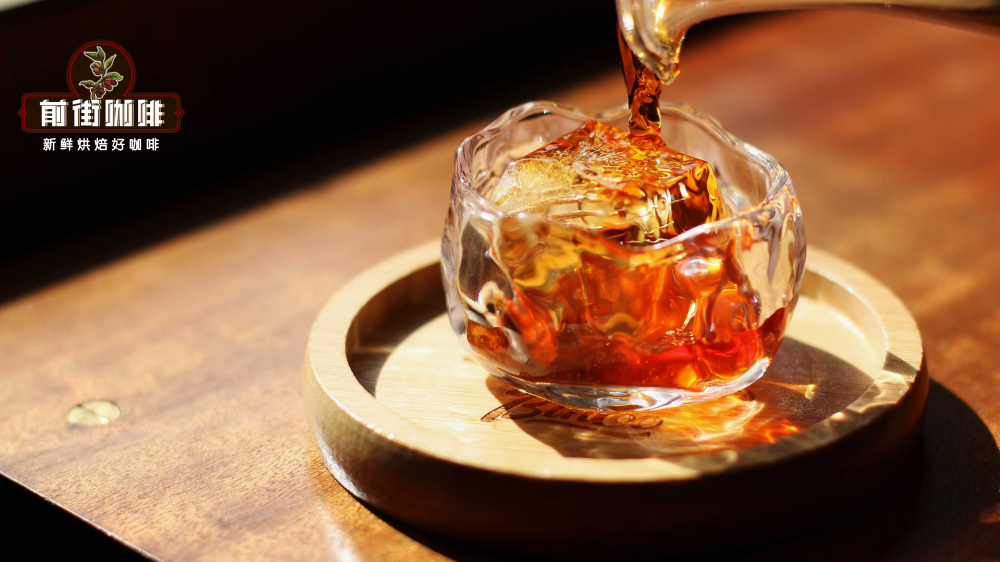
After slight fermentation, ice drip coffee carries a faint fermented aroma, and the mouthfeel also tends to become fuller. Because it is not extracted at high temperature, relatively fewer impurities in the coffee are extracted, and the caffeine is slightly lower; but some friends say that because the extraction time is relatively long, the caffeine will be relatively higher. Actually, Front Street also acknowledges this view—with long extraction, caffeine should not be underestimated. So, if friends affected by caffeine are afraid of sleeping poorly after drinking ice drip coffee, they can choose decaf coffee. Front Street's Colombia Swiss Water Process decaf coffee is also quite good!
The Origin of Ice Drip Coffee
Ice drip coffee originated in Europe. Because the coffee distiller was invented by the Dutch, some people call it Dutch Coffee, distilled coffee, or water-drop coffee. "In the 1600s, Dutch sailors were transporting coffee back to Europe from the then-colony of Indonesia. Because there was no hot water on the ship, they could not drink hot coffee, so they came up with ice drip coffee. Coffee extracted with cold water has a mild and smooth taste and a fragrant aroma, and not only the sailors but also ordinary people loved it."
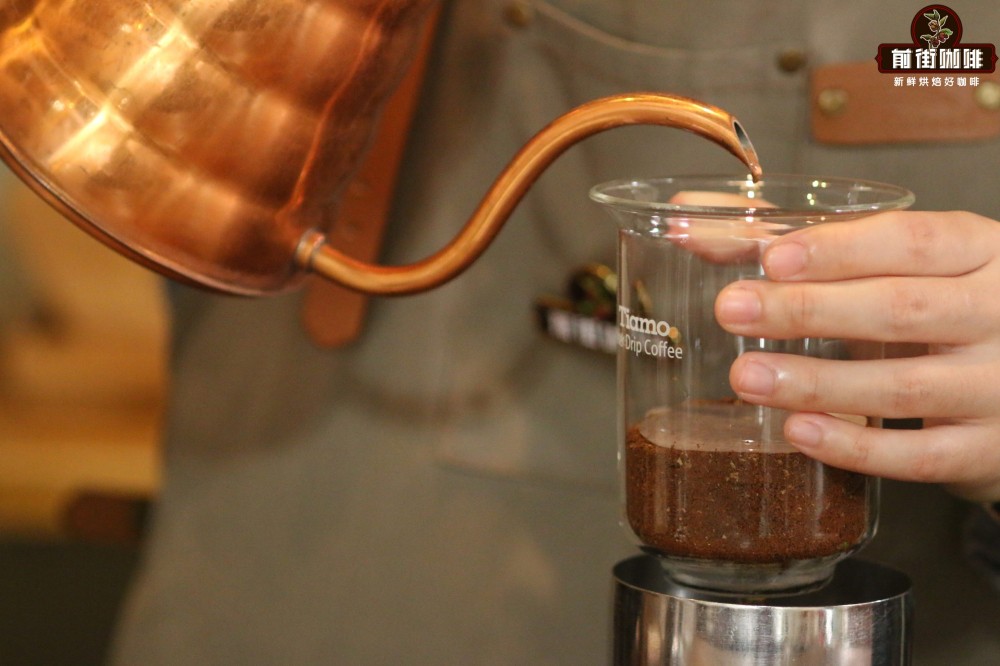
Although ice drip is called Dutch coffee, it does not actually have deep ties to the Netherlands. Instead, it has deep ties to Japan, so it is also called Kyoto coffee. The owner of Kyoto Hanabusa Coffee read in a coffee book about the coffee-brewing method of the locals in the then-Dutch colony of Indonesia and became very interested in that method. Then, based on the description in the book at the time, with the help of chemistry students at Kyoto University and a medical device company, he developed an ice drip device, wanting to reproduce the Indonesian brewing method, and thus invented ice drip coffee. Later it became popular in Europe and America, and Europeans and Americans, because they were unclear about this history, simply called it Kyoto coffee.
In Western countries, including the Netherlands, what is mainly used is not Japan's drip style (an extraction method in which ice water drips down drop by drop), but rather the so-called "Cold-Brew" immersion style (soaking coffee grounds in cold water for a long time) for cold extraction. Moreover, in the West there is also no so-called ice drip coffee (Dutch Coffee).
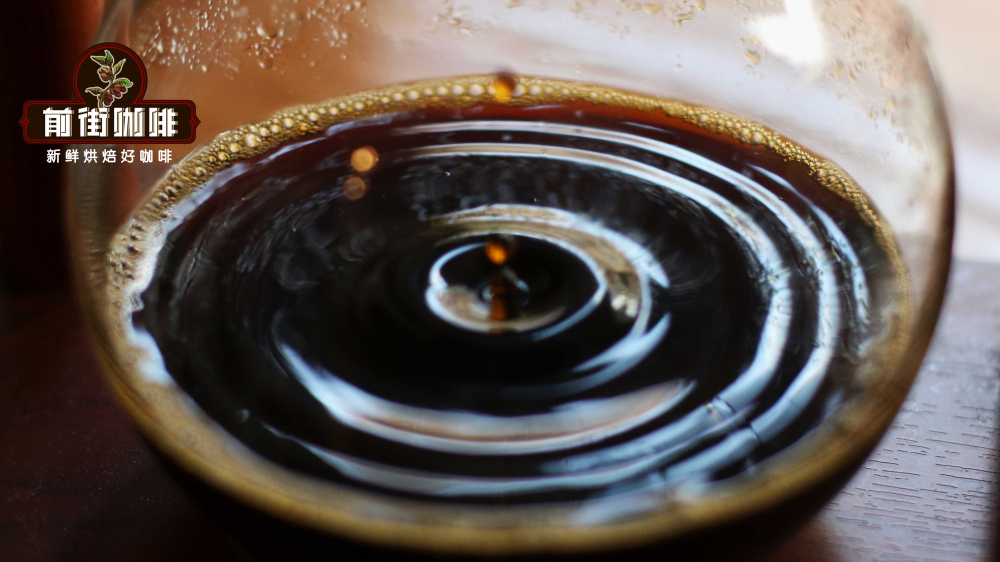
Drinking coffee is mainly about drinking the flavor you like. If you brew it yourself, you will certainly also choose the coffee beans you like to brew. There are many kinds of coffee beans. Although it can be said that all coffee beans can be used for pour-over, if making ice drip, can all coffee beans also be used? Front Street believes that under normal circumstances, yes, but if some coffee beans are used for ice drip, the taste may not be as good. Front Street believes that for making ice drip coffee, it is better to choose some representative single-origin coffee beans. Ice drip coffee uses a relatively long cold-water permeation extraction, so beans with strong character such as Kenya and Yirgacheffe will produce coffee with a lot of personality. Of course, Front Street sometimes also chooses blends of two or more beans to make ice drip coffee. Compared with cold brew coffee, ice drip coffee has more aroma, and its taste is more delicate and subtle.
How to Choose Coffee Beans for Ice Drip Coffee
Here are several types of coffee beans with relatively typical flavors introduced by Front Street for your reference:
1. Tropical fruit and fermented wine aroma type
Coffee beans with special processing methods: such as Front Street Mozart coffee, which has the sweet-and-sour taste of dark berries, plus the wine aroma produced by aging at low temperature, making the overall mouthfeel even better; Front Street Colombia's Flower Moon Night coffee, Honduras' Sherry coffee, and Costa Rica's Strawberry Candy coffee have very obvious aromas and are likewise suitable for iced pour-over and cold brew methods.
2. Refreshing and clean type
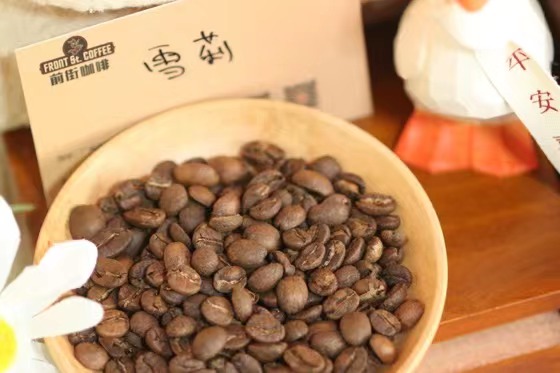
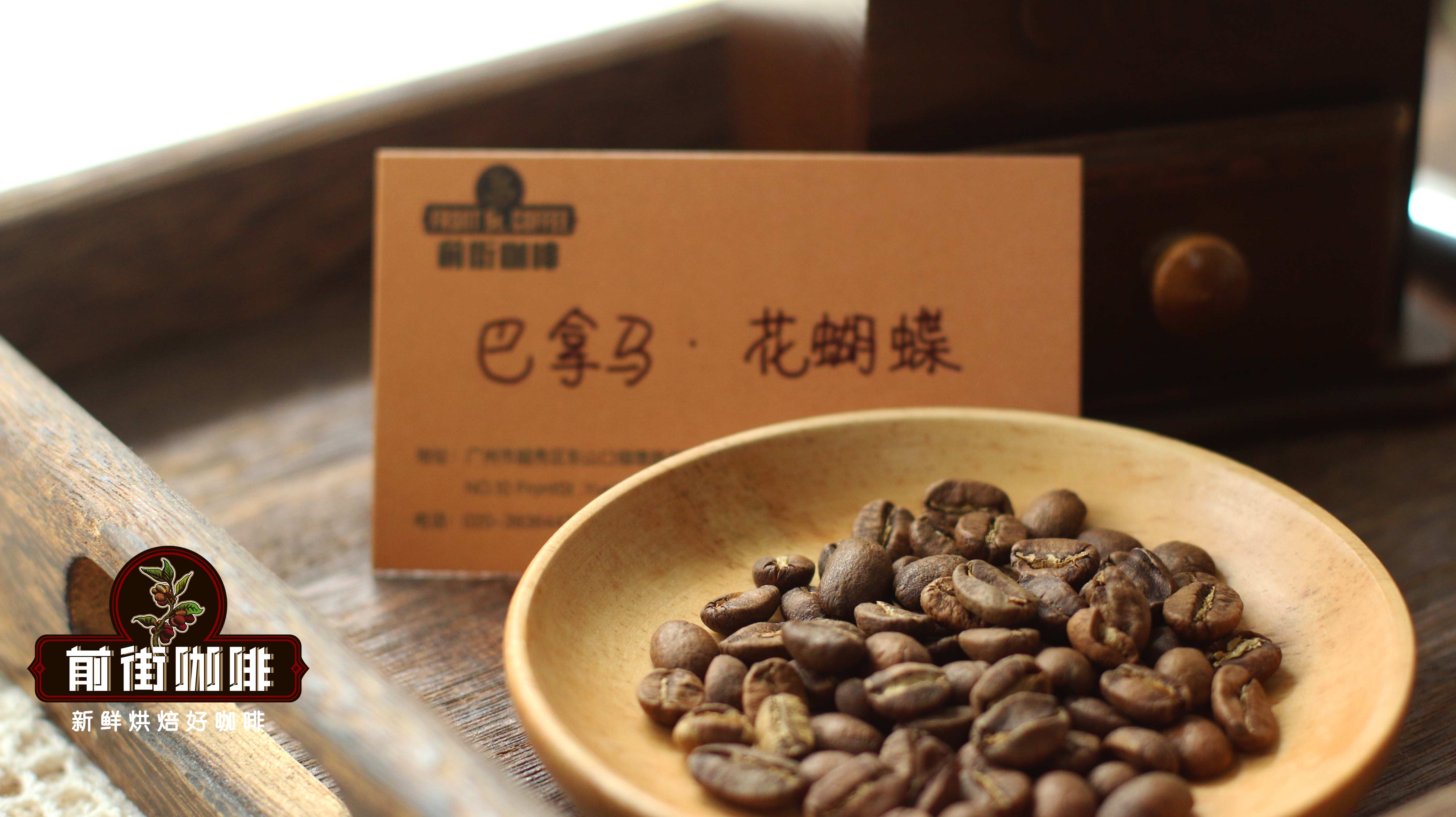
The refreshing and clean type belongs to African coffee beans, such as coffee from Ethiopia's Yirgacheffe region, Kenya Asalia coffee, etc.; but Panama's washed Butterfly Geisha blend also has a distinctive flavor!
3. Sweet and pleasant type
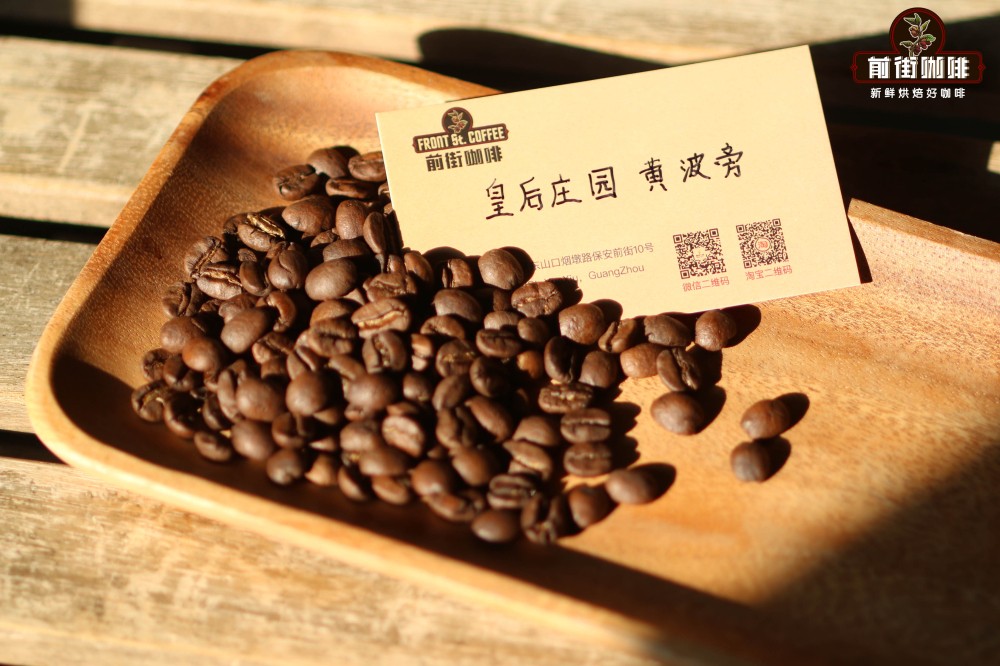
The above two types of coffee beans are medium-light roasts; dark roasts may be more intended for espresso. But Front Street has tried using Indonesia's Golden Mandheling to make ice drip coffee. After adding ice cubes, it has a rich chocolate sweetness and also a fermented aroma, without any bitterness at all. If you cannot accept the "heavy taste" of Mandheling coffee, Front Street believes that Brazil's Queen's Farm can also present nutty and chocolate flavor tones, and with dilution by ice cubes it also has a smooth creamy mouthfeel.
4. Flavor blend type
Espresso coffee is mostly made as a blend, so ice drip coffee can likewise be made that way. In addition to using single-origin beans with clear flavors, ice drip coffee can also choose to extract two or more single-origin beans together. For example, Front Street has tried mixing Honduras Lychee Orchid coffee and Geisha Village Red Label coffee—barrel-processed Lychee Orchid plus sun-dried Geisha Village Red Label—with a faint brandy aroma, plum-like acidity paired with maple syrup sweetness. Made into ice drip, you will feel a faint brandy aroma, rich fruit acidity leading the honeyed sweetness and a creamy smooth mouthfeel.
How to Use an Ice Drip Coffee Pot
We can usually see all kinds of ice drip pot devices online, in various materials and shapes, but generally they cannot do without the upper, middle, and lower parts, and are also divided into four main structures: upper pot, valve, powder cup, and lower pot.
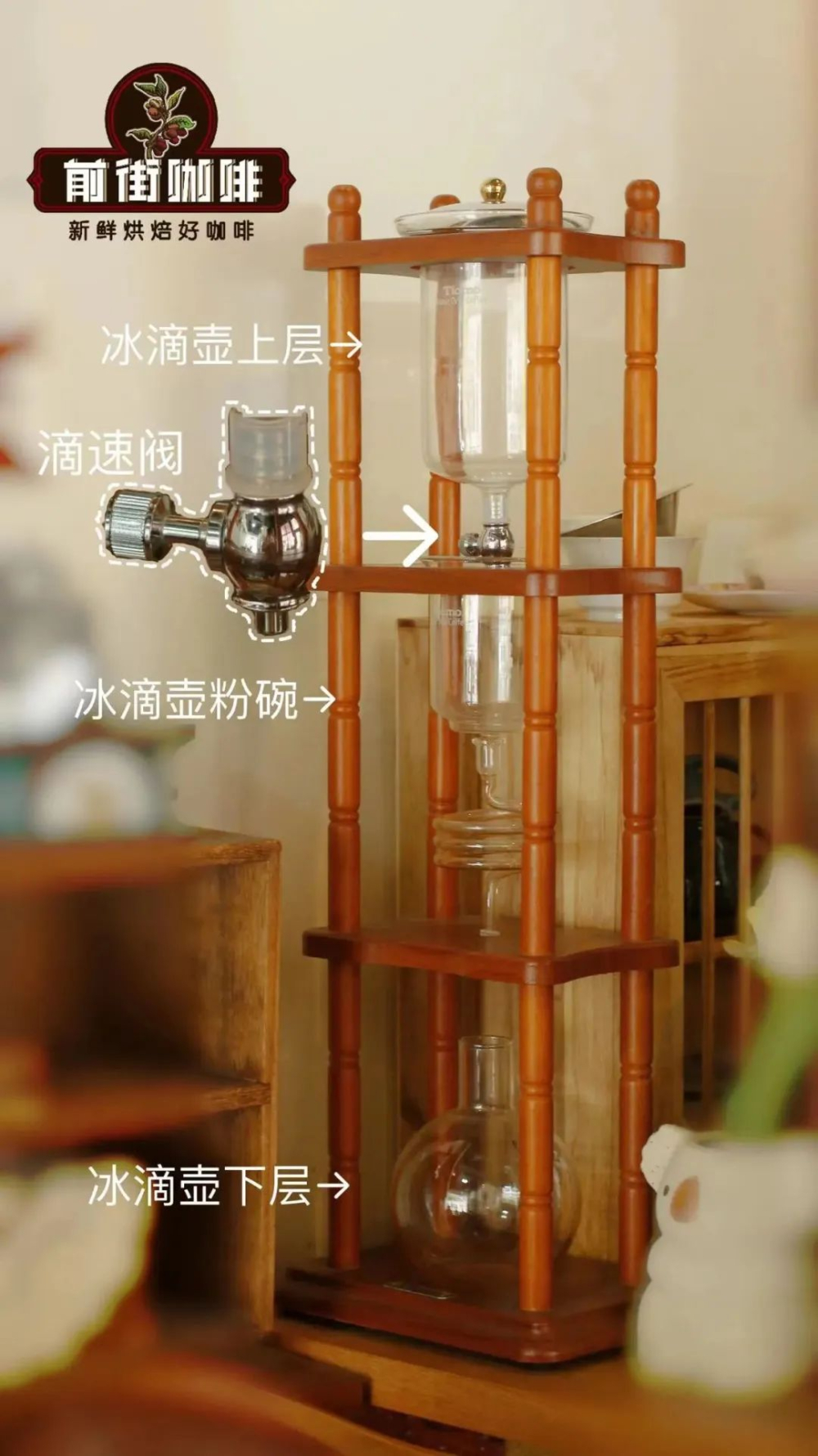
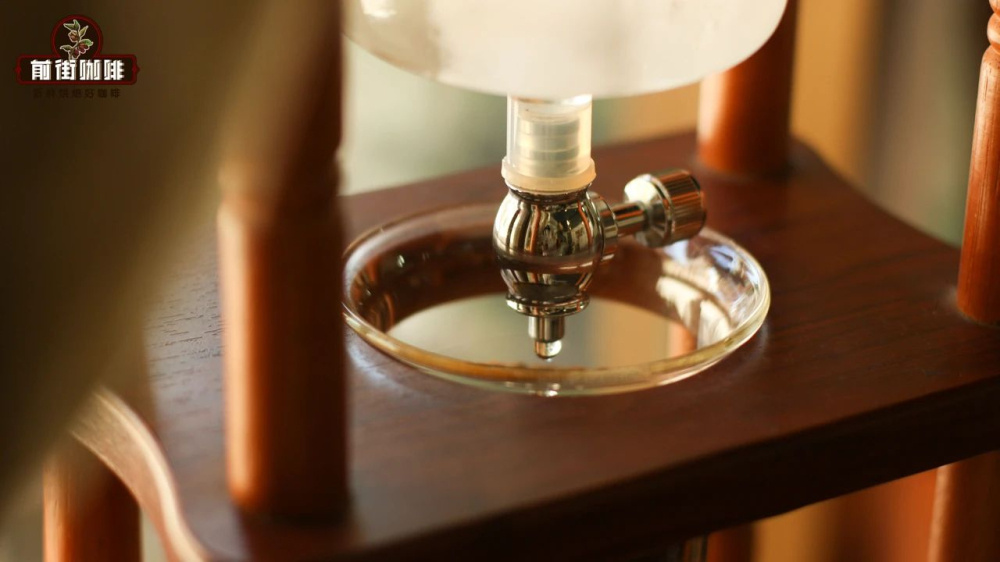
The upper vessel is mainly used to hold ice cubes and water, and below it is connected a metal component—this is the valve that can adjust the outlet diameter to change the dripping speed of the water droplets, allowing ice water to drip evenly into the coffee grounds. The middle glass pot, shaped like a cup, is used to hold the ground coffee powder, and there is a filter hole in the middle of the bottom that can drip out the extracted coffee liquid. The large pot below collects the extracted coffee.
Here Front Street chooses a relatively popular in-store Costa Rica Mozart coffee to make it. Mozart coffee beans use raisin anaerobic honey-processed green coffee beans; the flavor is raisin, osmanthus, and the sweet aroma of fermented fruit. Ice drip coffee can make the fermented sensation more obvious.
For grind size, Front Street generally chooses the same grind size as for iced pour-over. Because low-temperature water lowers the extraction rate, the coffee is ground finer to improve extraction. For this bean, choose a 85% passing rate on the Chinese No. 20 standard sieve. According to Front Street's store grind size, that is a 9 setting on the ek-43s grinder.
Generally we first calculate the extraction parameters. Use a coffee-to-liquid ratio of 1:10; 60 grams of coffee extracts 600g of coffee liquid. The ratio of ice to water mixture is 1:1. The valve flow rate is controlled at 7 drops every 10 seconds, and dripping is generally completed within 6-8 hours. (Usually the ice drip ratio is 1:10-1:12; everyone can adjust according to their own taste.)
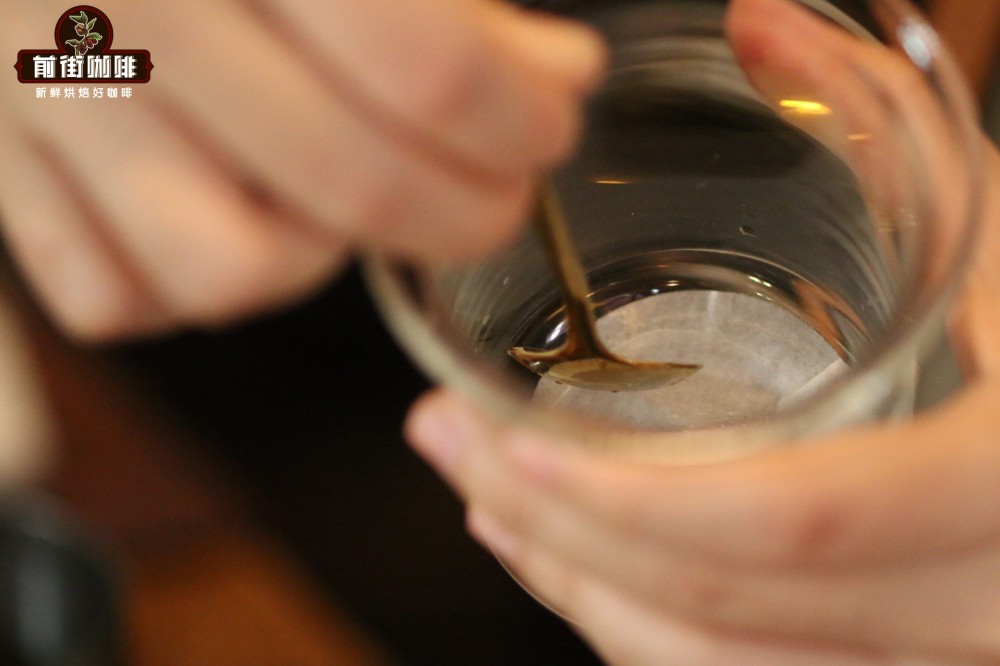
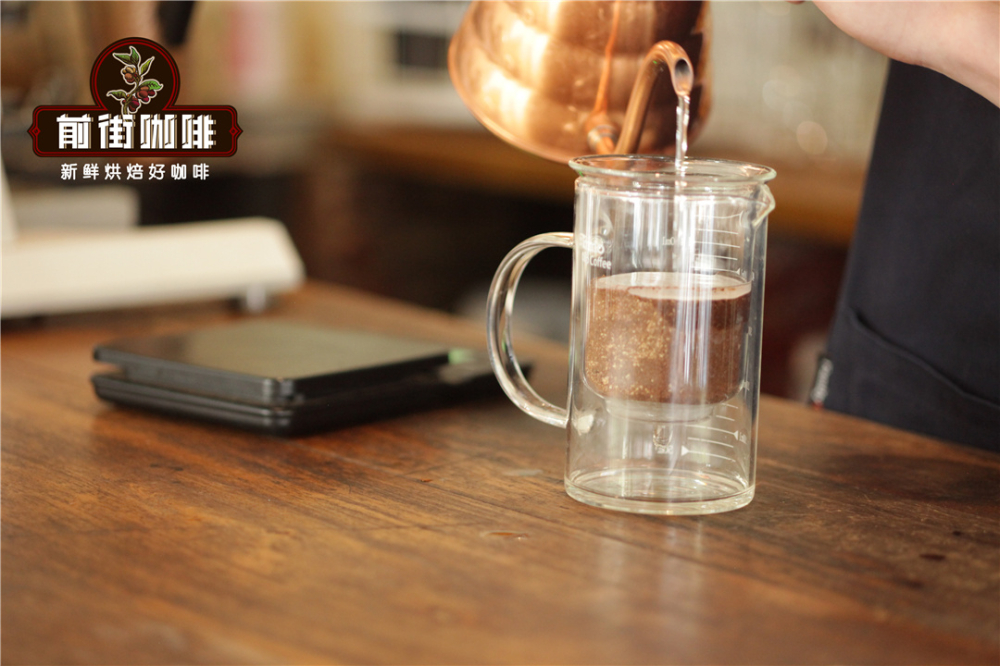
At the bottom of the middle pot, use a round filter paper and moisten it with water to make it adhere. Then grind the coffee beans into powder and pour them in. Note that they must be leveled to ensure even extraction. Also place a round filter paper on the surface of the coffee bed to prevent water droplets from disturbing the coffee bed. Before dripping, the coffee bed needs to be moistened with cold water first; this can both save extraction time and avoid uneven extraction at the beginning.
Place the powder cup on the rack and begin loading the ice-water mixture, usually half ice and half water. Adjust the valve flow rate to 7 drops/10 seconds, and make sure the dripping water droplets align with the position where the coffee liquid filters out. After dripping is complete, pour the liquid in the lower pot into an airtight container. Front Street uses a glass bottle and places it in the refrigerator to ferment for more than 12 hours; it can usually be drunk the next day.
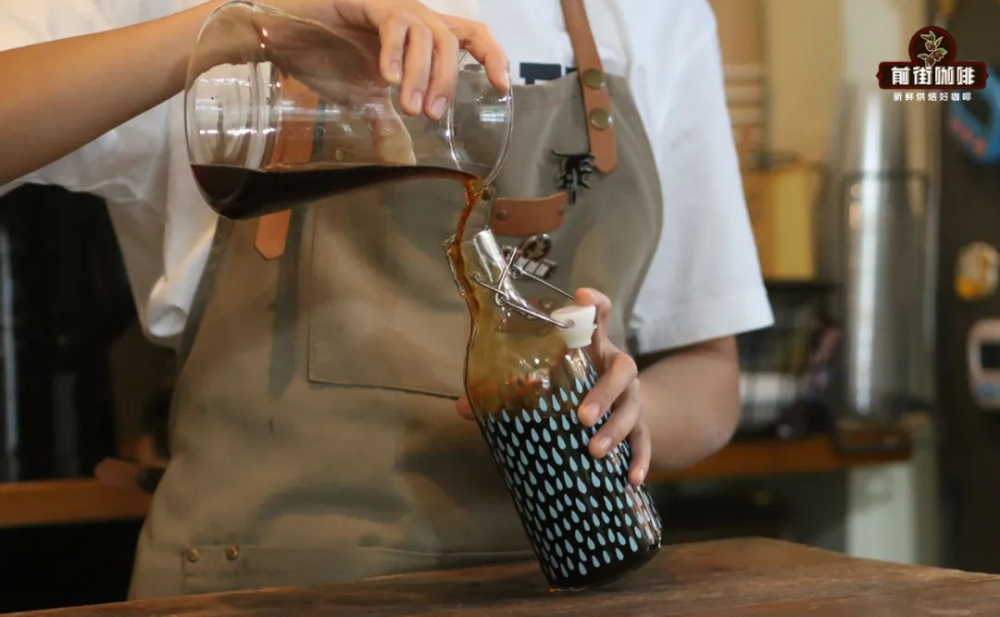
After a night of refrigeration, Mozart coffee will present a wine-like fermented sensation, the sweet-and-sour taste of tropical fruits such as berries and pineapple, a rich flavor without bitterness, and after dilution with ice cubes it is like drinking a refreshing fruit wine.
Front Street Coffee Brewing Suggestions:
Regarding coffee brewing, Front Street has always believed that the freshness of coffee beans has a great relationship with coffee flavor. Therefore, the coffee beans shipped by Front Street Coffee are all within 5 days of the roast date. Front Street's roasting purpose is "freshly roasted good coffee," so that every customer who places an order receives the freshest coffee when they get it. The resting period for coffee is about 4-7 days, so when customers receive it, it is exactly at its best flavor.
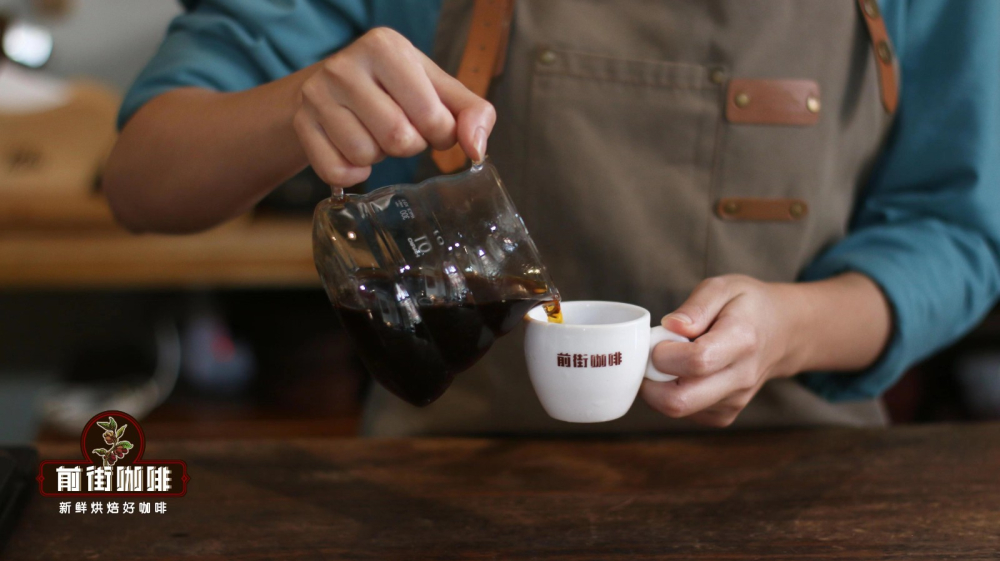
For friends who need ground coffee, Front Street warmly reminds you: if the coffee beans are ground in advance, there is no need to rest them anymore, because during transportation, the pressure produced by carbon dioxide inside the packaging can also make the coffee flavor rounder, so you can immediately brew a cup after receiving the coffee grounds. However, coffee grounds need to be brewed promptly, because coffee grounds oxidize relatively quickly after contact with air; that is, the coffee flavor will dissipate relatively quickly, and the coffee flavor will not be as good. Therefore, Front Street recommends buying whole beans and grinding fresh before brewing, so you can better taste the coffee flavor.
For professional coffee knowledge exchange and more coffee bean information, please follow Coffee Workshop (WeChat public account: cafe_style)
For more specialty coffee beans, please add the personal WeChat FrontStreet Coffee; WeChat ID: qjcoffeex

Light Roast Pour-Over Floral Coffee Beans Recommendation: Qianjie Yirgacheffe Gedeo Dingding, Qianjie Panama Hacienda La Esmeralda Green Label Geisha Coffee Beans, QianjiePanama Butterfly Coffee Beans
Daily medium-light roast Yirgacheffe pour-over floral coffee bean recommendation, Qianjie Yirgacheffe Guddina, light roast brings the signature white floral notesAromatic, with lemon-citrus fruit notes and a refreshing floral tea note; bright and crisp on the palate. Great value and an ideal entry-level pour-over coffee with floral and fruity notesAn unrivalled choice.
Moka pot, home espresso, and espresso-based milk drinks like latte — recommended beans: Qianjie Classic Espresso Blend, using BrazilianWest, with Mandheling Arabica and a small amount of Vietnamese Robusta fully blended, delivering a rich and outstanding espressocrema; overall style is rich and memorable. Qianjie Brazil Queen's Estate coffee beans and Qianjie Classic Espresso Blend coffee beans are both mochaA highly recommended option for pot-style espresso machines.
Fruity-floral signature espresso latte bean recommendation: Qianjie Strawberry Candy espresso blend, featuring strawberry gummy and rose aromas,Full-bodied sweetness with a grape and almond finish; especially stunning as an iced latte. Made from Costa Rican honey-process beans, PanamaBlended from Panama Geisha coffee beans and select beans from Colombia's Huila region. Not only does it overturn traditional espresso flavor, the cremaalso performs well, with impressive showings in creative specialty drinks.
Now available on Taobao store「 Qianjie Coffee 」To purchase the above coffee beans, Qianjie Coffee offers dozens of selected single-origin pour-over and espresso coffee beans from around the world. Qianjie CoffeeQianjie Coffee is a veteran specialty coffee roaster; beans are freshly roasted within 5 days, with consistent quality and highly competitive pricesGreat value, ships within 24 hours. Qianjie Coffee is recommended by many coffee lovers and platforms.
Taobao Qianjie Coffee Link: https://qianjiecoffee.taobao.com
Or search our shop directly on Taobao 「Qianjie Coffee」
Qianjie Coffee Store Address: 315 Donghuadong Road, Yuexiu District, Guangzhou

Site Recommendations: 耶加雪菲 花魁咖啡 瑰夏咖啡 波旁咖啡 蓝山咖啡 天堂鸟咖啡豆 曼特宁咖啡豆 PWN黄金曼特宁 星巴克菜单 咖啡豆种类
Please indicate the source when reprinting.
2025-05-01 17:48:31
